We’ve been climbing and climbing, up stairs, along narrow passageways, through archways and tunnels, until finally we get to the top, an open space, and the big Catholic Cathedral. We think this is our destination, the top of the town, but we see the man in the blue shirt off to the right.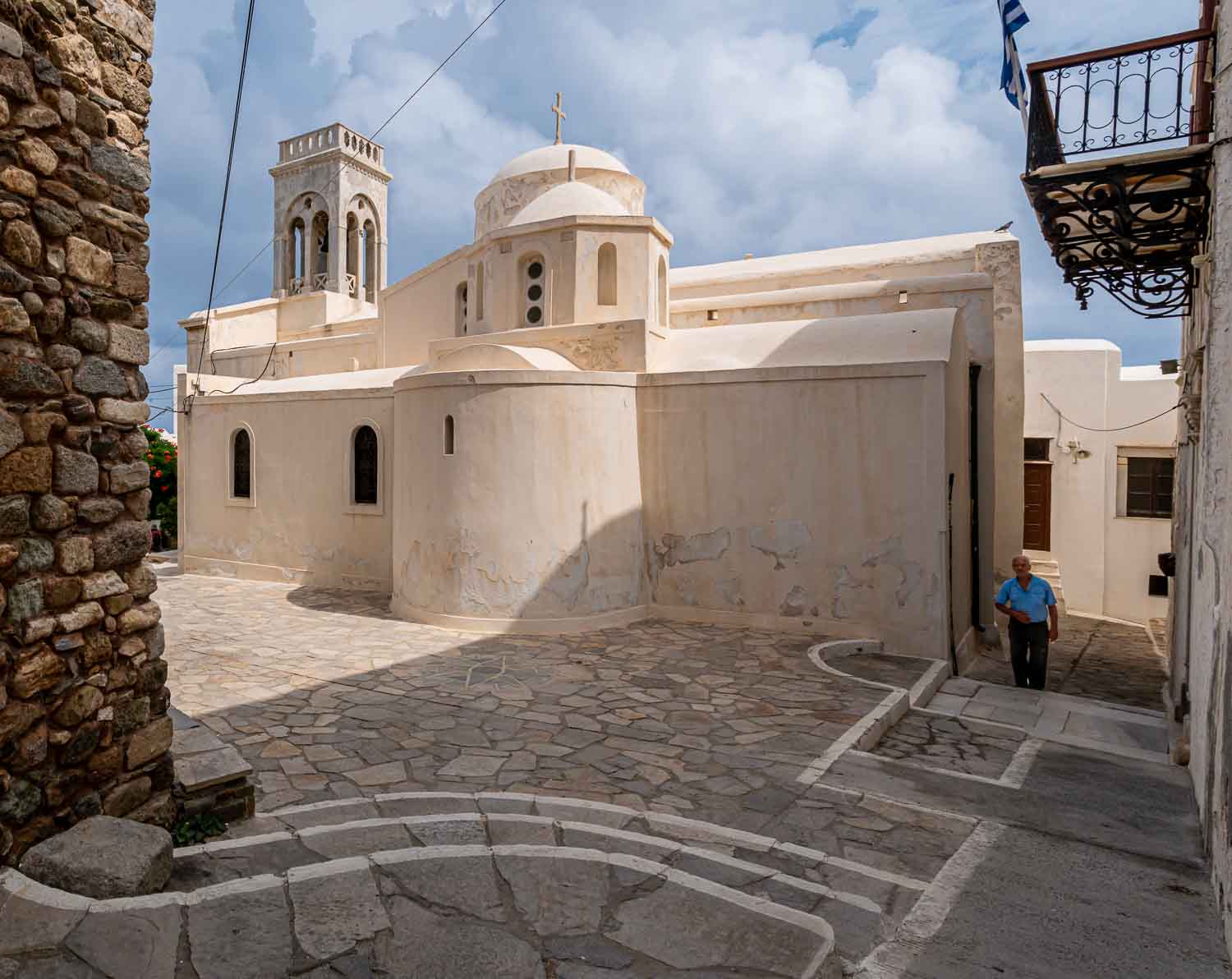
He’s waving to us, beckoning us over, urging us forward. Come see this, over here! he seems to be saying. Why not? we shrug, and walk towards him. He then shows us into one of the most beautiful places we visit on Naxos.
First our jaws drop at the unexpected beauty of the place. And then we drop into silence. It’s an exquisite, tiny, richly decorated space, but even more beautiful is the energy. So still. So silent. So sacred. We are stopped in the best way. We stop the exploring, the busyness, the excitement, the sensory overload of travel, and just sit for a while, in silence, in peace. It’s heavenly. This is grace. Breathe in, breathe out. Ahhhhhhhh.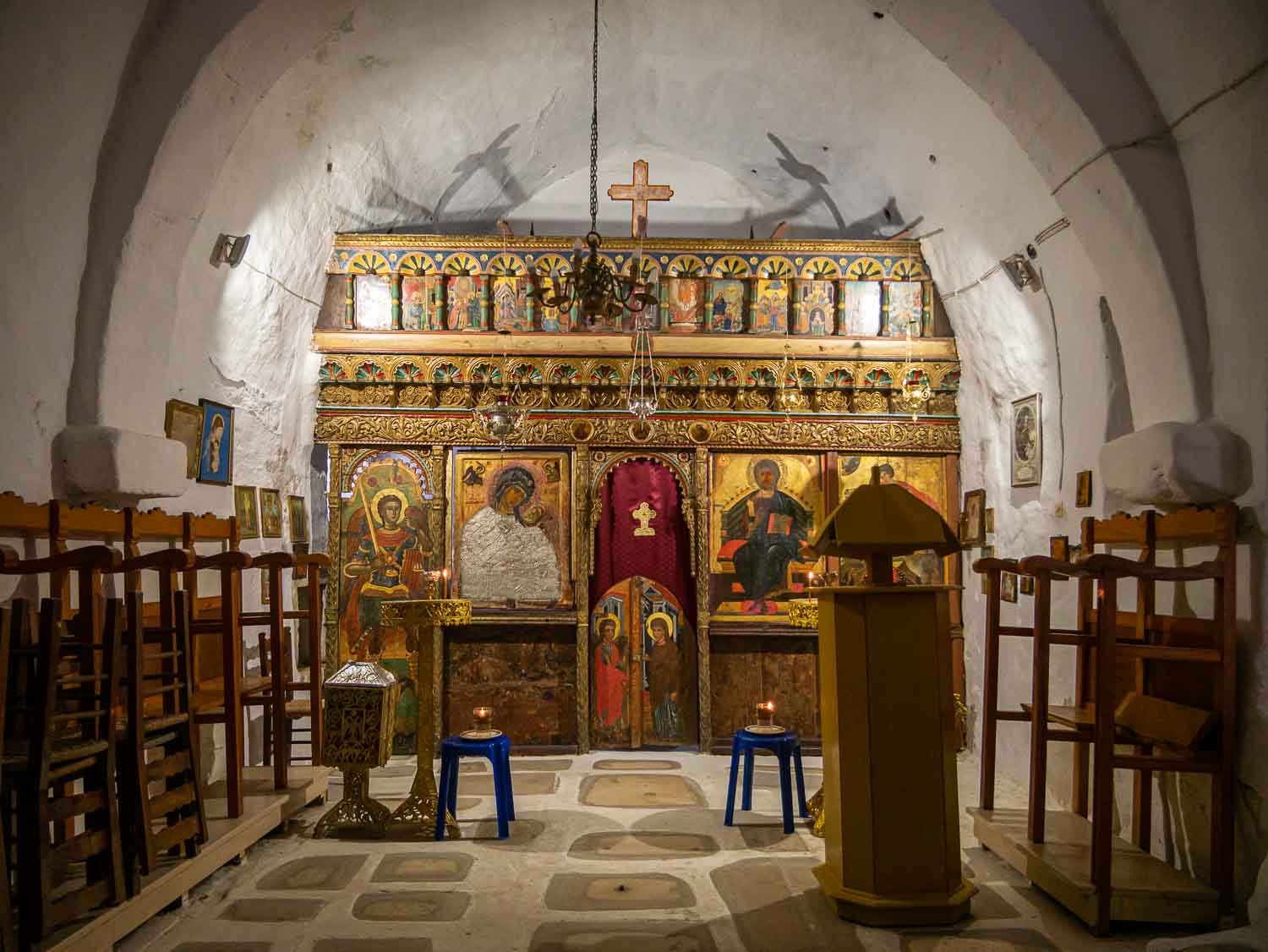
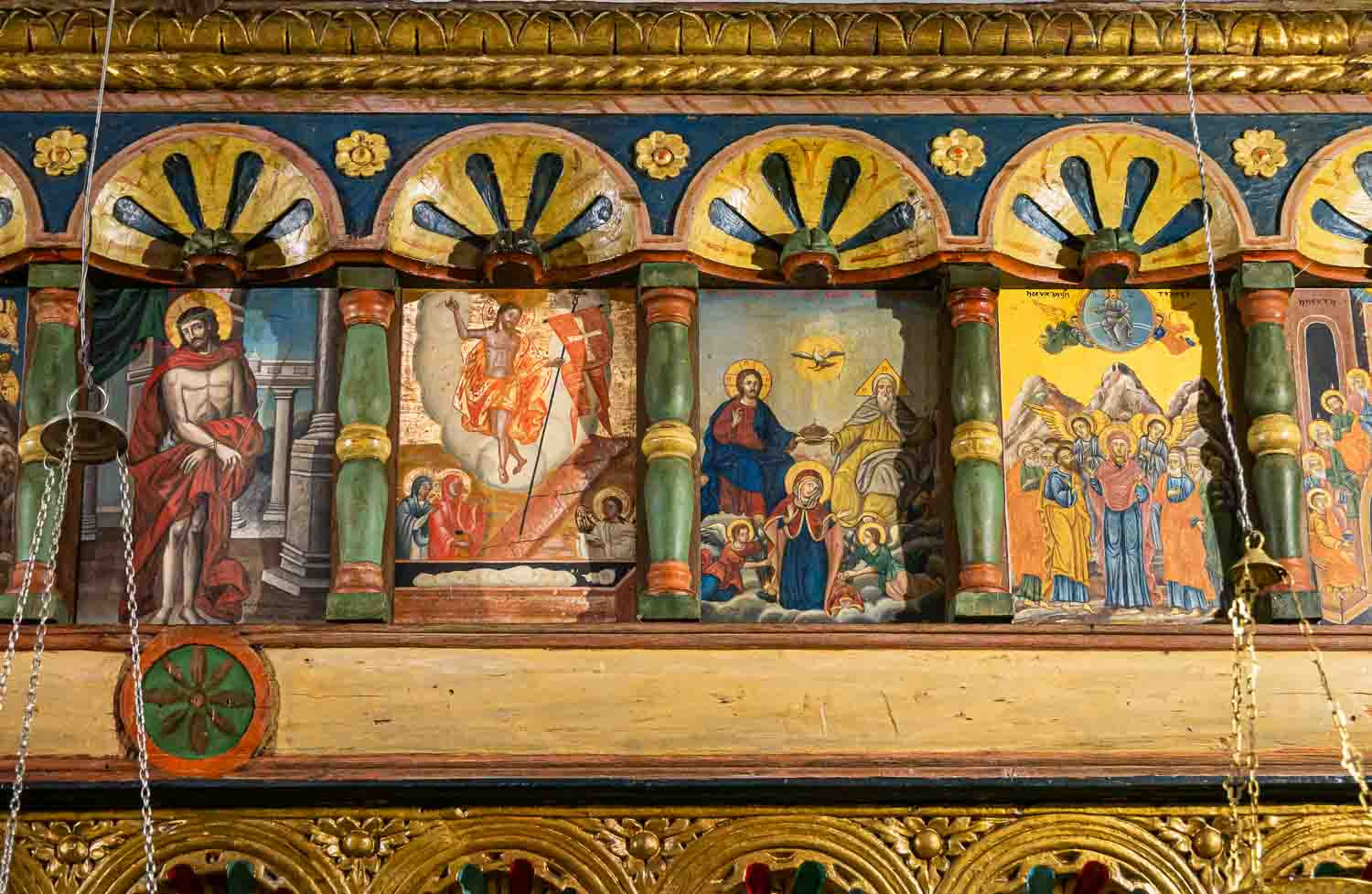
It’s Panagia Theoskepastia, a tiny Orthodox church from the 9th or 10th century, and the oldest building on the former acropolis of Naxos. I would imagine that very few tourists venture there, and probably none without the lovely caretaker encouraging people to enter. We do go into the cathedral, but the energy isn’t the same so we don’t stay long. I have no memories of it.
But first I’ll go back a bit. From Don’s notes the day before on Santorini: June 10th 2022. This morning we went for a final breakfast at Pelican Kipos: eggs scrambled with feta cheese and baby tomatoes, fresh bread, butter and jam, a piece of cake, tea for me, coffee for Ali, followed by the traditional free ending to our breakfast meal: mini donuts dipped in honey and crushed nuts. We love this Greek tradition of tiny free desserts after every meal.
Later that day we get a taxi to the port, then a ferry to Naxos. Our taxi driver tells us he is from Sparta. Hearing that shocks me into reality. To me Sparta is a powerful city-state of ancient Greece. It has never occurred to me that it’s a modern place, that it still exists, that there’s still a city and municipality called Sparta; I get geography lessons from travel, and history lessons. Anyway here’s the taxi driver’s very modern story: he’s a friendly chatty guy who admits that he doesn’t have six-packs. He tells us how he lost his business in the financial crisis in Greece and had left Athens to drive cabs in Santorini. He’s quite philosophical about the change in his circumstances, telling us that he feels much less stress driving a taxi than he had running his own business. Sometimes life’s toughest challenges can lead to better circumstances, despite the lack of six-packs.
Approaching Naxos by ferry you are greeted by the main town with the mountains behind it, and a quite startling and enormous marble doorway. It’s known as Portara, and it seems almost surreal, the only thing left standing in a wasteland of fallen stones.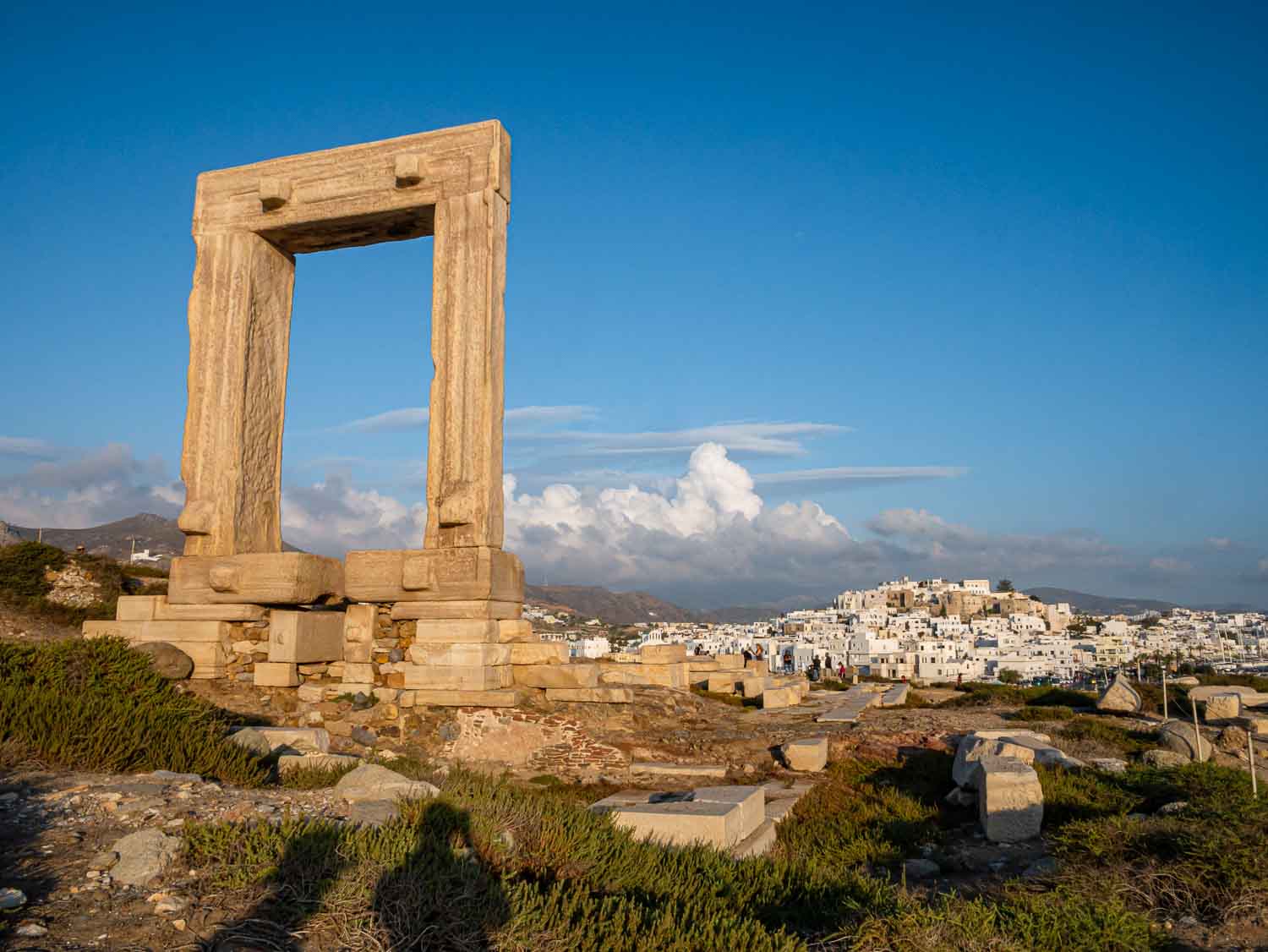
Of course when researching Naxos it’s always mentioned. Well, it’s pretty hard to miss: Portara, standing alone on the tiny islet of Palatia and connected by a causeway to the mainland, it’s the obvious symbol of the island. Portara is actually the entrance to a temple dedicated to Apollo that was begun in the 6th century BCE, but never completed. It was a vanity project of the ancient tyrannical oligarch Lygdamis, who was eventually overthrown by the Spartans. All things must come to an end, even ancient tyrants. Except Portara apparently. And Sparta. So far.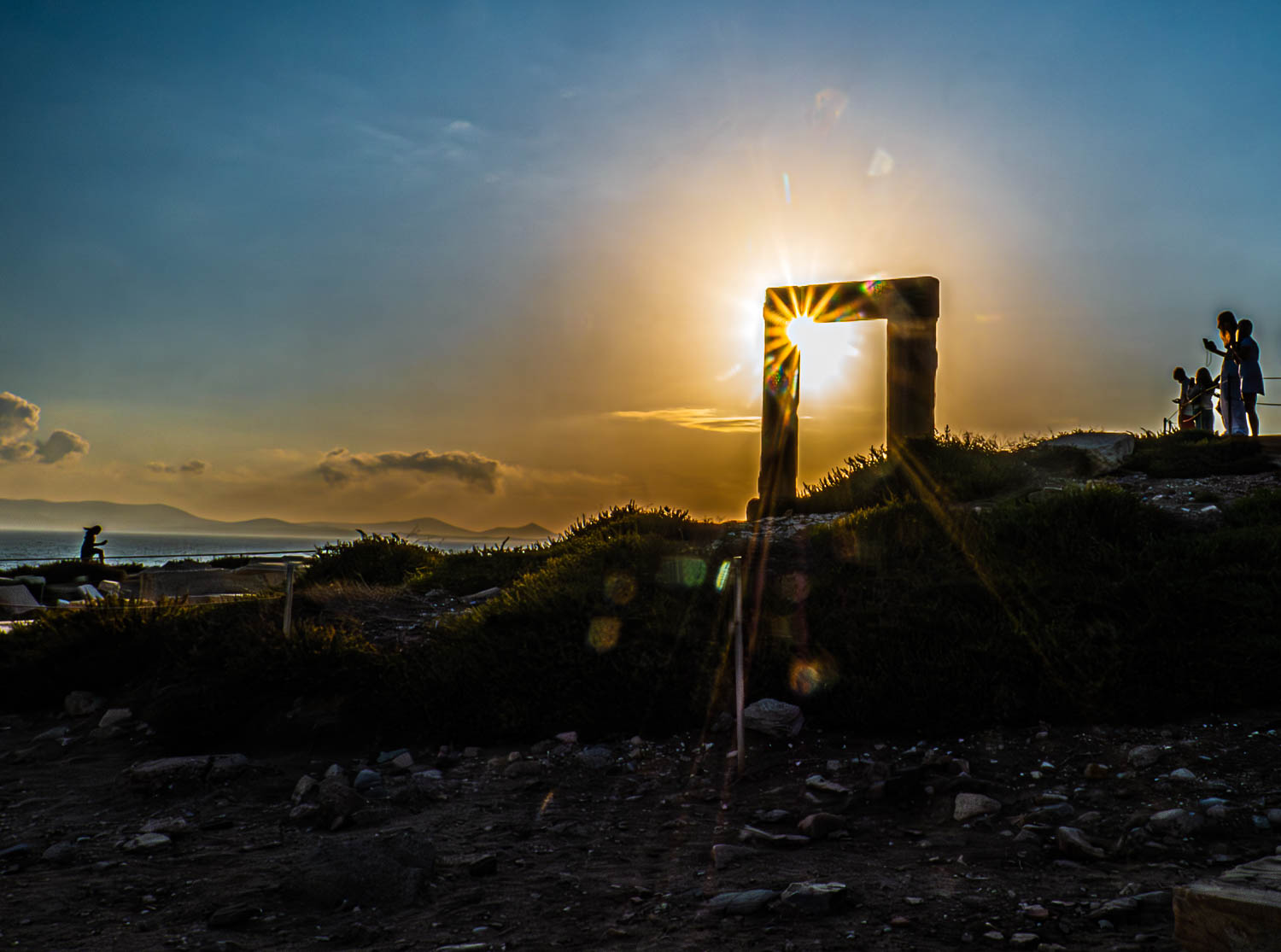
Naxos is the largest of the Cycladic islands. The first night there, having dinner at a family-owned restaurant and eating authentic Greek food, I suddenly feel like I’m back in Greece after the theme park that is Santorini. Santorini is truly magical, but the small part we saw is different from ordinary down-home Greece. Santorini felt special and separate because it is; there’s a reason so many people flock there. On the other hand Naxos, being one of the less-touristed of the Cycladic islands, feels more authentic, no doubt because Naxos has a year-round population and strong sense of community that has existed for 6000 years.
Thracians were the original inhabitants, back around 4000 BCE, and Naxos was their leader. Since then the island has been ruled by the Carians, Ionians, Athenians, Spartans, Macedonians, Egyptians, Rhodians, and Romans. In the 13th century the Venetians established the Duchy of the Aegean, made the island its capital, and built a castle in what is now Naxos Town. For three centuries they ruled Naxos and ten other nearby Aegean islands. Chora is the Greek word for town, and the main town on Naxos is often referred to as Chora. Just to be confusing the pronunciation is Hora. One of the main towns on Crete is spelled Chania, but don’t be deceived by the spelling. It’s pronounced Hun-ya. And as for those Venetians – they were all over the Adriatic and Aegean Seas back in the 12-16th centuries. And just about everywhere they went they built castles.
This is Chora, a stack of sugar cubes except for the remains of the Venetian castle, visible as the brown stone walls.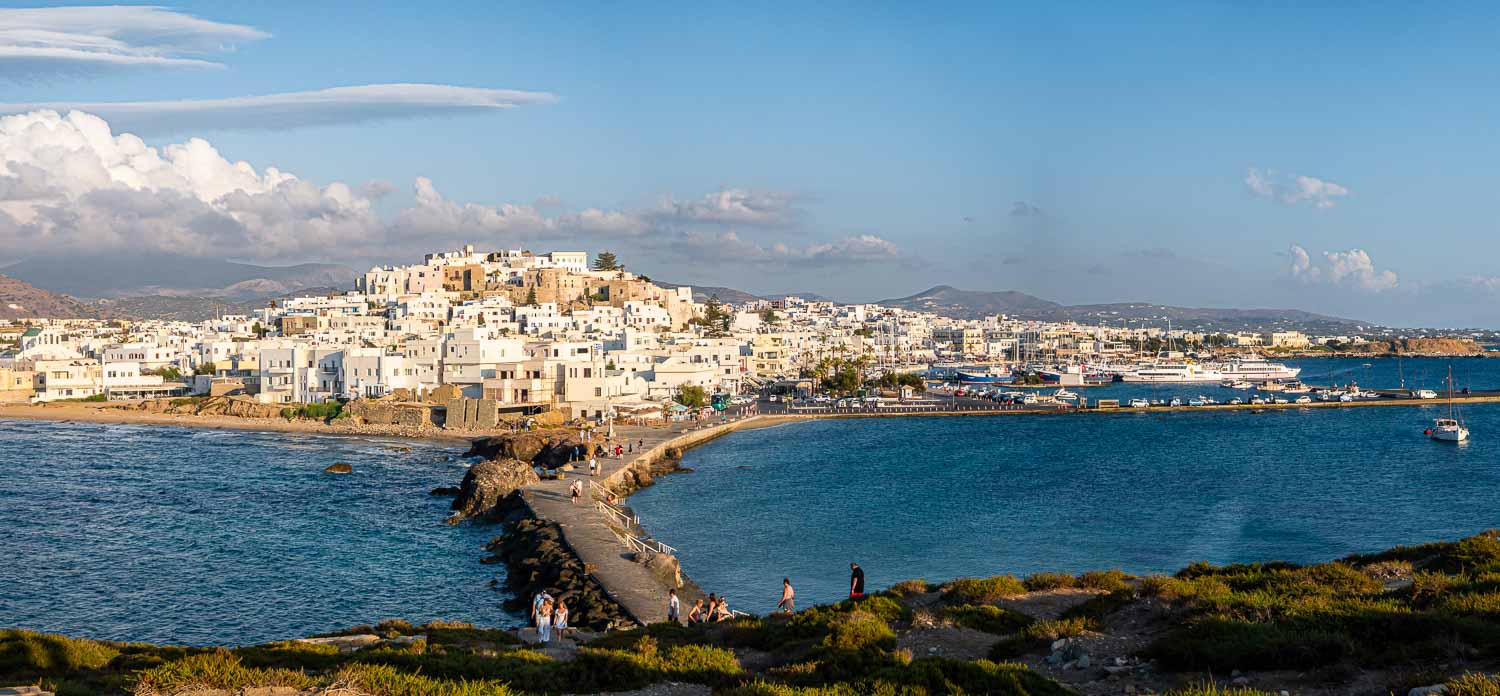
It’s a bit confusing though because everything above and next to the stone walls was also part of the original castle, and within its walls lay elegant buildings – mansions, monuments, and churches as well as the duke’s residence and administrative buildings. This is the old Venetian town with it’s labyrinth of narrow passageways. The whole area is known simply as Kastro, the Greek word for castle, although fortified town would be a better way to describe it.
So we climb. From our small guest house down near the beach we climb the hill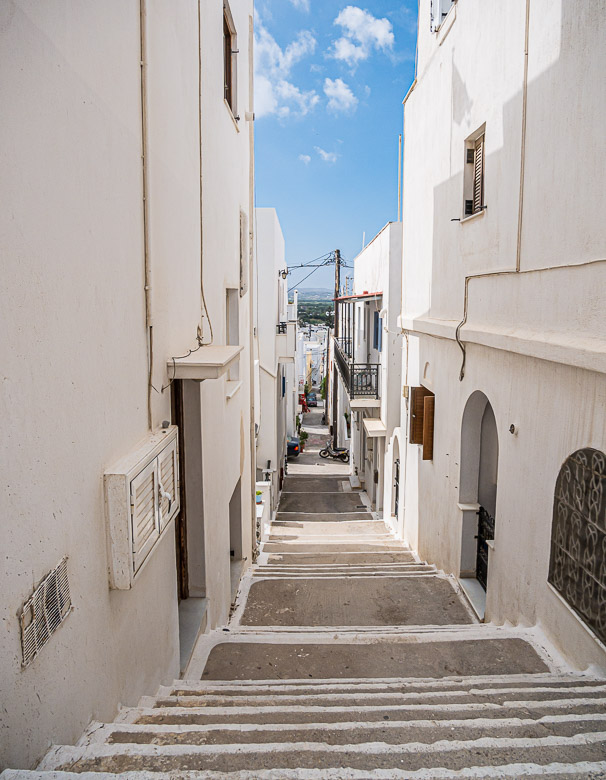
looking for Kastro, the medieval heart of the town, and soon find ourselves in a maze of narrow residential streets,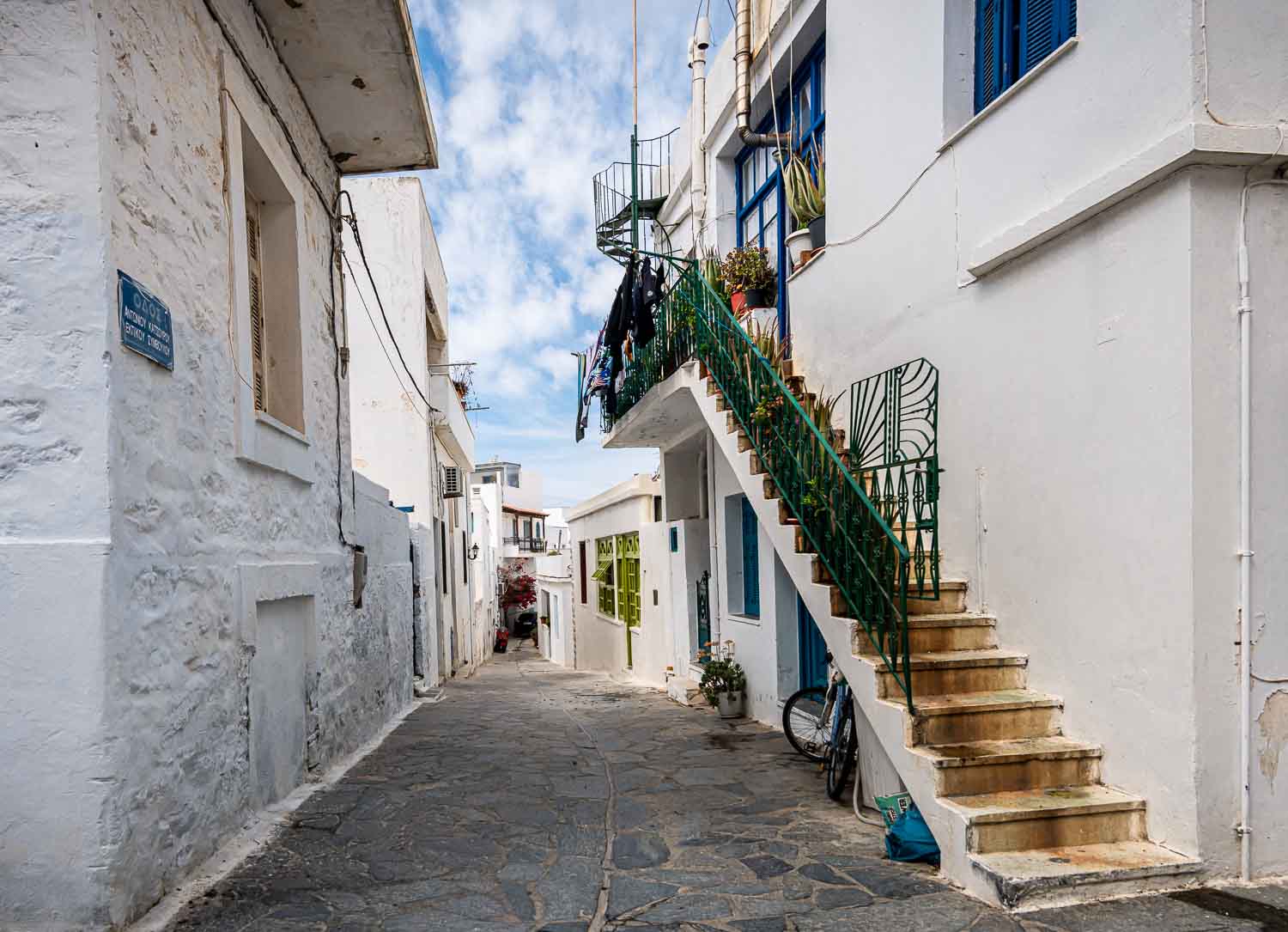
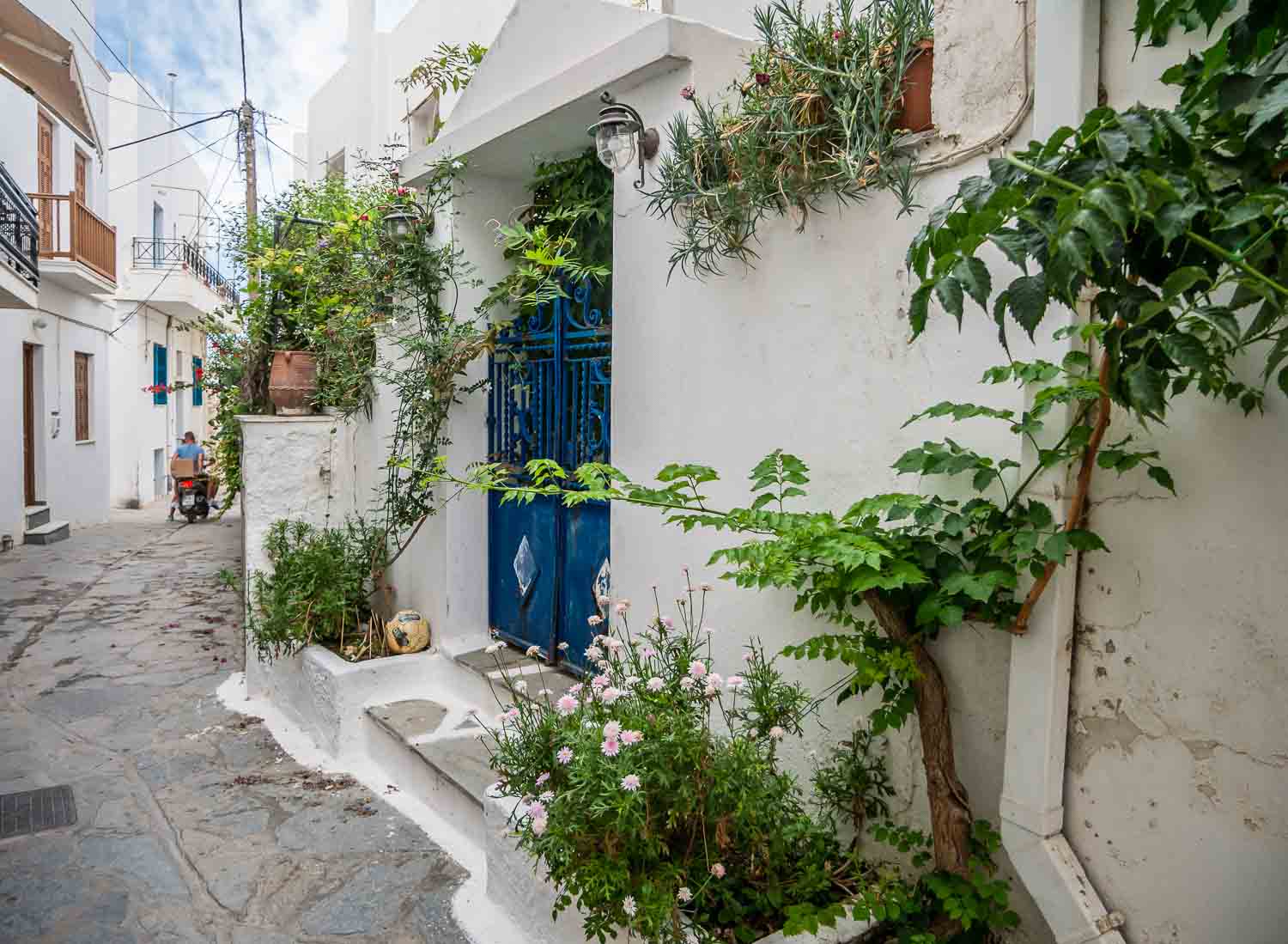
draped with oleander, and with bougainvillea, that bright floral mainstay of the Mediterranean climate,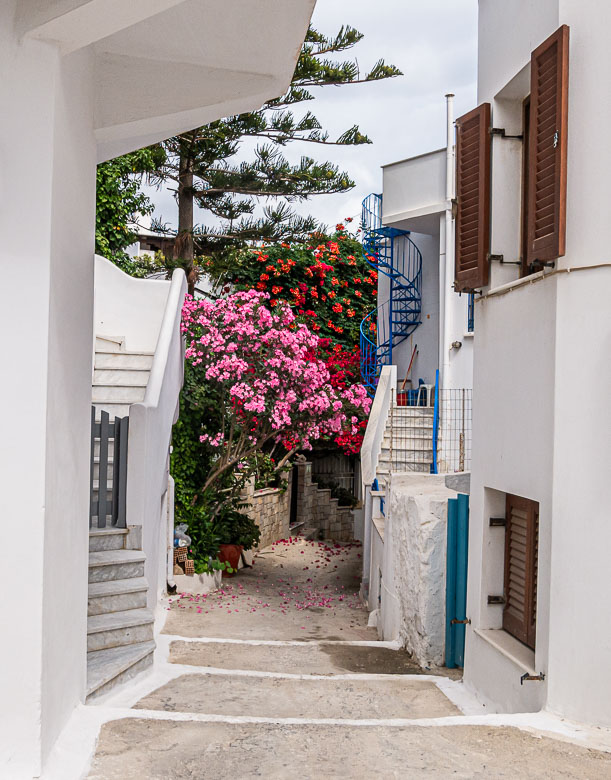
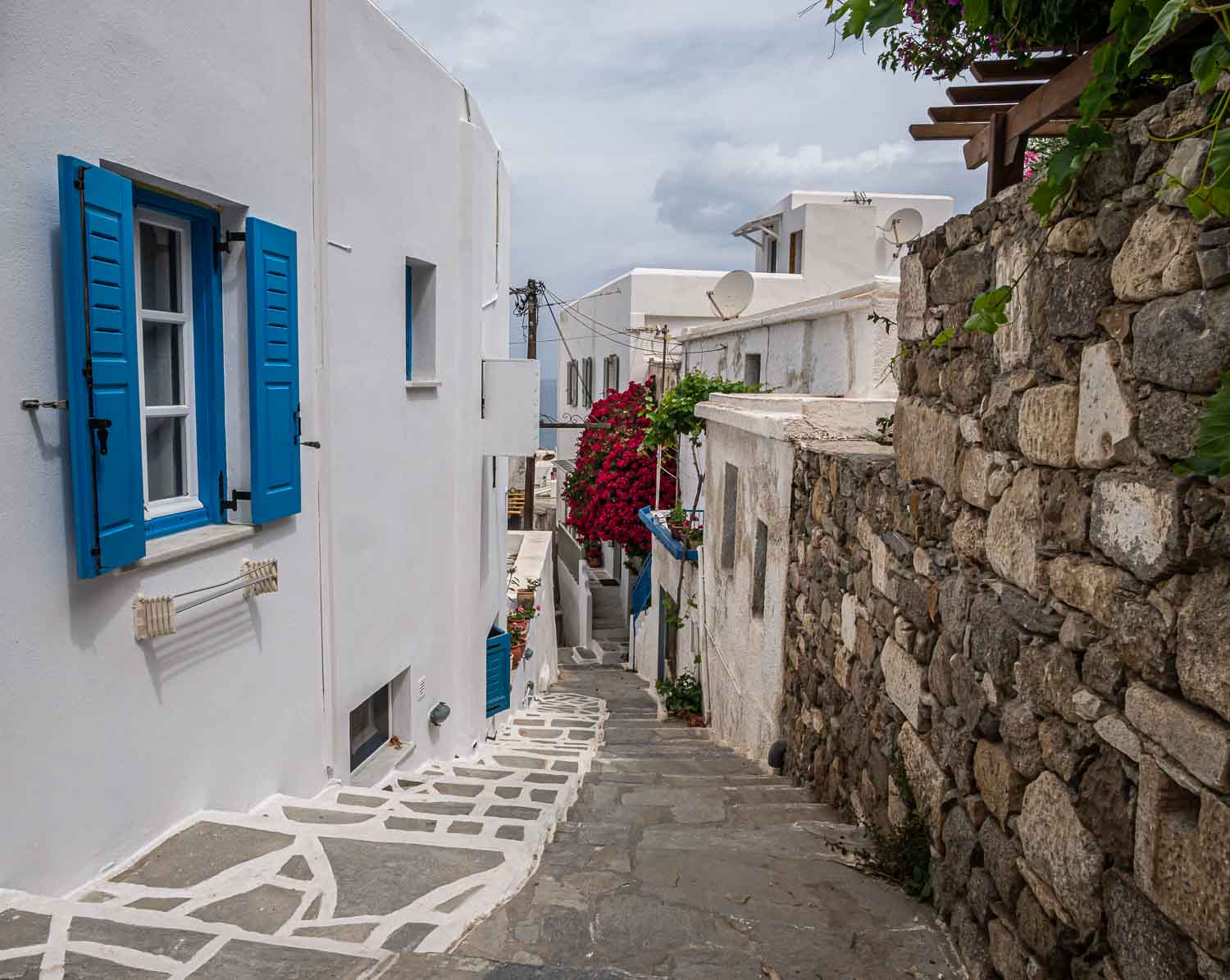
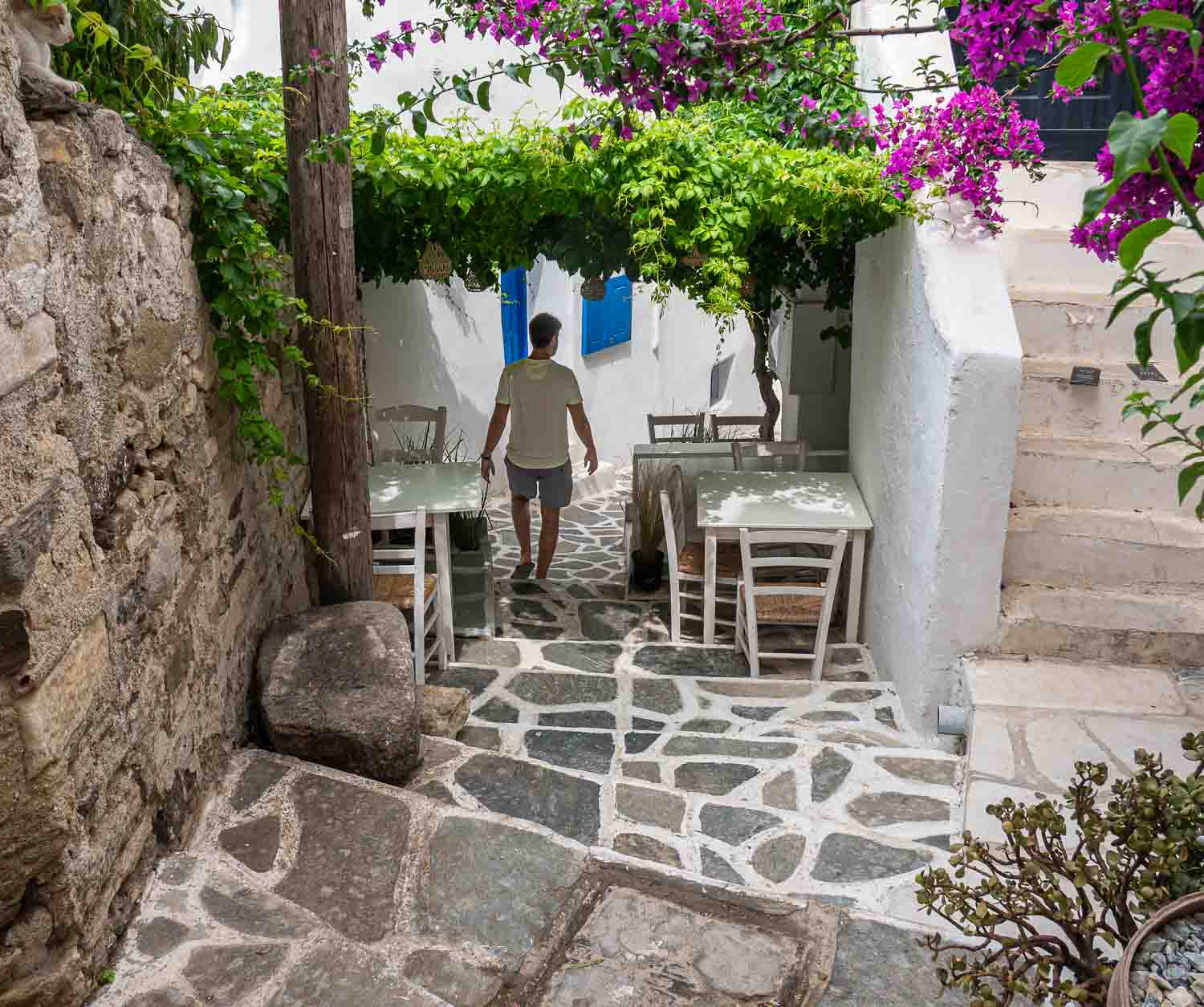
small gardens lush with greenery,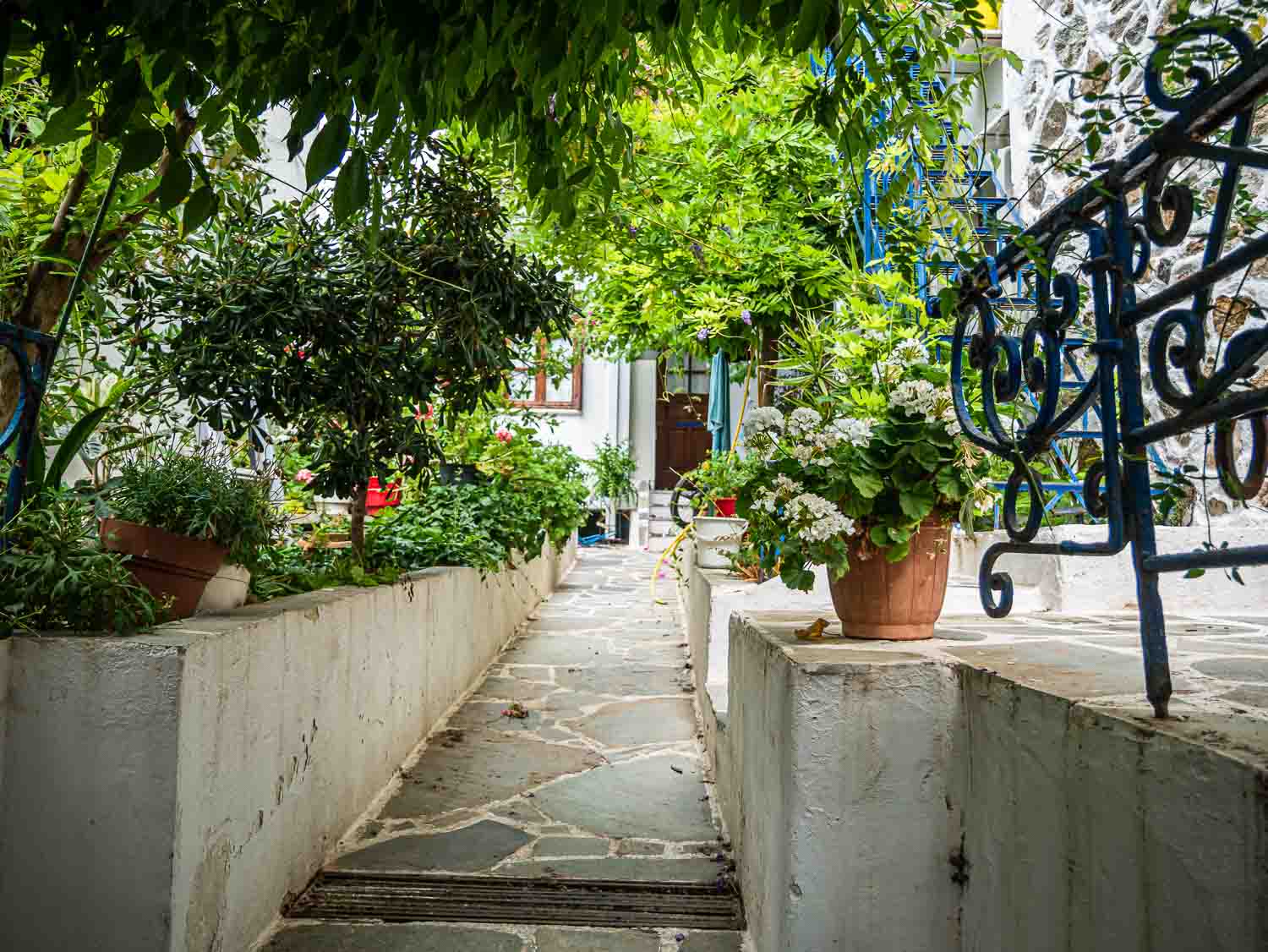
and residences with unexpected bright splashes of colour.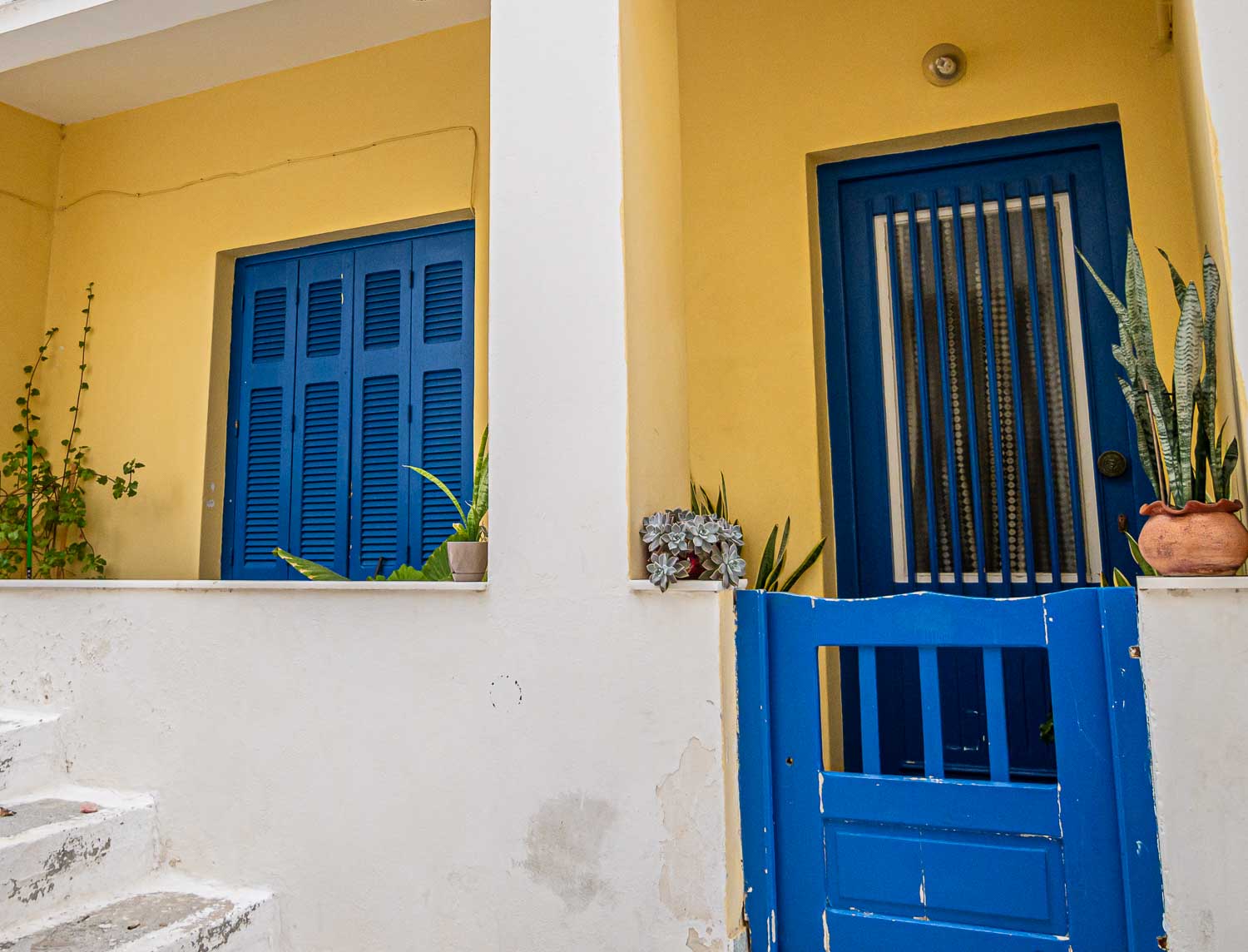
The higher we go the more convoluted it gets.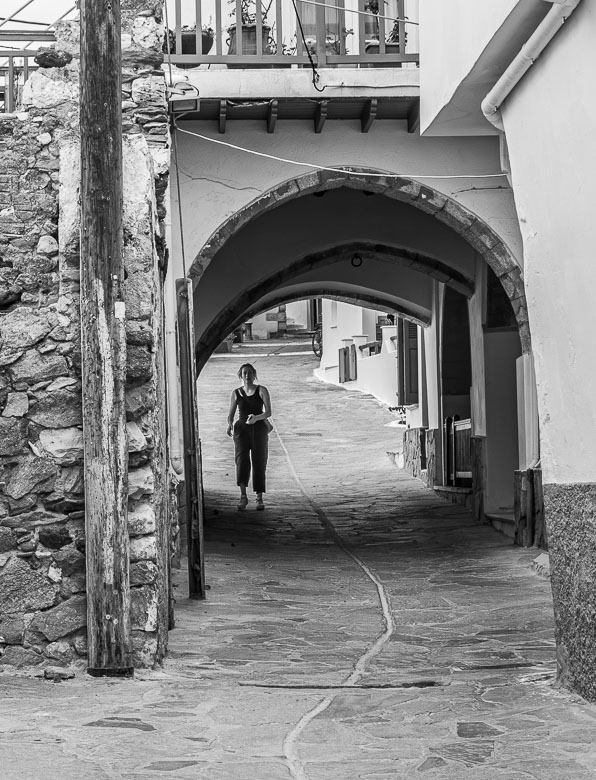
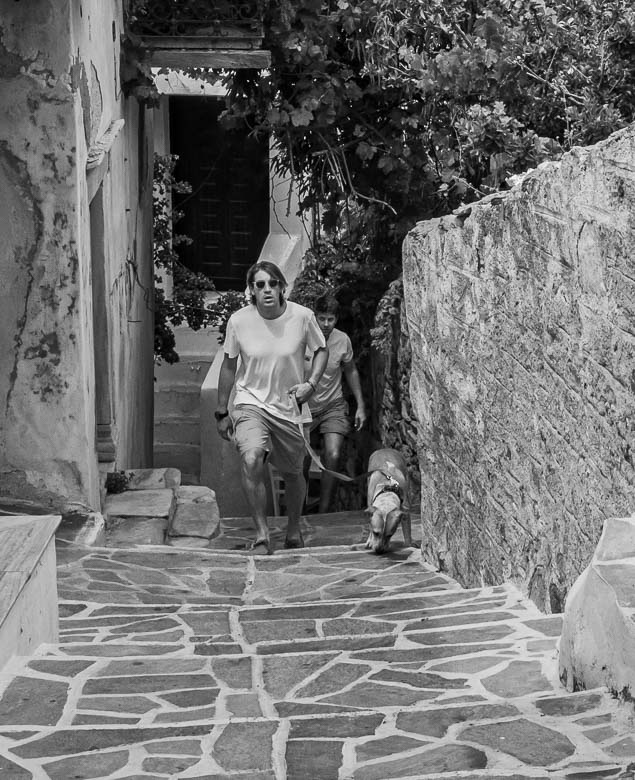
We pass people along the way, not tourists, but people who live here in this ancient place that has been inhabited continuously since the 13th century,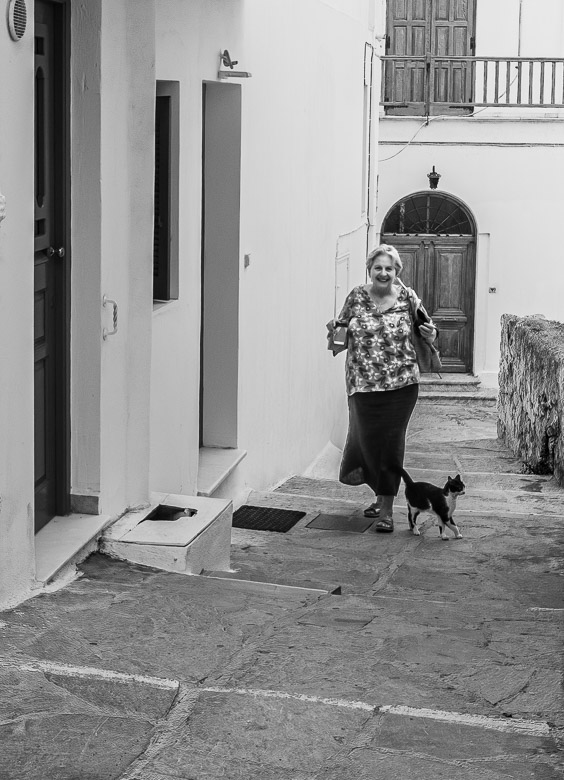
and where homes are juxtaposed chaotically with churches and other buildings, and laundry is hung to dry outdoors in the hot Mediterranean sun.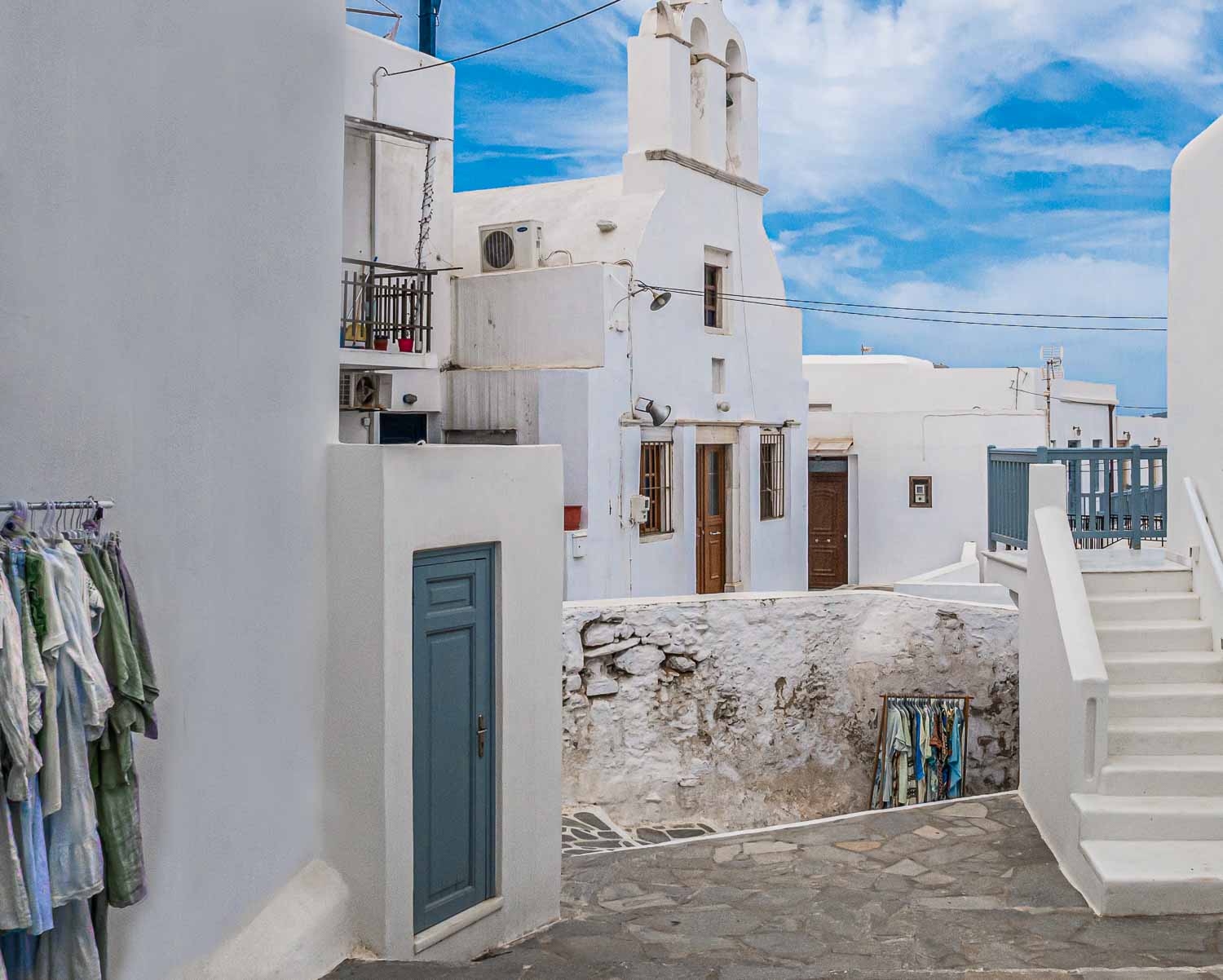
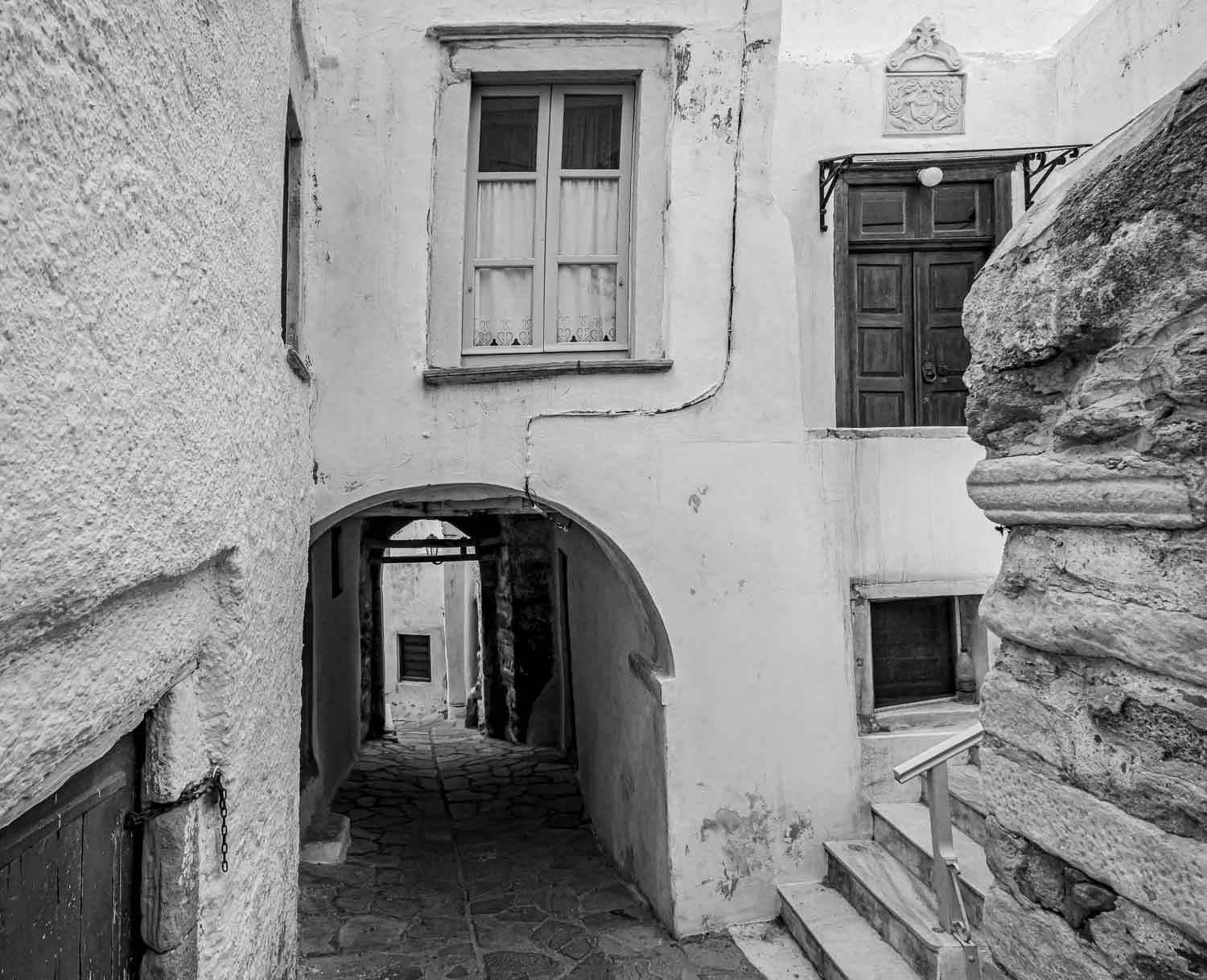
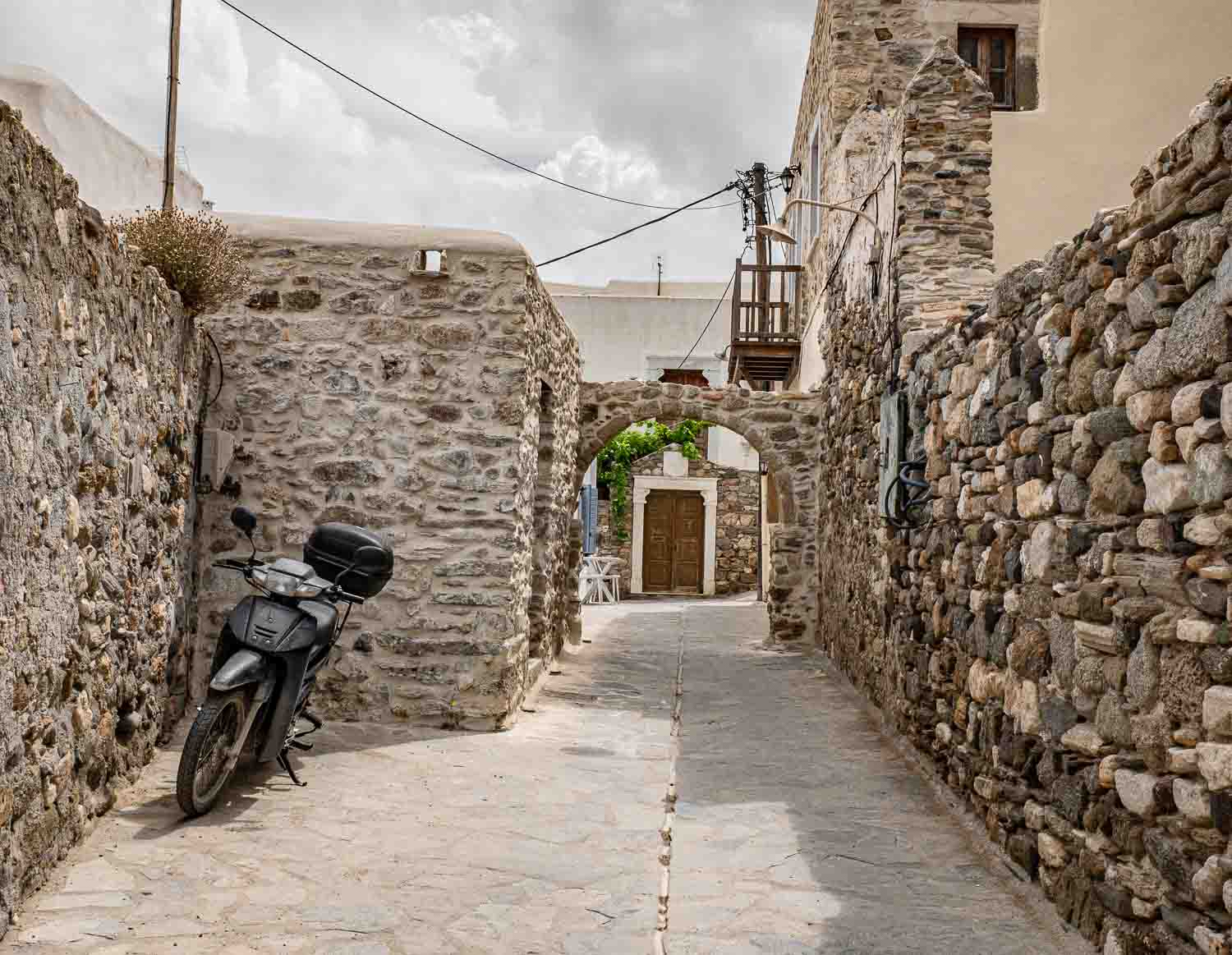
We pass through tunnels with wooden roofs centuries old,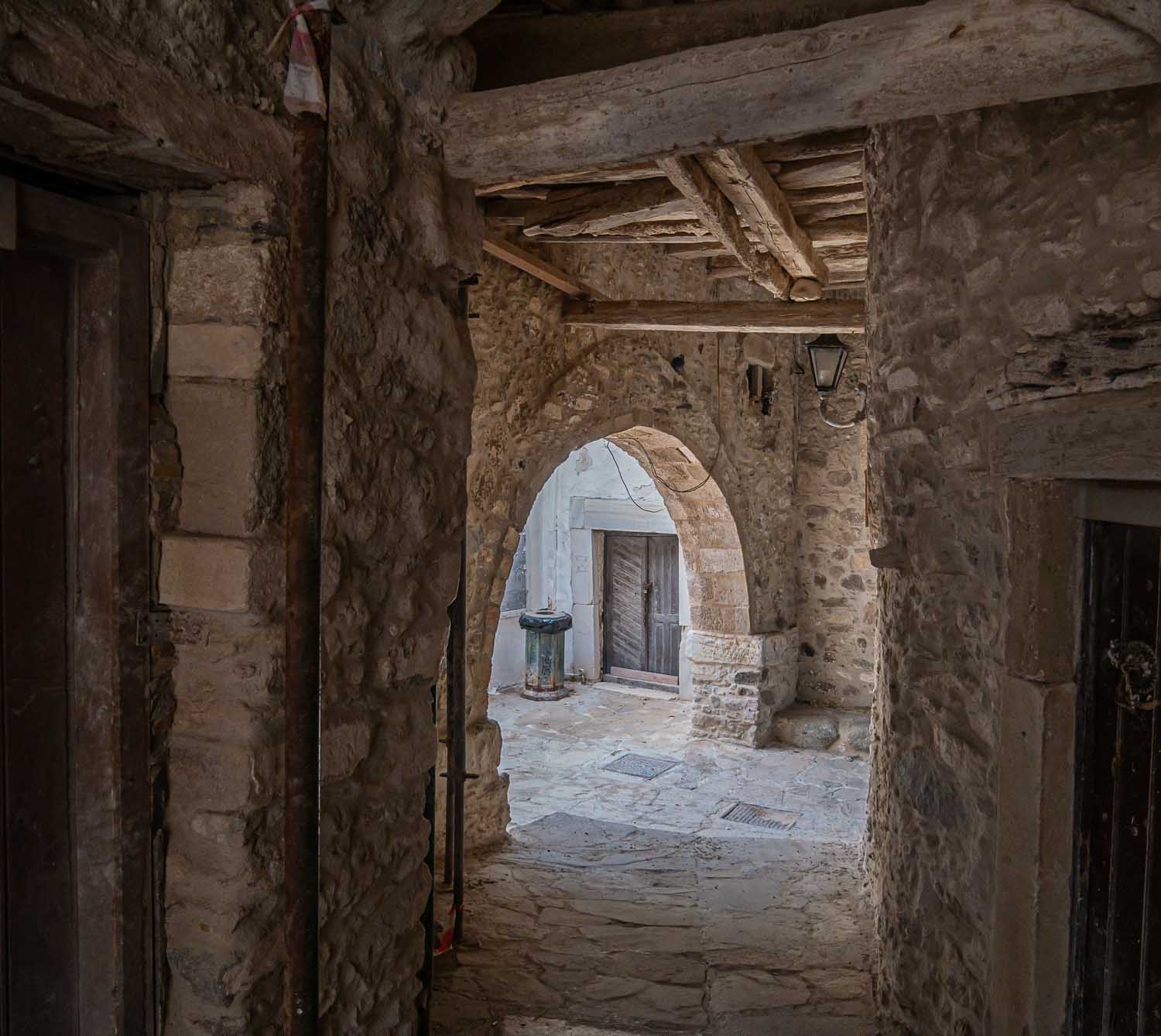
through arched doorways with wooden doors of equal age,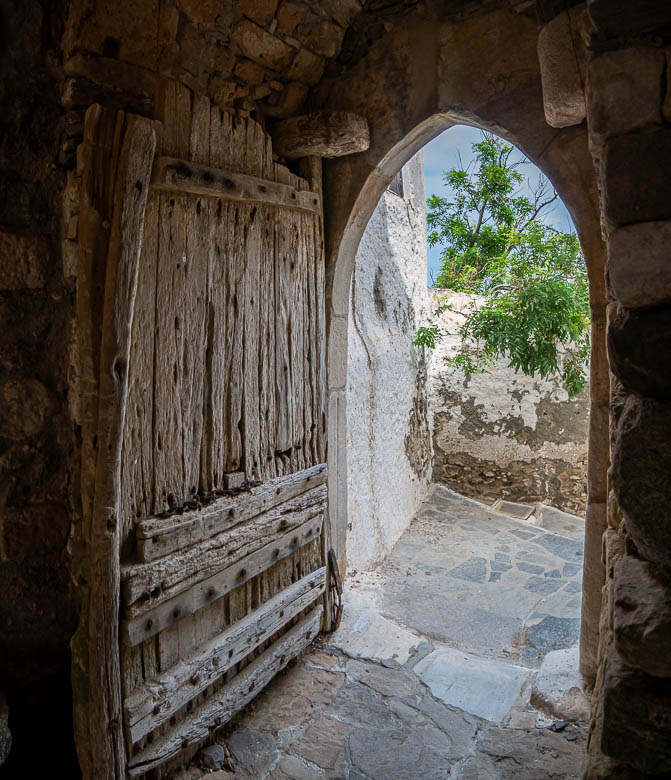
and arrive at small courtyards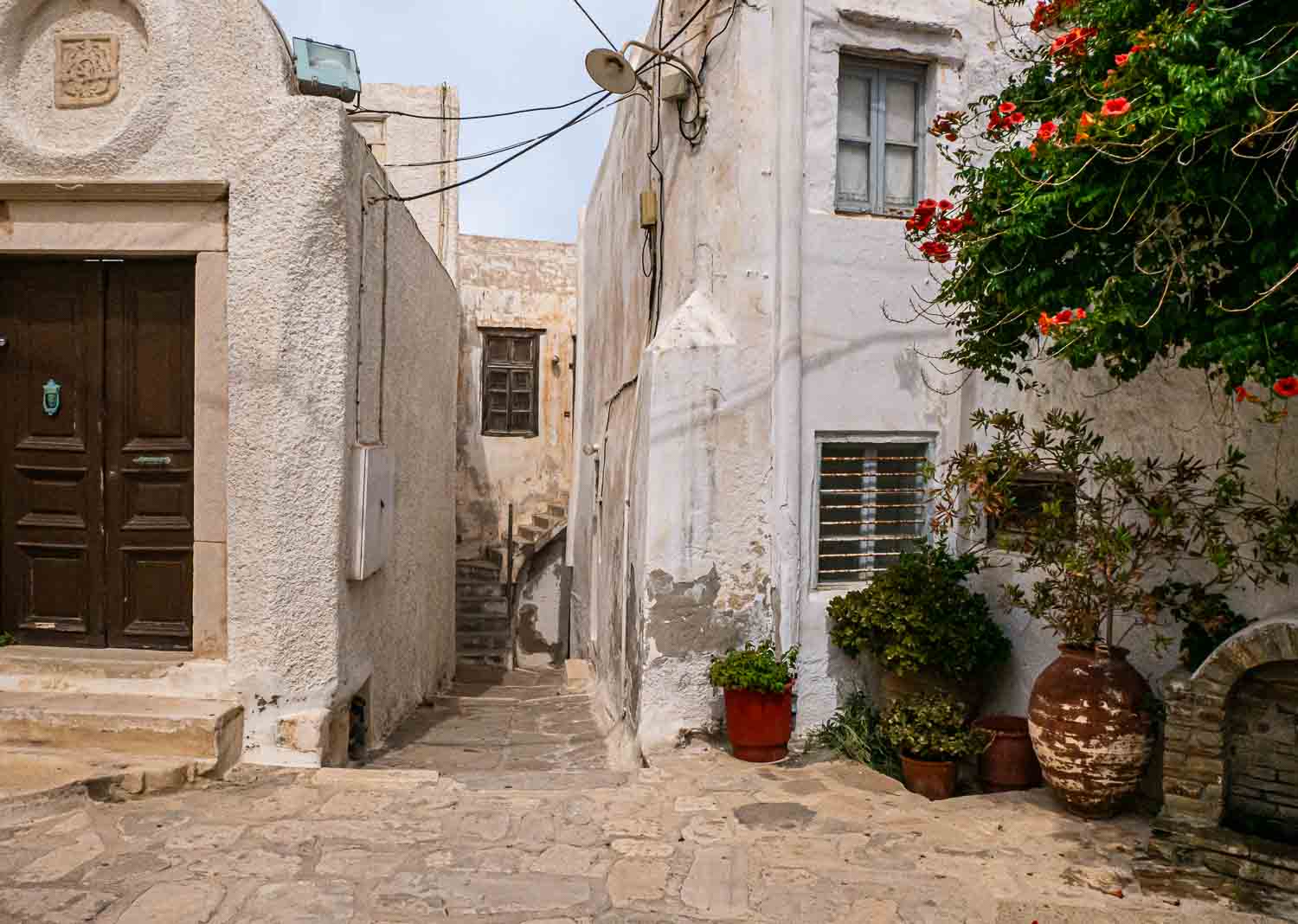
leading to staircases and buildings that still have the patina of lost times.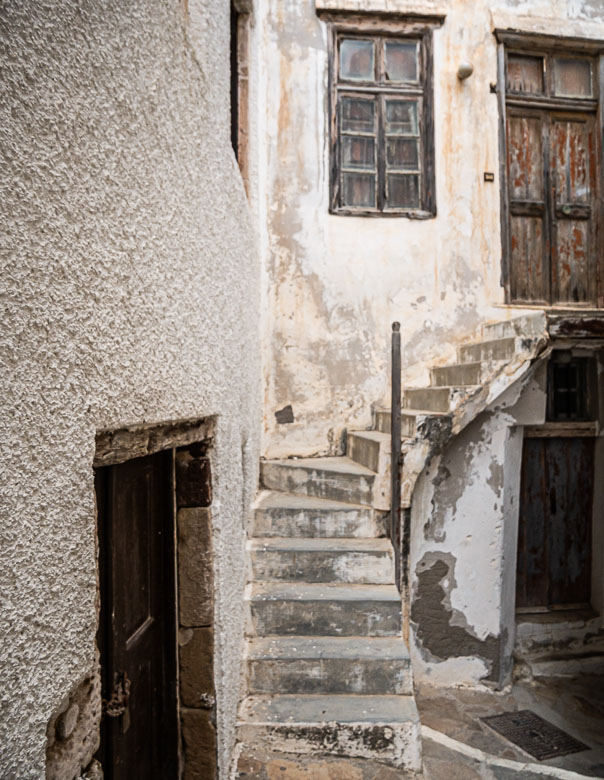
We come to the tower, the only one still standing of the original twelve.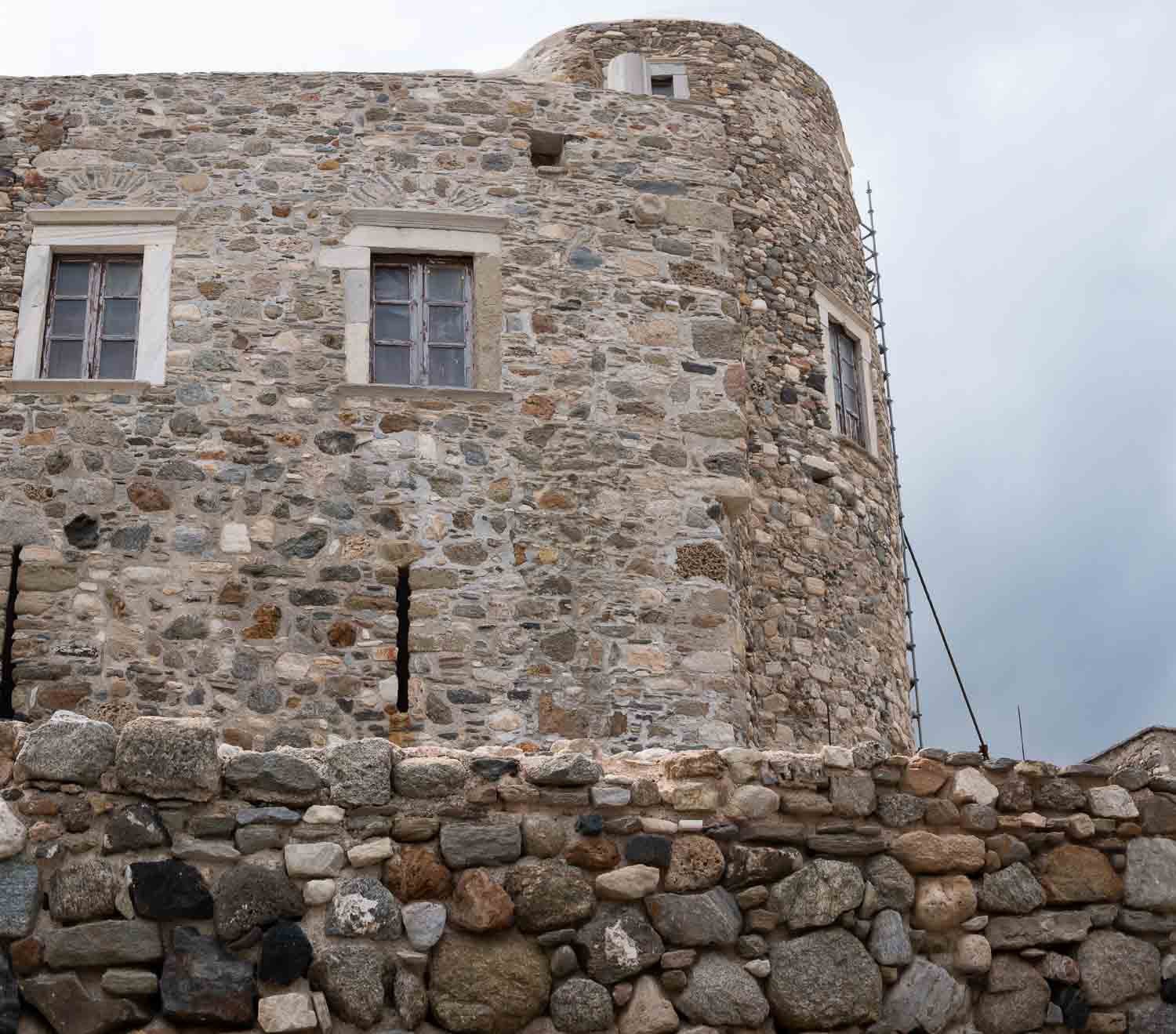
Wealthy Venetians built their mansions around the duke’s palatial tower and some of their coats of arms are still visible, on walls,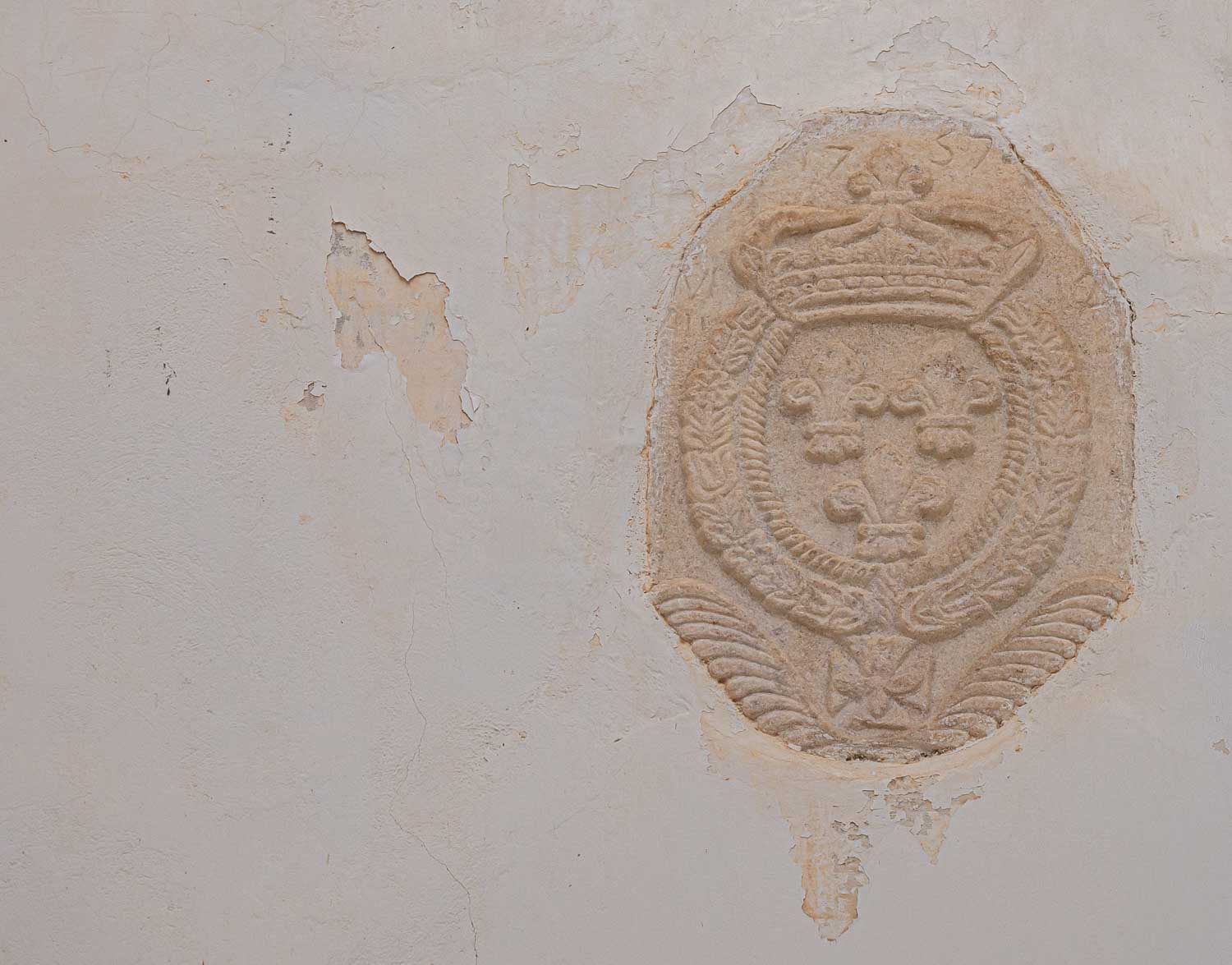
and pavement.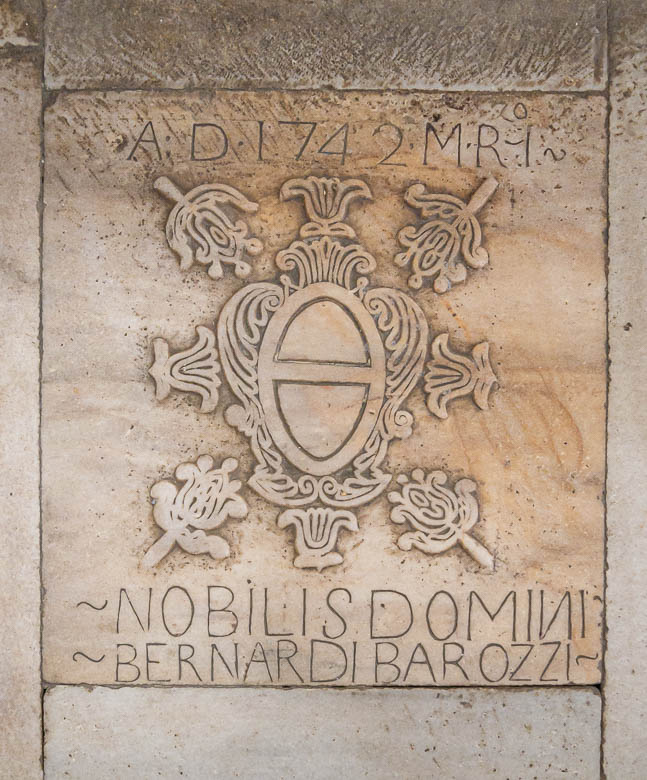
Finally we arrive at the cathedral, and are beckoned into tiny Panagia Theoskepastia at the top of the hill.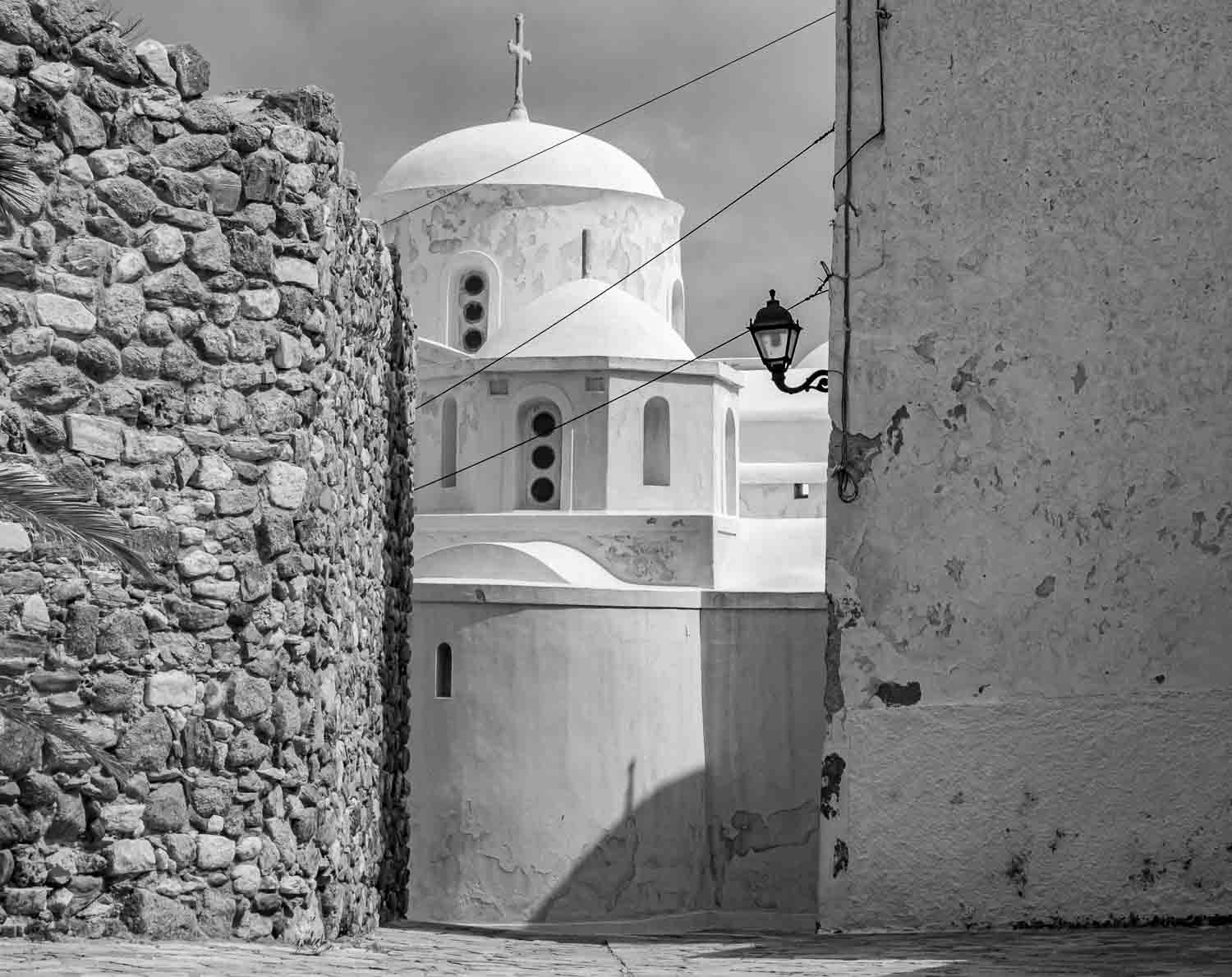
Soon after we find our way back down to the water through the web of steep cobbled alleys, with homes and chapels in amongst the tunnels, archways, and ancient stairwells of the 13th-century Venetian stronghold.
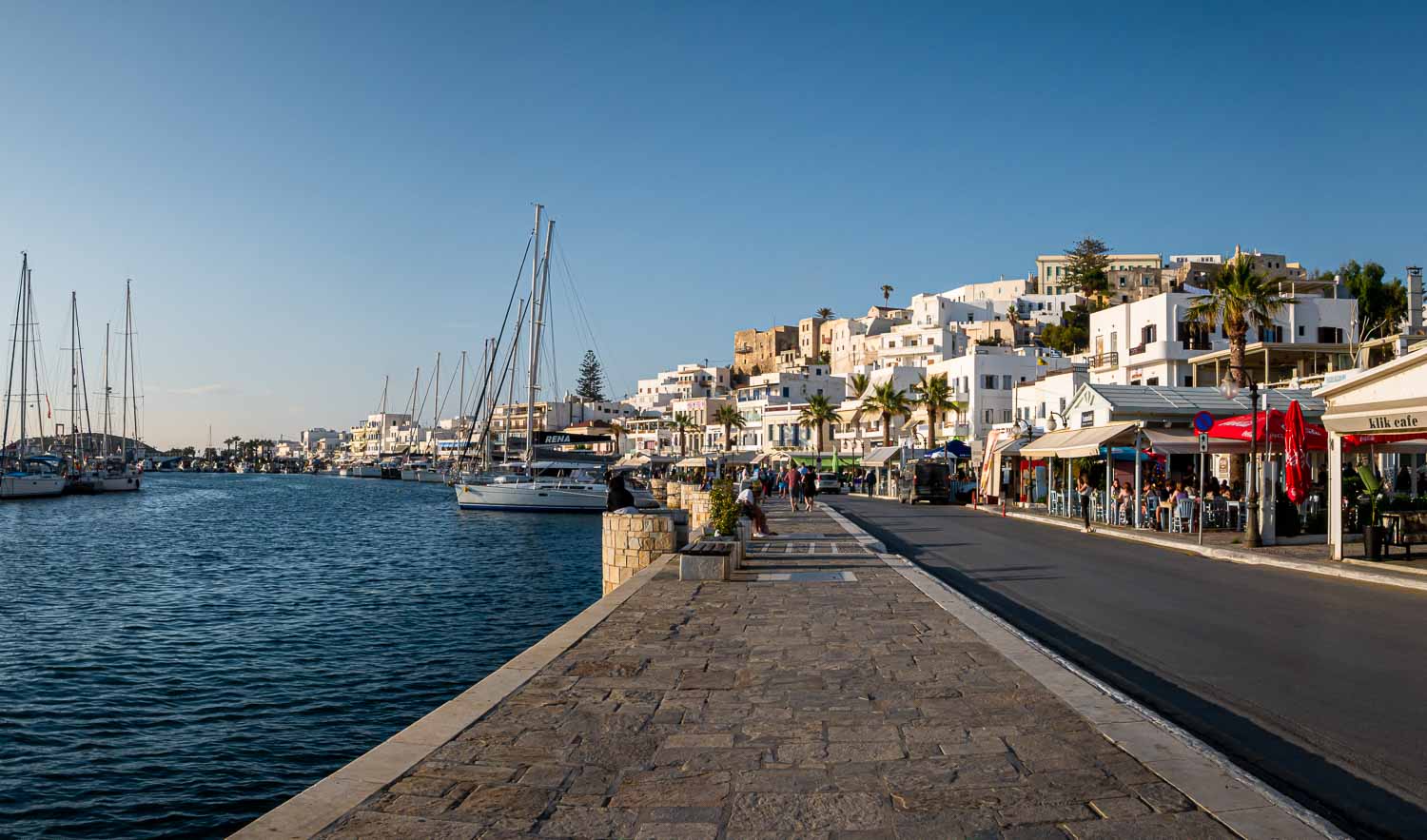
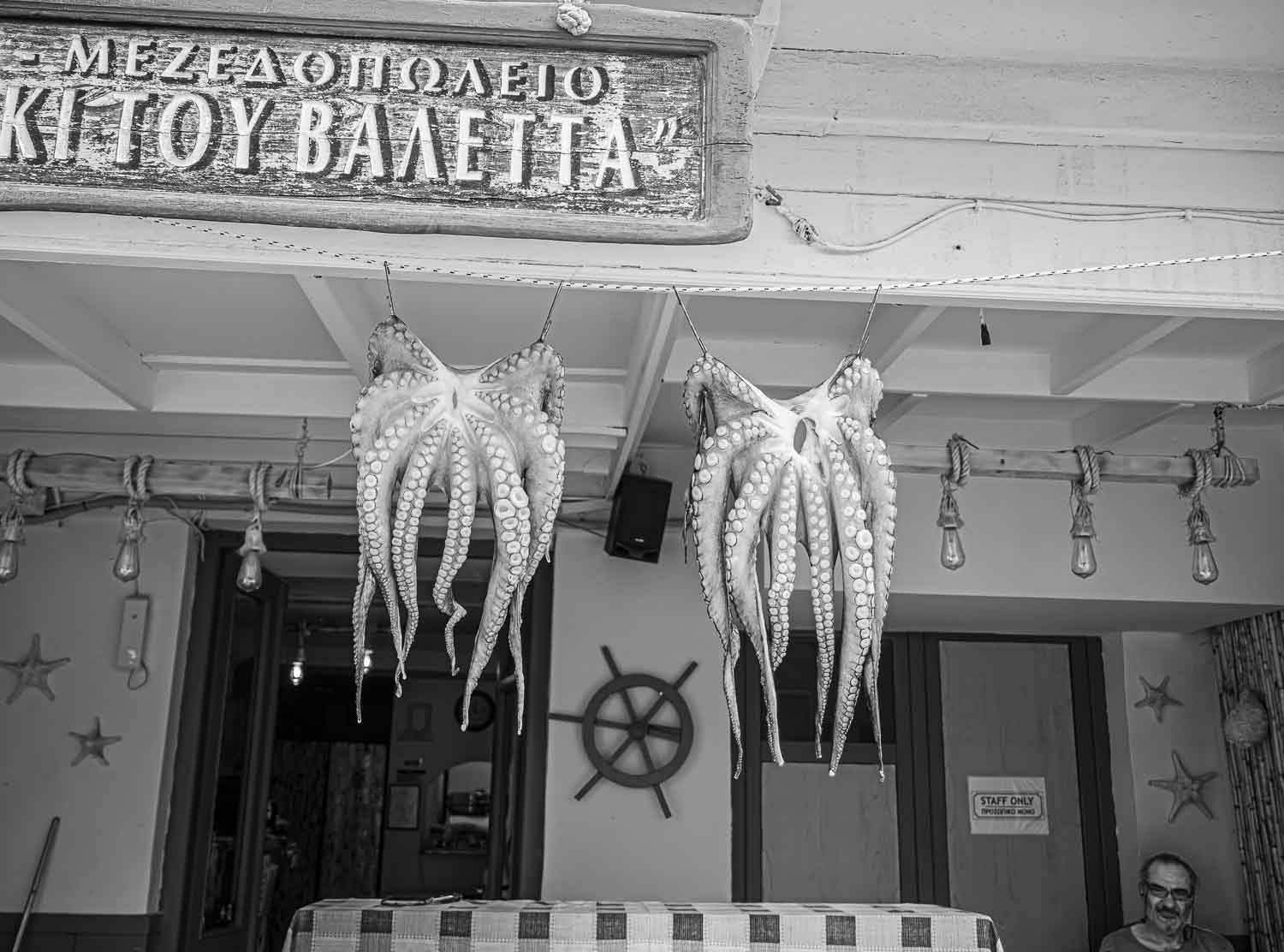
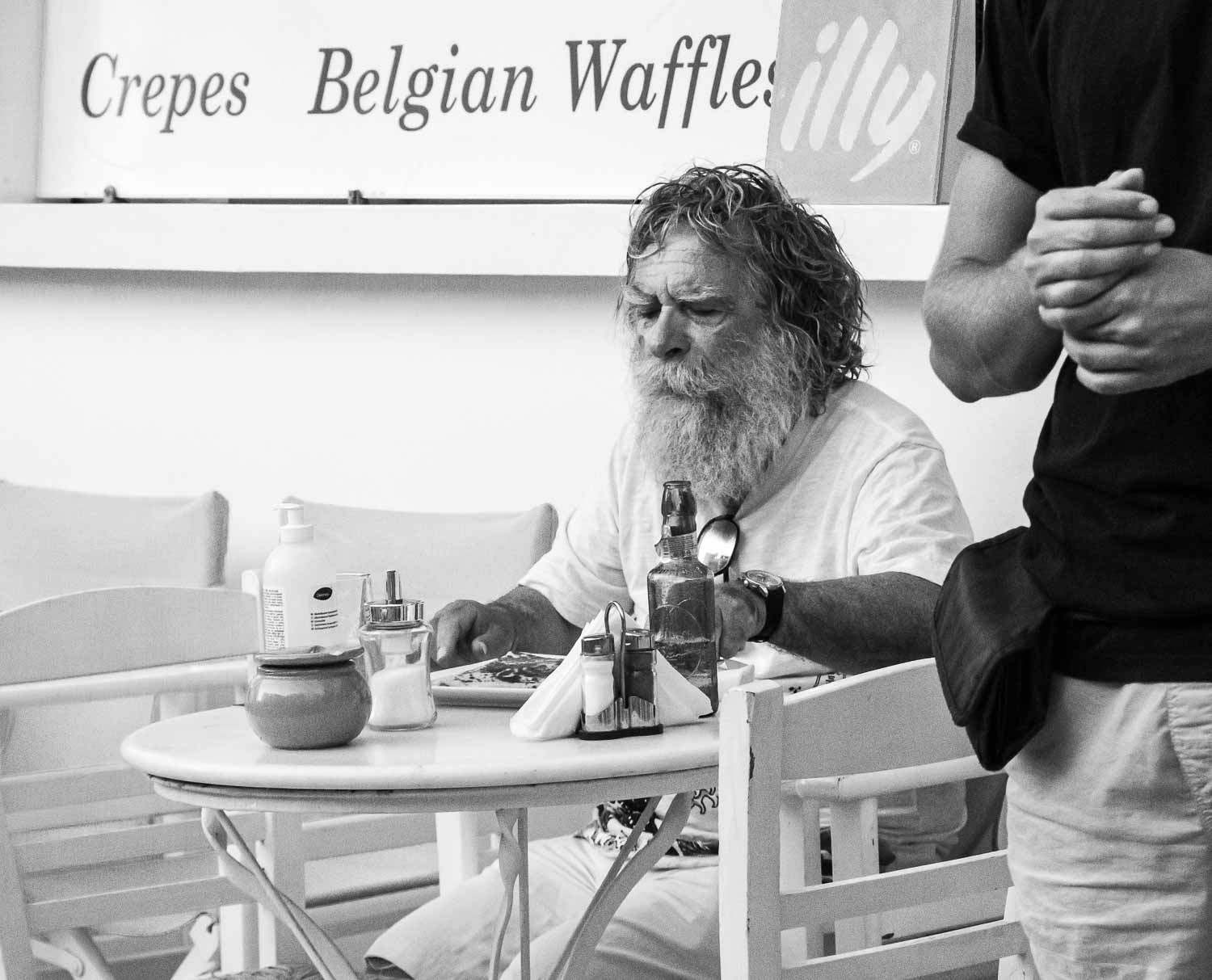
Down at the water there’s an entirely different Naxos Town with a throng of restaurants and tavernas arrayed along the waterfront,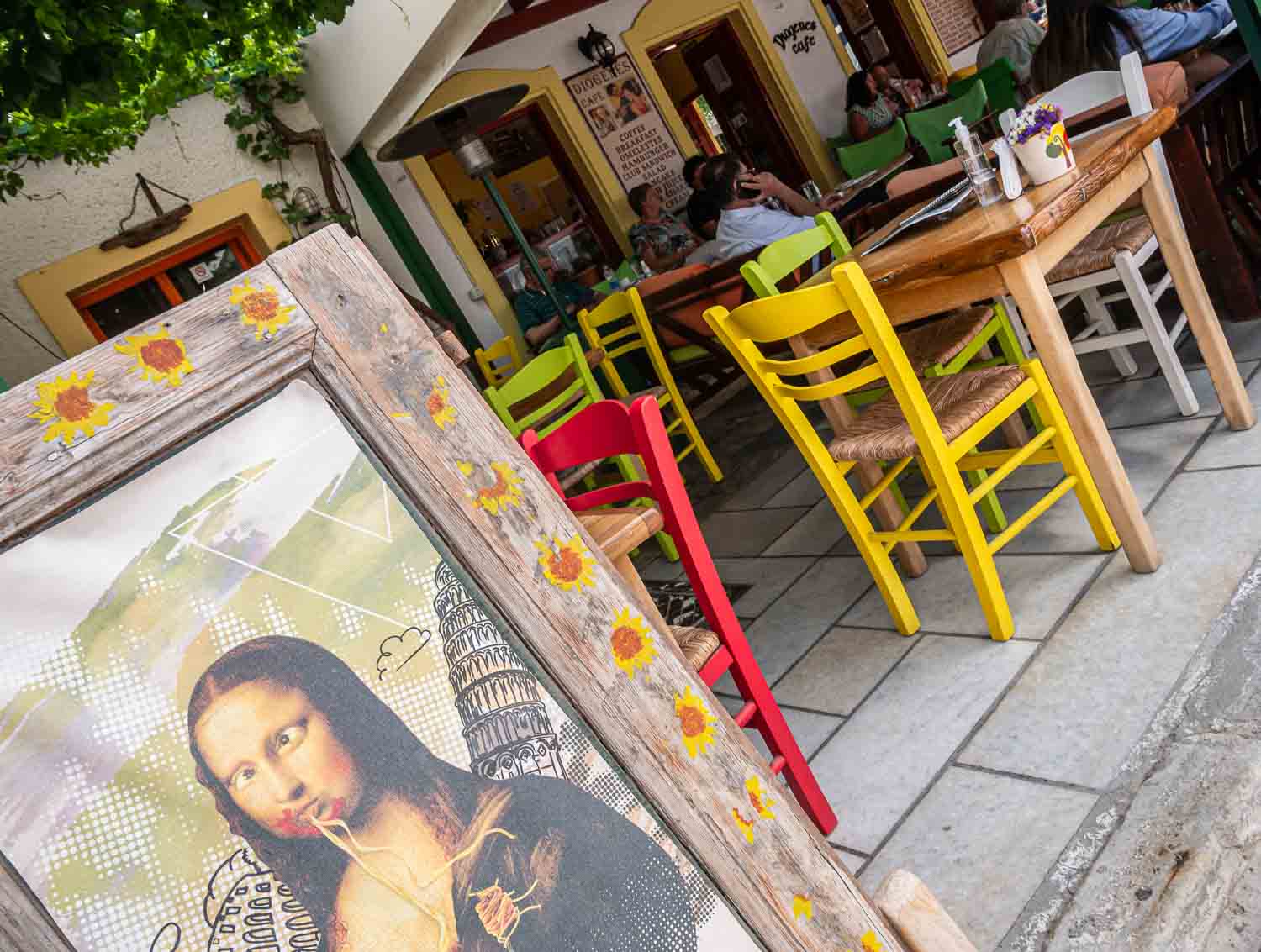
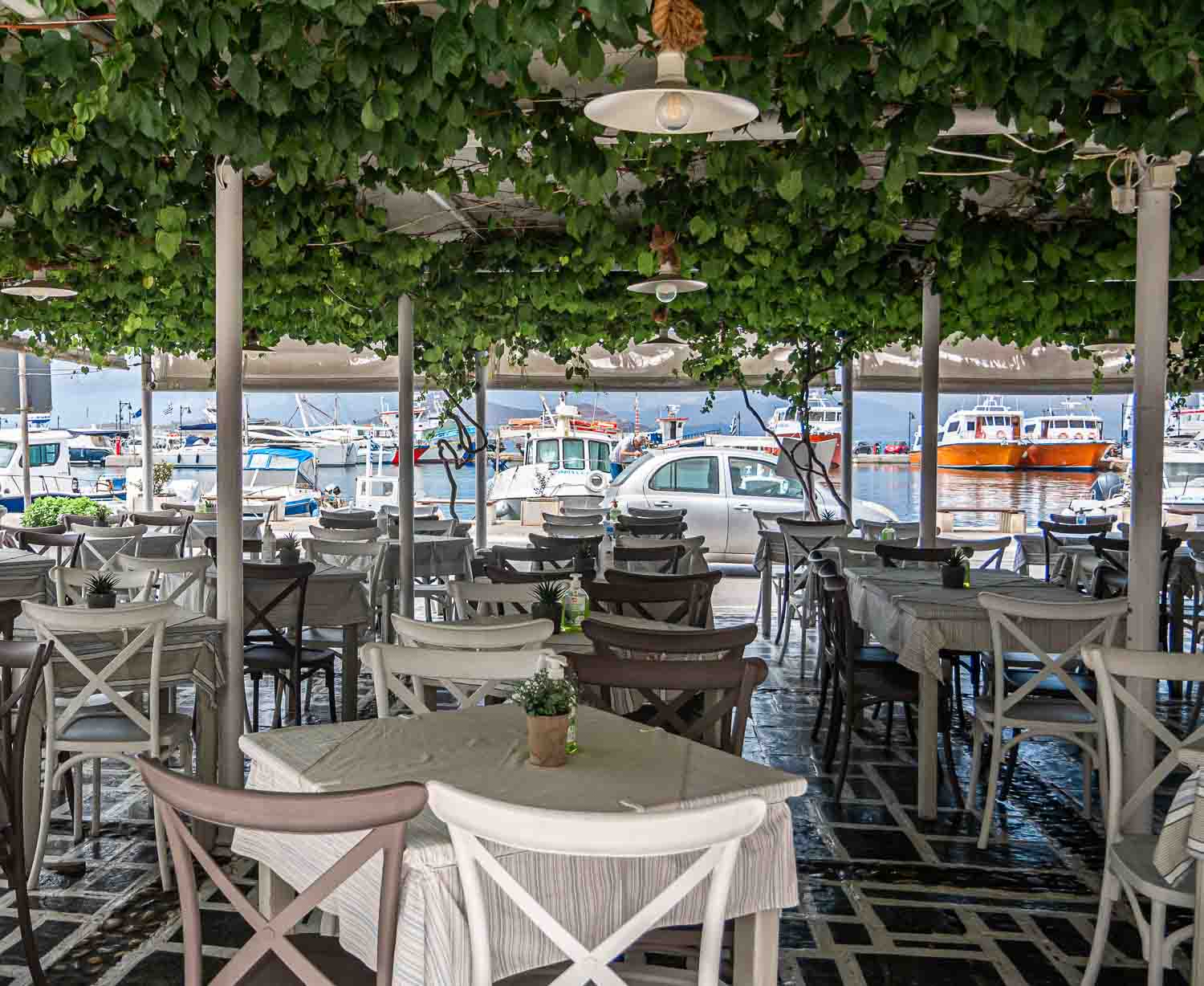
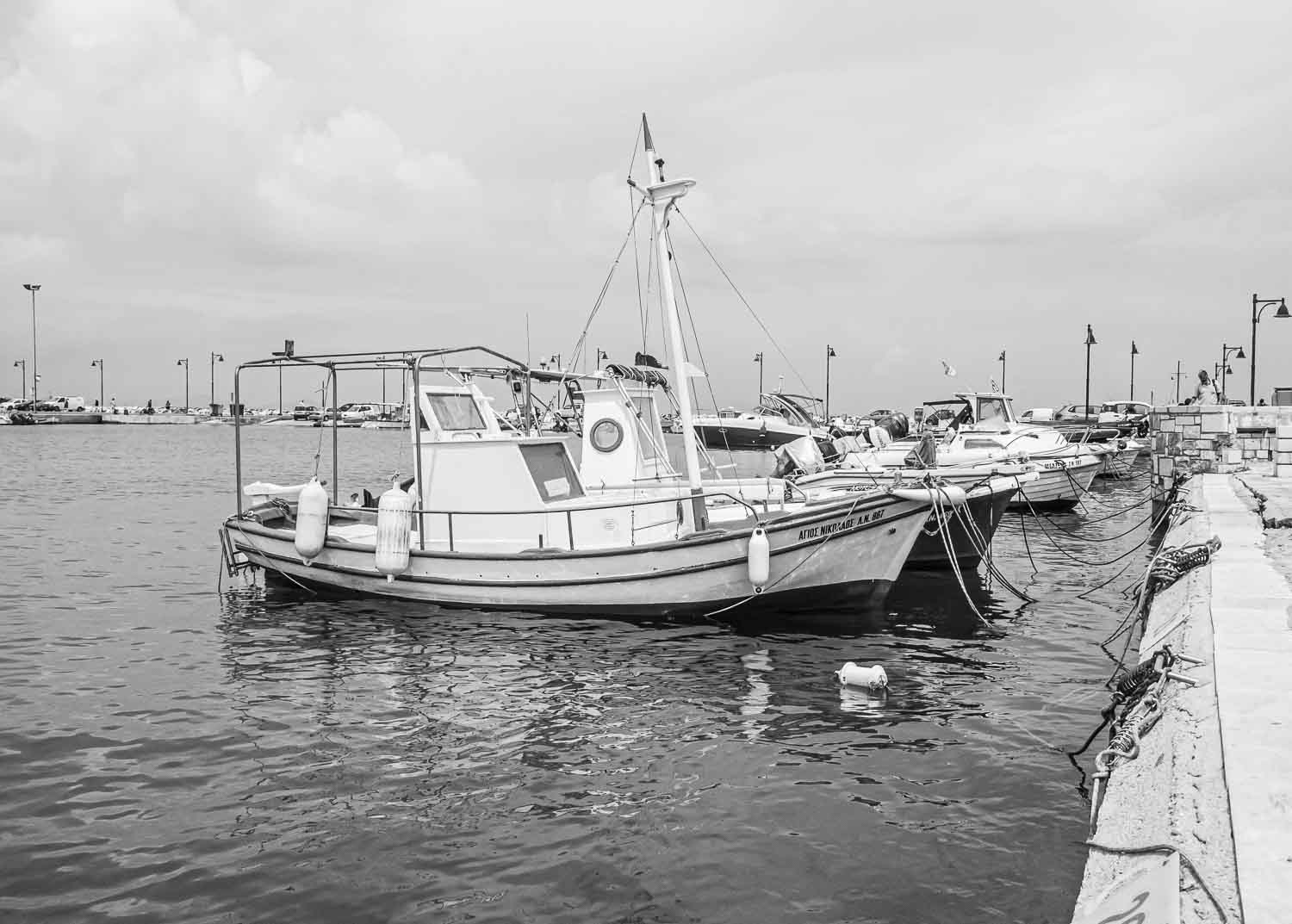
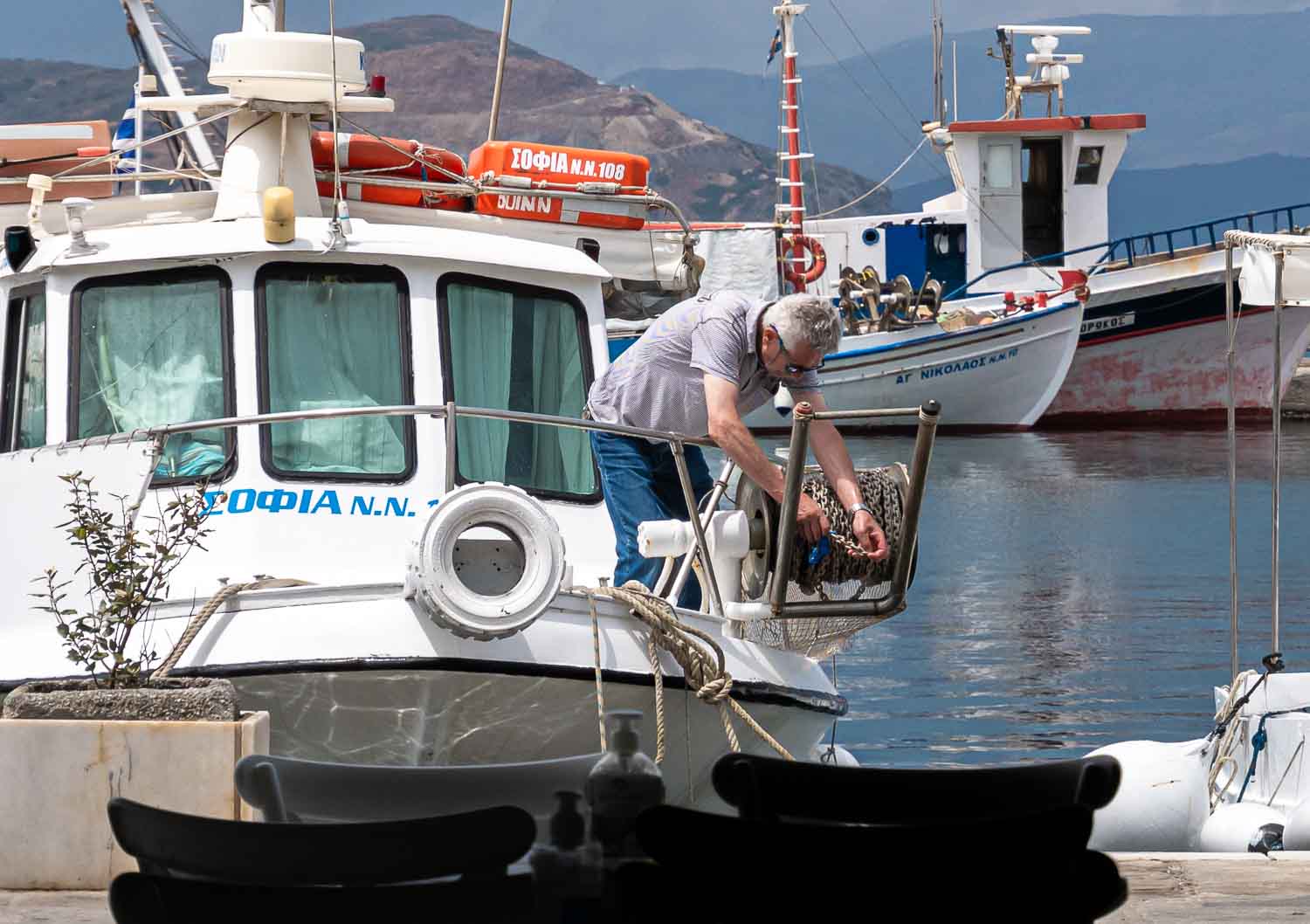
a small fleet of fishing boats,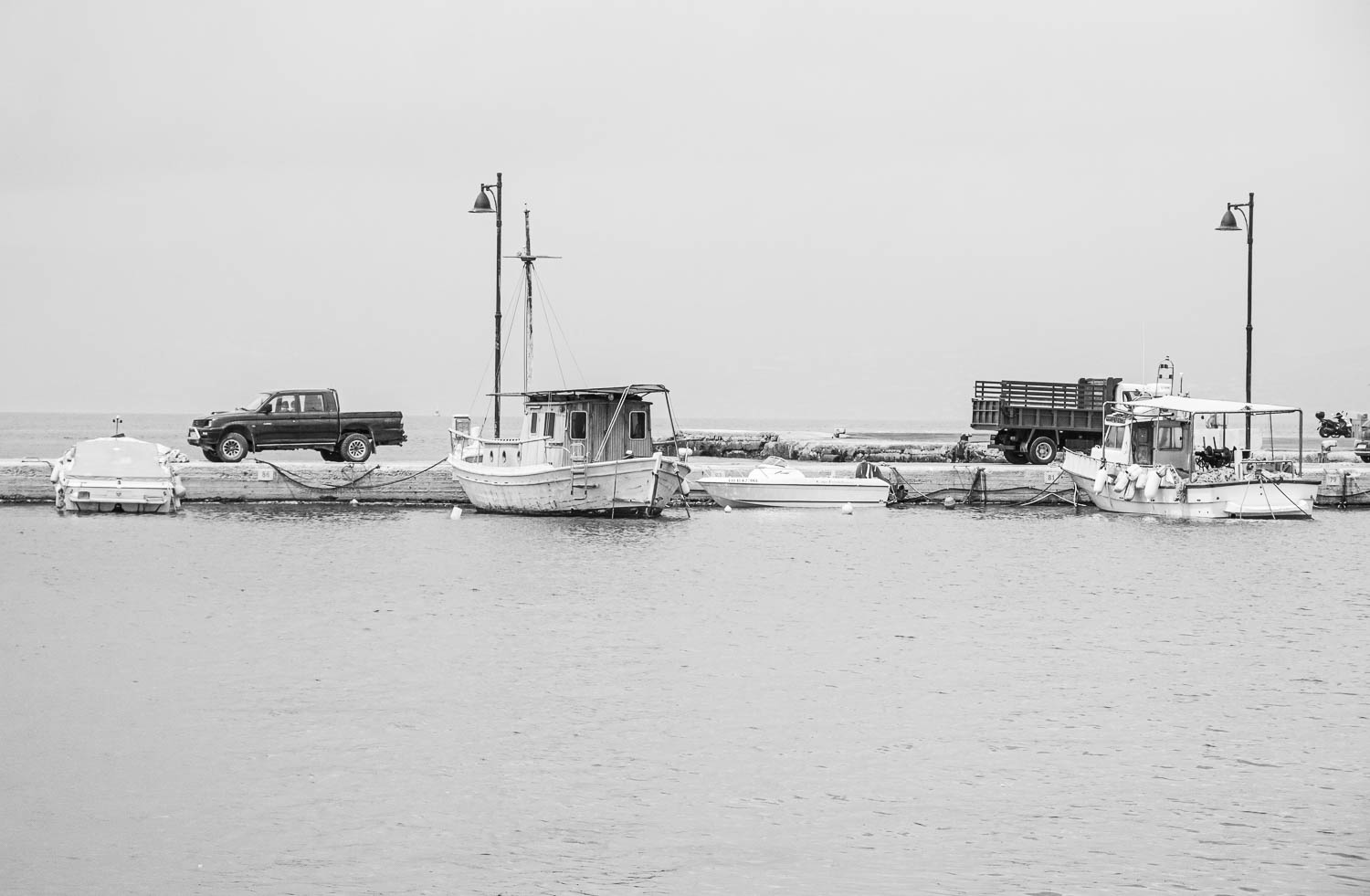
a wide pedestrian thoroughfare on either side of the road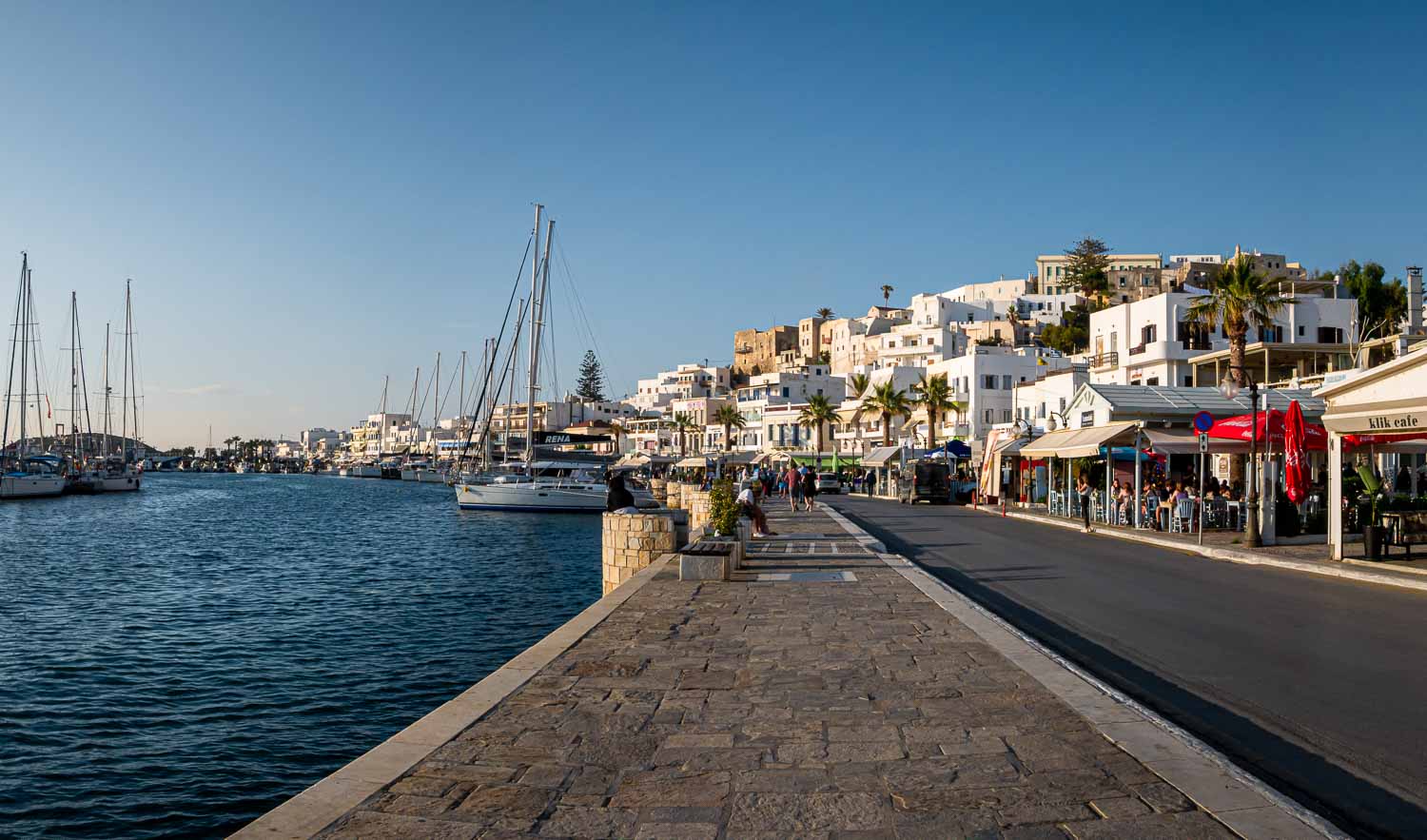
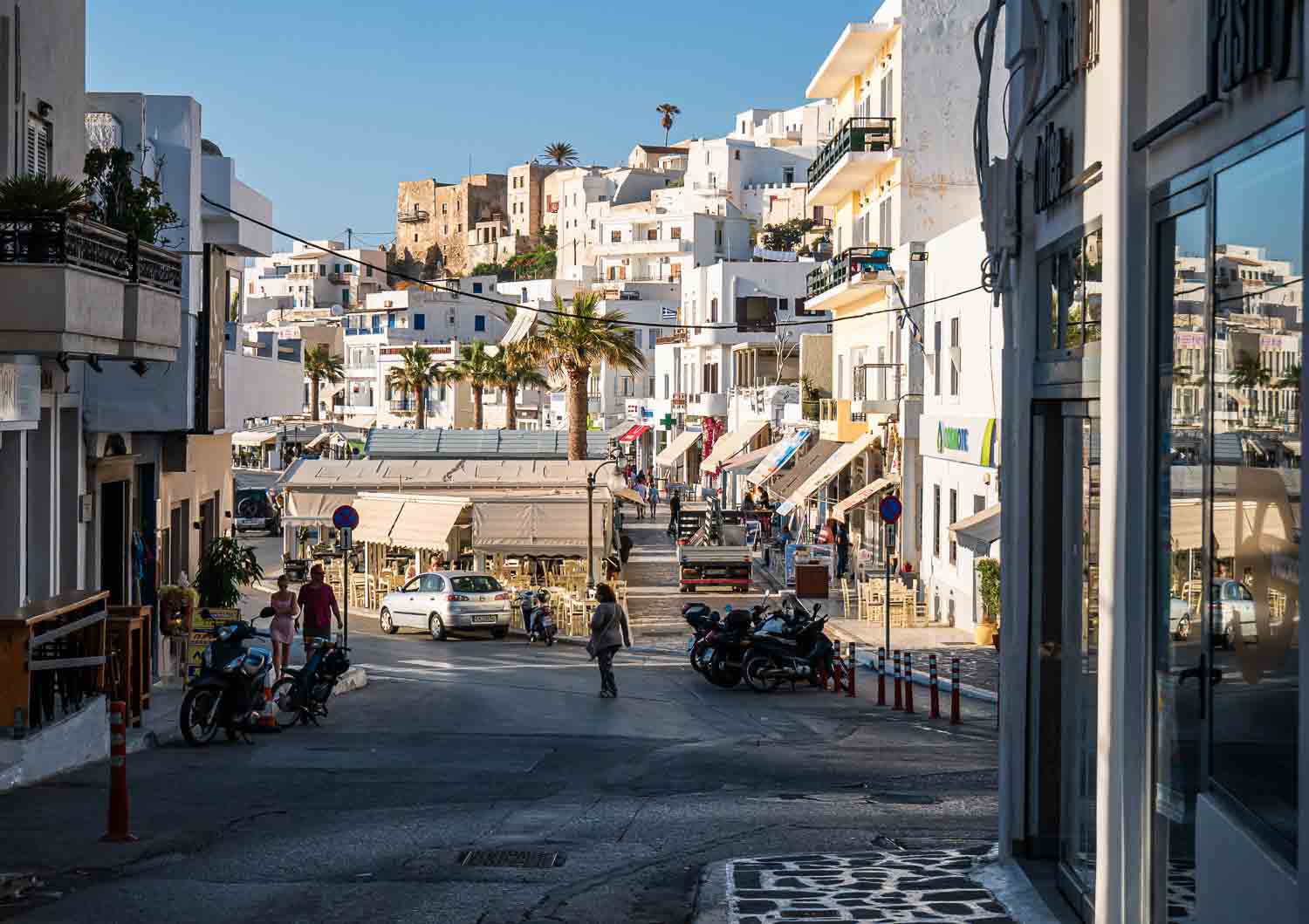
with places to stop and rest,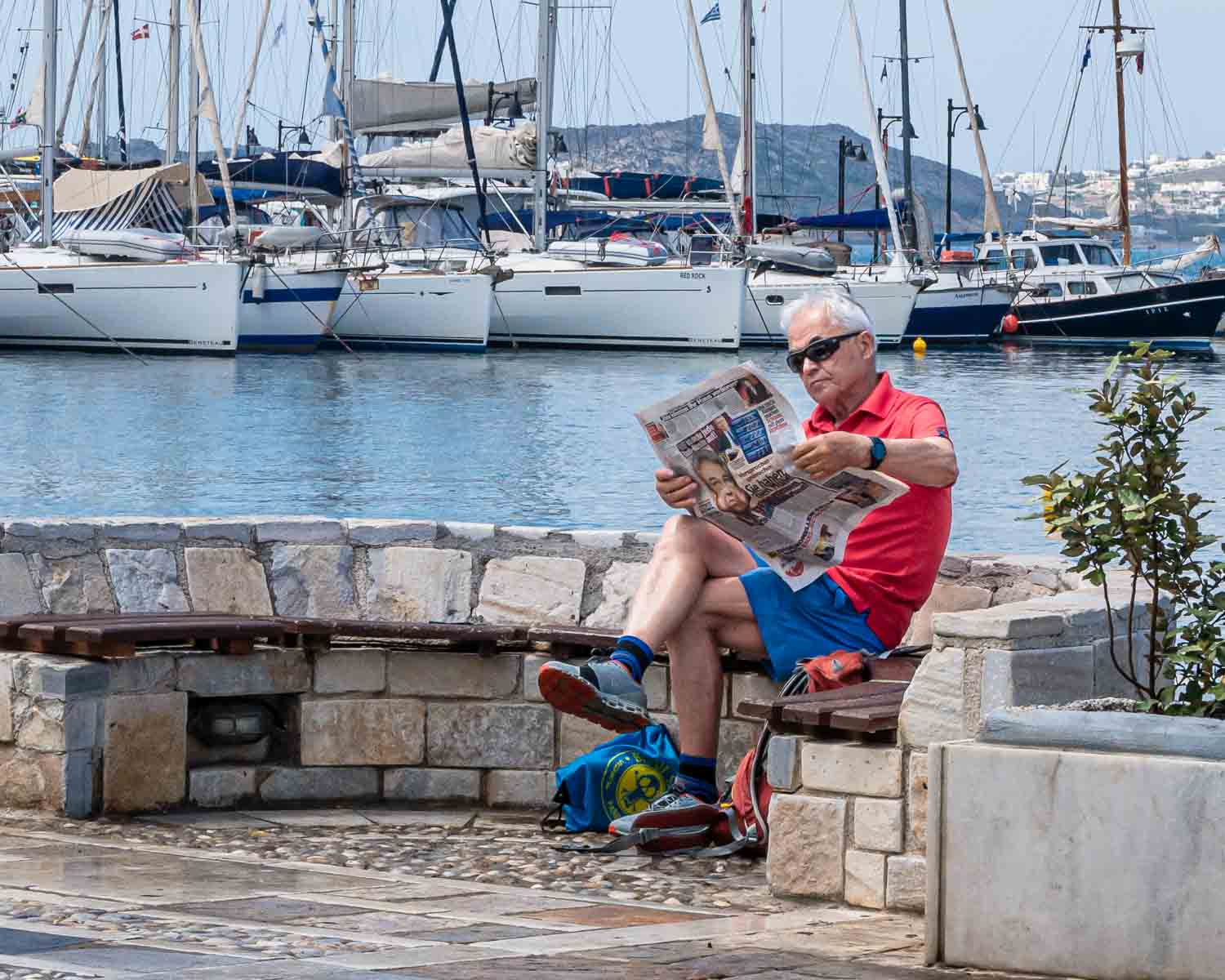
and our favourite ice cream shop.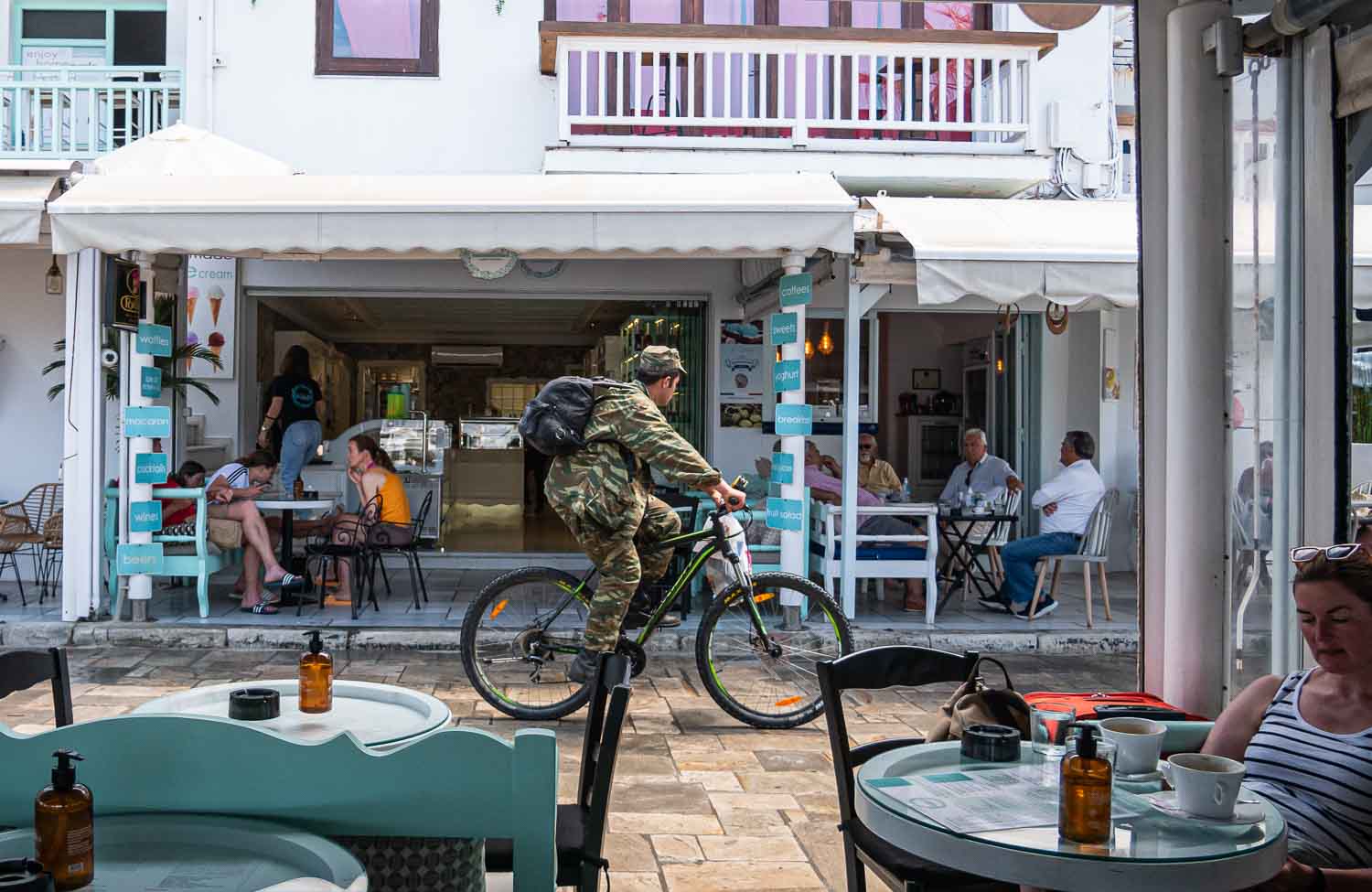
Naxos is the island where we walk a long way from the centre on a busy main road looking (successfully) for a store to buy duct tape to reattach the handle to my case; where we eat an amazing spinach salad with balsamic dressing, pine nuts and cheese, followed by tuna steaks, and another meal of whole grilled calamari and huge Greek salads with thick wedges of feta; where we work our way through the biggest bowls of ice cream we’ve ever seen; where we visit some of the lovely inland villages; and where we spend a couple of days at two of the many beautiful beaches that fringe Naxos, doing what everyone does when visiting the Greek islands – lazing by the water. Homer called Naxos Dia, meaning heavenly, or divine. I have to say I agree.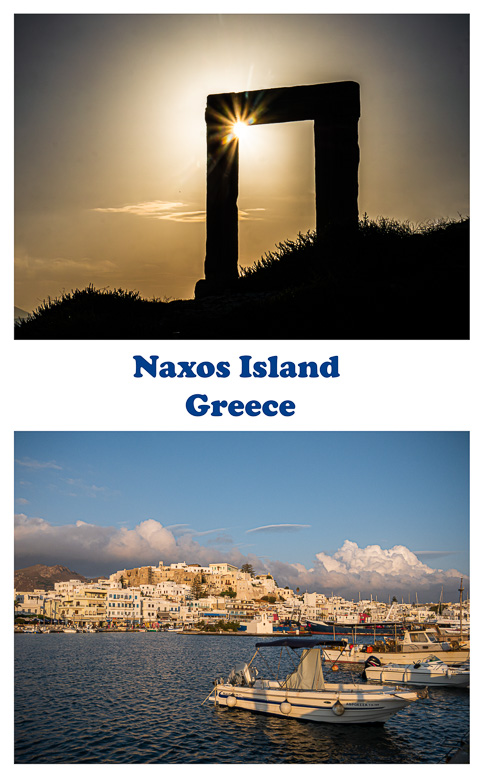
Next post: a day trip visiting some of the inland villages of Naxos.
All words and images by Alison Louise Armstrong unless otherwise noted
© Alison Louise Armstrong and Adventures in Wonderland – a pilgrimage of the heart, 2010-2023.

 Adventures in Wonderland
I loved Naxos! So interesting and beautiful. I’m looking forward to your next edition on the villages and rural parts of the island! I enjoyed the slower pace and fewer tourists. Pat
LikeLiked by 1 person
We also enjoyed Naxos. We chose it in part because of the slower pace there. We figured Mykonos would be just as touristy as Santorini so we passed on that, and we were clear about going to Milos (posts to come!) so Naxos seemed the perfect place to experience a good variety of the Cyclades islands. We had a couple of days at the beach there too that were really lovely .
Alison
LikeLike
Love to see this. We spent quite a bit of time here with the kids. One of their favorite trips.
LikeLiked by 1 person
We really enjoyed it – the slower pace, and laid back energy. Must have been a lovely place for family holidays.
Alison
LikeLike
Naxos looks like the kind of place I would love. That tiny Orthodox church looks very special. fabulous photos once again.
LikeLiked by 1 person
Thanks so much Darlene. Naxos is lovely – pretty relaxed and authentic, but with fabulous beaches.
I’m so glad we decided to go into that little church – it was really serene.
Alison
LikeLiked by 1 person
What a welcoming place Alison. One can actually imagine people of all the gone centuries walking in those lanes. It must be something during the night time still. With lights and lamps on some windows. Thanks for the images, they really brought the old charm here.
LikeLiked by 1 person
Thanks so much Narayan, my pleasure. It’s a really enchanting pace, full of the feeling of centuries.
I do wish now that I’d taken some night photos with the lights shining in the windows!
Alison
LikeLiked by 1 person
Yes Ali, night life must have some old charm to it.
LikeLiked by 1 person
Wow, Naxos looks so charming, even more so than Santorini. I hope word doesn’t get out so it stays that way. I love the story of finding the special chapel. It reminded me of a similar occasion in Charlottetown. Maggie
LikeLiked by 1 person
Naxos is just lovely, and not at all like Santorini. It’s way more authentic. There are plenty of tourists there, but they’re pretty much all at the many beaches, so it doesn’t feel overrun.
And that chapel was such a lucky treat!
Alison
LikeLiked by 1 person
Putting it on the list! Maggie
LikeLiked by 1 person
I enjoyed walking through those narrow bougainvillea filled streets with you. The food sounds so good. Naxos looks refreshingly tourist free. Thank you for taking me along.
LikeLiked by 1 person
Thanks so much Skip, glad you enjoyed it. Naxos is lovely, and it helps that most of the tourists are at the many beaches. The food is fabulous! So much good food is produced there (and exported to the other Cycladic islands) so it’s really fresh.
Alison
LikeLike
I have never been to Greece, but I spent several weeks in Malta, and this post reminds me quite strongly of that trip. It’s too much white city for me to ever want to live there (Malta or Greece) but it does make for fantastic photography. And that chapel – what a find! Those places that are cut off from the bustle of every day life are magical and, in my experience, completely unexpected.
Favorite picture in this post: the one with the purple flowers at the top, the tables under the greenery, and the guy going down the stairs. 🙂
LikeLiked by 1 person
I’ve never been to Malta, but it’s on my list! (Lol everywhere I haven’t been is on my list 😂) If it’s like Greece I’ll probably love it.
That chapel was such a such a piece of serendipity, like a little bit of magic from the universe. I wonder how many people follow his invitation.
You’ve also chosen one of my fave pics. Don’t you just want to follow him down those stairs to see what’s there?
Alison
LikeLike
Oh, heck! Change, of course. My memories of the waterfront doesn’t have a road like that. We sat at a tiny taverna, under a striped awning, and just gazed at the glimmering sea. It was one of the most beautiful places we’d ever been. I was happy to go back with you, Alison, 30+ years on.
LikeLiked by 1 person
Oh I can hardly even imagine what it was like back then! It must have been so beautiful. Still, I’m glad you were happy to go back and see it as it is now, and I think there’s much of it that’s unchanged. I hope so anyway. We enjoyed Naxos – it’s still seemed pretty authentic and laid back. A gently friendly place.
Alison
LikeLiked by 1 person
What a heartwarming story of yet another beautiful corner of Greece! Since I first learned about Naxos (from the inflight magazine of the Greek national carrier that I downloaded online), I have always wanted to go. I’m further convinced to do so by what you said about the island which is the opposite of Santorini that has become very touristy. I can imagine spending a few days, if not an entire week, staying there admiring Portara, the Venetian castle, and the small Greek Orthodox church, as well as trying the food. And you also mentioned about the villages — look forward to your next post!
LikeLiked by 1 person
Thanks Bama. We loved Greece, and would love to go back one day. I hope you get there, it’s really worth a visit, and I’m sure you’d really enjoy Naxos.
We were so lucky to see that little Orthodox church, and of course Kastro and Portara are must-sees.
Alison
LikeLiked by 1 person
Your photos bring across the feeling of being in an ancient place, Alison. What a treat to be waved into the tiny church and find bliss there.
LikeLiked by 1 person
Thanks so much Astrid. All of Europe of course is so ancient – I never tire of it having been raised in Australia and living in Canada. Every time I’m in Europe I go looking for the ancient streets. Same in India actually.
That little Orthodox church was such a treat.
Alison
LikeLike
I admit to being largely ignorant about Greece. I saw a little of it (Corfu and a bit of Athens) 40 some years ago, but didn’t get the experience you’re showing here. On your wandering up and down the hill, did you have an actual route to follow, or were you just going generally up or down and letting fate and twisting side streets decide?
LikeLiked by 1 person
I also was largely ignorant about Greece. Still am 😂 but at least now I’ve seen a little of it.
We didn’t have a route, letting fate carry us. We knew if we kept climbing we’d get there eventually. And of course on the way down the water was always an indicator.
Alison
LikeLiked by 1 person
We didn’t make it to Naxos but it looks lovely. Thanks for sharing so much beauty!
LikeLiked by 1 person
My pleasure. Naxos is definitely lovely; Greece is so fabulous, I wish we could have seen more of it.
Alison
LikeLike
Rushing to read as I get ready for a trip of our own tomorrow, but so glad I paused to soak in more of Greece and Greeks! The history and current charm are just a killer combo. Love it all.
LikeLiked by 1 person
We *loved* Greece, everywhere we went. Athens was a bit of a shock – we were pretty travel weary and needed a break, but still enjoyed so much there, and then all the islands were just so fabulous.
Thank you for checking this out when you’re so busy! Where are you off to? Wherever it is have a fabulous time.
Alison
LikeLiked by 1 person
Dolomites for nine days – hiking with J and some friends! 🙂
LikeLiked by 1 person
Wow, admit to being a little envious. Enjoy!
A.
LikeLike
I’m so glad you enjoyed your visit to Naxos Island, Greece. I read your article and I was captivated by your descriptions and photos of this beautiful place. You have shown me a side of Naxos that I didn’t know existed, and I appreciate your insights and observations.
LikeLiked by 1 person
Thank you so much Supraja, I’m glad you enjoyed my post. Most visitors to Naxos only go to the beaches and we wanted to see more of it than that. We did also go to the beaches of course! We loved Greece very much and I hope to go back one day.
Alison
LikeLike
Fascinating, beautiful and enticing. Your photography is excellent, Alison. We’ve never been to Greece and I’m wondering why! 🙂
LikeLiked by 1 person
Thank you so much Jane. I can definitely recommend Greece. We loved it. It makes a very short list of countries we’d like to return to.
Alison
LikeLiked by 1 person
Before I went to Greece, I had this impression that it was like the Caribbean with lots of cruise ships and party resorts. Of course, it is much different, with the ancient culture, history and the beauty of the villages. I think your man from Sparta is a great reminder of how much history is there.
My wife and I have said that if visas or jobs were no issue and you could live anywhere, we’d pick the Greek Isles. It is just so awesome there. And we’ll have to check out Naxos when we are there. Great photos and great post!
LikeLiked by 1 person
Hey Jeff, nice to hear from you! Thanks so much, glad you enjoyed the post.
We absolutely loved Greece and would love to go back. One of the reasons Naxos retains its charm I think is that there is no cruise port there. And yeah, the history – millennia of stories to unpack in Greece and of course we barely scratched the surface.
Are you blogging at all these days? I have a look now and then and there’s nothing new 🙁
Alison
LikeLike
Wow, the sunrise through the portal!! The artwork in the small church is also breathtaking. And so well preserved.
LikeLiked by 1 person
I just love that the caretaker of that church beckons people in. It’s so beautiful and serene.
Ah, it was sunset not sunrise. I’m not a sunrise person though often I wish I was 🙁
Alison
LikeLiked by 1 person
I thought I remembered that you were an early rise to go out to explore a place, but sunset is good too!
LikeLiked by 1 person
This is charming as all heck!
LikeLiked by 1 person
Thanks Susan. Isn’t it all just delightful!
Alison
LikeLike