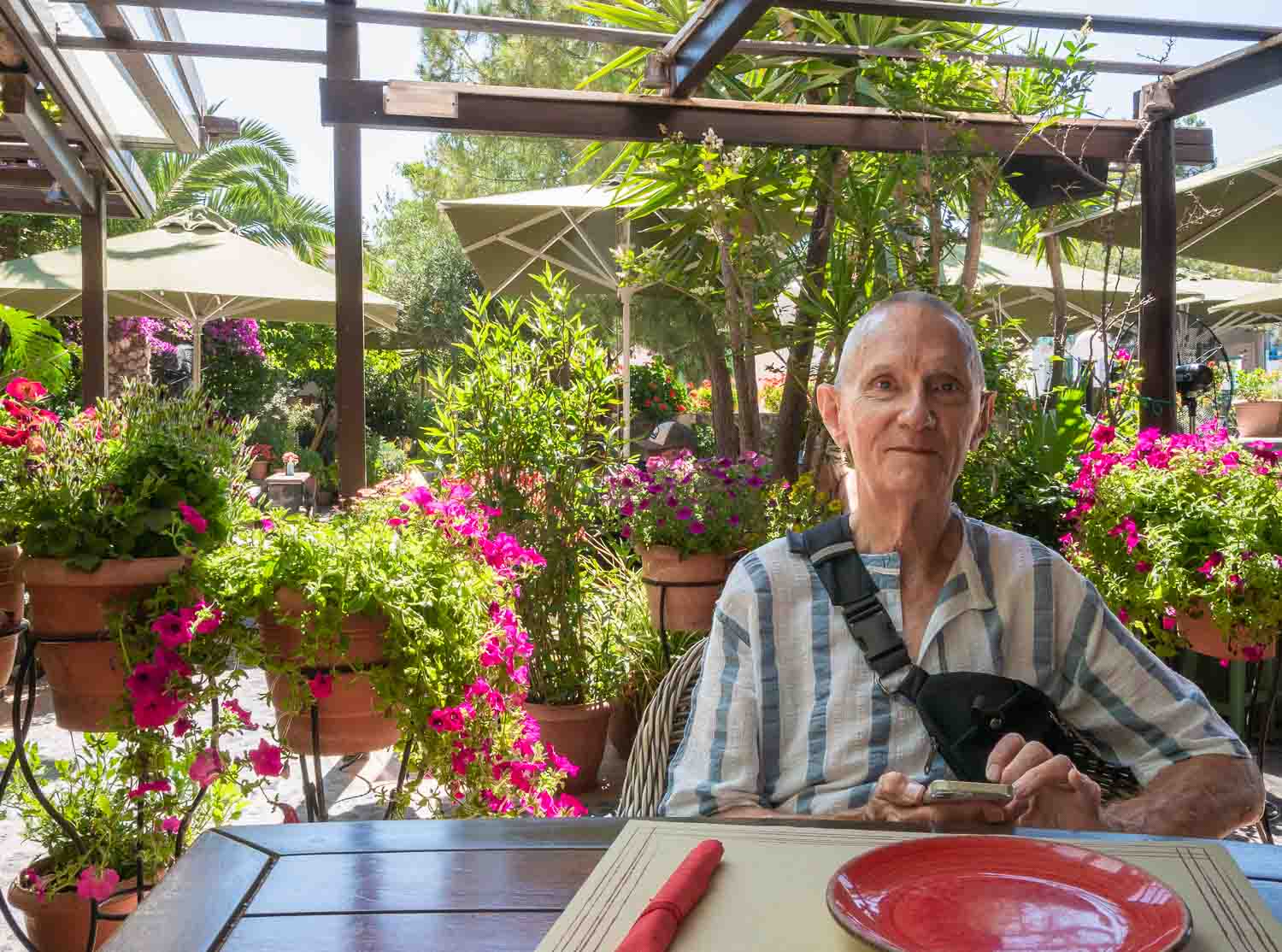
From Alison:
I hear his troubled voice over the phone. I can’t get the door open.
He’s supposed to be picking me up from the Skytrain station and he’s half an hour late so I call.
Where are you?
I’m still at home. I can’t get the door open.
It’s late. It’s dark. There are not many people around, but a bus has arrived. I know if I don’t get on it there won’t be another for at least half an hour. So I tell Don that I’ll come home on the bus.
When I arrive some twenty minutes later he’s standing forlorn out the front of our building. I think he can’t get in, but yes, as I arrive he opens the door. So weird. Why is he waiting outside? And what door can he not get open?
Inside our apartment he collapses on a seat. He says more rambling weird things including that he’d walked round and round the car trying to get in and couldn’t get the door open. By this time I’m getting worried. I’ve never seen him like this. But he can tell me his name, and he can tell me my name, his eyes follow my finger as I move it back and forth, and he has no paralysis. Plus he couldn’t be having a stroke because he’s on a blood thinner. Or so I thought. He’s absolutely exhausted so I put him to bed, hoping the mental confusion will be gone by the morning.
He’s so confused he can’t figure out how to unlock the car? In retrospect I understand this is a huge blessing.
He’s worse in the morning, makes it from the bed to the table and collapses with his head on his arms. I call an ambulance. Every now and then I ask him his name and he just looks at me bewildered, but sometimes he can figure it out. Every now and then I check for hemiplegic paralysis, the most obvious sign of a stroke, and he has none.
The ambulance takes two hours to come.
The paramedics do similar tests, and more, and ask me a lot of questions. Then we walk down the hall, they assist Don down the stairs and onto the stretcher, into the ambulance, and off we go.
At the hospital the paramedics check him in, and we are then shunted into an extremely busy emergency waiting room. It is almost eight hours later that Don gets to the top of the queue and is seen by a doctor. Eight hours. Even as I write this three weeks later I am still both enraged and incredulous at the triage he was given. Why was he not treated as an emergency? Why was he not seen before someone who was treated for a non-life-threatening soft tissue injury? His chart said “acute mental confusion”. Was that not enough to raise some red flags?
As I sit with him during those eight hours, every now and then I ask him his name. He responds with a blank stare. Or a deep frown. I ask if he understands the question. Sometimes he shakes his head, sometimes answers no. Mostly he just stares. He tries to speak but can’t make the connection between his jumbled thoughts and his mouth; that part of his brain is not working. His eyes are vacant. It’s clear as we wait that his mental confusion is growing worse and worse.
Finally a doctor. Blood tests. CT scan. Admittance. The doctor tells me what I already know: It’s bad news I’m afraid. There’s a large mass in his brain indicating a bleed. I tell the doctor he has a Do Not Resuscitate order in place. Don and I have talked about this. No heroic measures please.
At midnight I get a taxi home. Exhausted. Desperate. Sobbing. I’ve lost him. I’ve lost him.
I barely sleep more than two hours. I clean the apartment. I tell myself that I’m still alive so I must keep on living.
Next morning in the hospital a miracle! His eyes are alive. He knows who I am, who he is, where he is. He can speak! He’s back!
He’s in hospital for eight days, and every day he’s a little brighter, a little stronger. After an MRI scan indicating many minor brain bleeds in the past, plus this big one, on the ninth day, May 27th, I bring him home. And every day since then he has improved. Initially, for the first three or four days, he slept almost twenty hours a day. Now there are days you’d never know anything had happened, at least from the outside. Except that it did. And everything is different.
Don has heart arrhythmia. He’s been on a blood thinner for years to prevent blood from pooling in his heart and sending a blood clot to his brain. He can no longer take the blood thinner because of the brain bleeds, so now he’s at risk for a different kind of stroke. Also the neurologist told him that he’s now at risk for a seizure any time in the next two years. He’ll soon be 81. He may live weeks or months or years.
We are living on a knife edge. Well we all are, all the time, but it’s really being brought home to us now. We are being called upon to let go. Over and over and over. Every day we die into gratitude for this reprieve we have been given, and into humility for any idea we ever had that we are in control. Every day I’m grateful for the time we’ve had together, and the time we have now, for our love, for this lucky life.
It’s different for Don of course. He’s highly intelligent, has a doctorate in, ironically, neuropsychology. At the hospital he was invited to study his CT scan with the neurologist, who treated him more as a colleague than a patient. It’s extraordinary what he remembers. And what he forgets. It’s a whole new world for him, and it is taking some adjustment. But I’ll let him tell you about it. How wonderful that he can!
From Don:
Initially I had no clue that there was anything wrong with me: when you just can’t think you just can’t think! I didn’t understand why I was having such difficulties. It was only as I began to get “better” in the hospital that I came to realize my profound losses: in particular, familiar words wouldn’t come to mind when they were needed; sometimes I’d think of three of the four things I needed to remember, but forget the fourth, and the most critical, thing; sometimes I just couldn’t think at all. I began to feel “stupid” in ways I’d never felt before, even though Alison kept telling me how much better I was doing in the days following the brain injury. I had no idea how much I’d lost until I’d lost it. As Forrest Gump’s mother would say “Stupid is as stupid does.”
It was a profoundly disturbing awakening: I’m not stupid, I’m just nothing like as smart as I was, and that is very upsetting in ways I can only try to explain: it’s as if I have no reserve capacity to deal with the unexpected events of life, no reserve capacity to draw upon when things go sideways. So I always feel on edge, because things can turn out in unexpected ways at any time, and then what will I do? This is the knife edge. I didn’t realize until I lost it how much I felt that my intelligence helped keep me safe, and so I feel vulnerable in a way I never have before.
Alison, of course, is my reserve capacity, for which I am deeply grateful, but it’s just not the same because she may not be thinking along the same lines as I was trying to. She steps in to try to be competent for me, but that’s not the same as being competent for myself. Having said that, I now have a deeper appreciation of what a gift Alison is, and continues to be; I had not, before this event, truly understood her depth of feeling, her profound intuition, and the depth of her love for me. What a gift.
In addition to Alison, I have felt overwhelmed by all the offers of love, help, and appreciation from friends and family. There have been offers of non-medical healing modalities such as Reiki, mushroom powder for energy, and shamanic drumming, to help restore my mental and physical strength. I’m learning to let others help, for how can I possibly know what will work? I had no idea how much my proximity to death would affect friends and family. It’s like they all got it: say how you feel now because you might not get the chance later. Lucky me.
In the metaphysical world there’s a saying to Die before you die. This is meant to convey the idea of the dropping away of the ego and of the identification with form. It feels as if I am being impelled into this kind of letting go; Alison said this in different words: for the time we have now, for our love, for this lucky life, but that is the essence of how I feel too. Eventually of course we will all have to let go of everything. I’m grateful that, so far anyway, I get to do this gradually.
Because I’ve had a brain bleed I can’t take a blood thinner any more, so how to avoid the risk of a stroke? Turns out I may be a candidate for a Watchman Device (not for the squeamish!) that avoids having to take a blood thinner, but it does involve surgery. I’ll be consulting both the hospital neurologist who told me about it, and my cardiologist, as to the potential risks and rewards.
In the meantime I have to undergo a sleep apnea test at the request of the hospital neurologist, who is concerned that my blood pressure might be spiking while I’m sleeping. I’ll also be undergoing a follow-up MRI scan at the hospital in about five weeks to make sure that the brain bleed has fully resolved. I didn’t ask what they would do if it hasn’t. One thing at a time!
From Alison:
Somehow between the two of us we muddle along. I’m learning slowly that I must makes notes of every conversation Don has with each of his numerous doctors so we can somehow have competent conversations about it. Don is better at note-taking than I am; a lifetime of medical-legal work is deeply ingrained.
In the meantime life continues, in a quiet mundane way. For ordinary daily things Don is quite competent – making his breakfasts and lunches, taking out the garbage, doing the dishes, going for short walks (we’re working on building his stamina back up), visiting with friends, and most importantly having thoughtful conversations about his difficulties and mine. This last, for me is the most important thing, and the greatest gift. I knew it before, but now I really know it. Two things that sustain me: walks in the forest, and quiet conversations with Don.
I decided to write this post because anything else would be a lie. I can’t make any other blog posts without addressing this first. I can’t continue writing about our travels as if our life is just ticking nicely along in the same way it always has. The only ticking I hear now is time.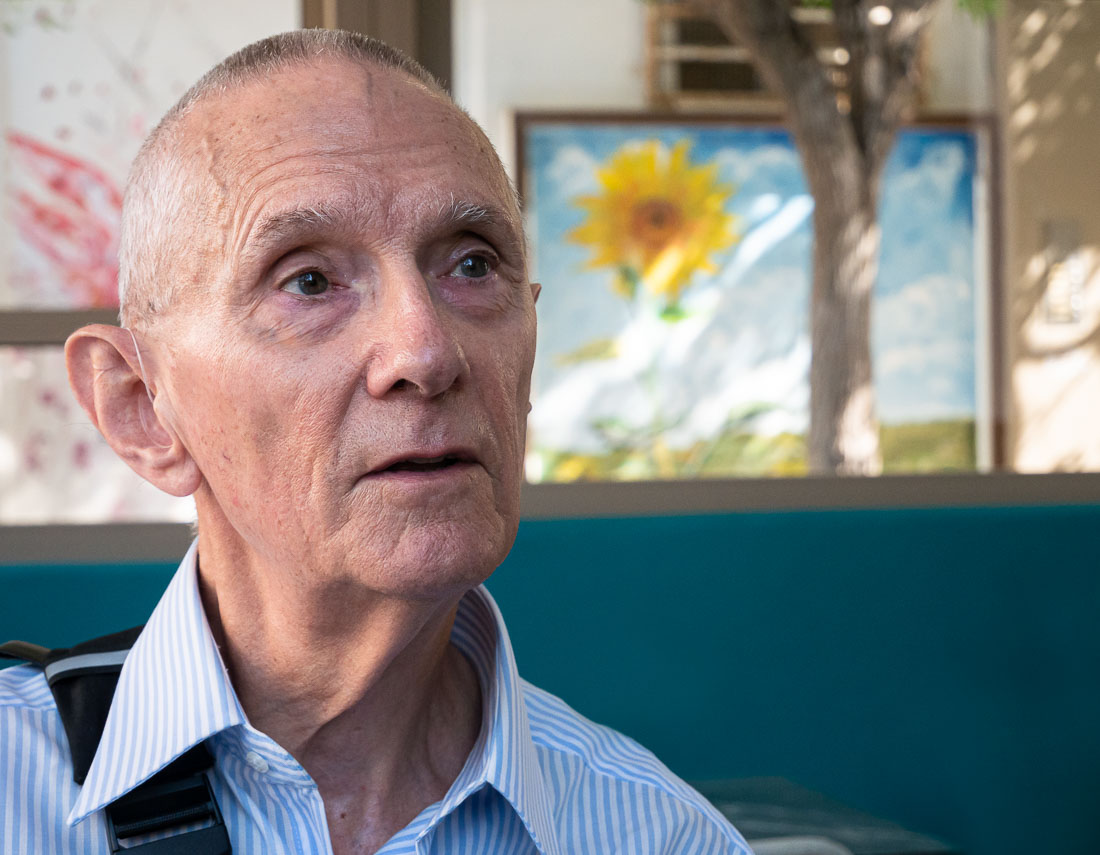
And because I am alive I will keep on living, and doing one of the things that brings me both joy and satisfaction: the ongoing creation of this blog. So the next blog post will be about that most mythical of Greek islands – Santorini.
All words and images by Alison Louise Armstrong unless otherwise noted
© Alison Louise Armstrong and Adventures in Wonderland – a pilgrimage of the heart, 2010-2023.

 Adventures in Wonderland
Oh, Alison and Don, I am just reading this today, the 18th. I am so sorry that you’ve had this scare, but again, a good reminder to love each other and your lives together every minute. Sending blessings to you both.
LikeLiked by 1 person
Thanks Suzy ❤️ Don’s improving everyday, and yes it has a been a very good reminder – life is fragile (as I’m sure you understand!), and the most important things are love, presence, and gratitude.
Sending blessings back!💕
Alison
LikeLiked by 1 person
Oh, Alison and Don, I have just read the post and do not know what I can say or what I should say in such a situation. It was really lucky that Don recovered quite quickly because it could be really dangerous for bleeding in the brain. The fact that Uncle Don was still able to stand there, trying to figure out how to “open the door” for hours is miraculous. Anna and I agree that it is something more than a miracle to see Don’s response in the post: he still remembers the words of Forrest Gump’s mother which I have forgotten for years. I am sure Don will recover soon.
Thanks both of you for the intimate post, this is definitely not easy to write.
Best wishes to both of you.
Kenny and Anna from Taiwan.
LikeLiked by 1 person
Thank you so much Kenny and Anna. So lovely to hear from you. It was very scary, but much of it feels miraculous, especially Don’s recovery. He is improving every day, and we’re optimistic he’ll make a full recovery.
I needed to share this before I could continue to write about anything else, but also to be open about our experience. I think many people have been affected by it and perhaps that will be helpful. I hope so.
Best wishes to you two
Alison
LikeLike
Hi Don and Alison,
I’ve just read your post above and just wanted to send my love on to you. I’m so grateful you have one another for support. You’ve given myself and many people a gift of travelling along with you on your explorations and adventures as well as opening your hearts about your personal struggles with health. Love and hugs to you both. Janet
LikeLiked by 1 person
Hi Janet,
Many thanks for your love and comments. Love and hugs from us. Don and Ali
LikeLiked by 1 person
So lovely to hear from you Janet, even if it’s under such circumstances. Don continues to improve – almost, thankfully, back to his normal self. But it’s a wake-up call for sure. Life is fragile and we can no longer pretend that it isn’t. Meanwhile we cherish what we have.
Love and hugs back.
Alison
LikeLike
Hello Don and Ali !
Hope you both are fine!
You two are a beatifull example for life!
What a scare huh??? Sending positivite / good energy and praying for the best.
Your quiet follower from Brazil,
Cheers!
LikeLiked by 1 person
Thank you so much Cristian for your kind words. How lovely to hear from you, and thank you for following the blog. From Brazil! I was there briefly (Iguaçu and Rio) in 1978!
Don is improving, and we are both just so happy he’s still here.
Ali 🤗
LikeLike
I am not sure how I missed this. I believe I was travelling in Ireland at the time. I am relieved that Don is recovering and I’m sure your love and attention have a lot to do with that. Please give him a hug from me. With the positive attitude you both possess, I have every confidence he will be fine. xo
LikeLiked by 1 person
Thank you so much Darlene. It has for sure been a stressful time, and really was a wakeup call to pay attention more to what’s really important. So happy to say it feels like the worst is over, though we’re not taking anything for granted. We’re both less stressed, and Don continues to improve and in many ways is back to normal. We feel so lucky, and grateful. Thanks for your kind thoughts. Happy to pass on that hug!
Alison
LikeLiked by 1 person
My dear friend! I am so sorry that it has taken me so long to read this post and that I almost missed it entirely. Your words brought tears to my eyes. I have come to know you and Don over the years through your beautiful blog and your words of encouragement to me. I am so relieved that Don is ok. What an incredible scare. I can imagine how hard the past few weeks have been. I am thinking of you and Don. You have been my inspiration for years. I hope you know that. Take care of yourself and Don and please keep us updated. And yes, keep writing that beautiful blog of yours. It is an incredible work of art. something to treasure and a huge gift for you to share with us all.
LikeLiked by 1 person
Thank you so much for all your kind words and thoughtfulness. I’m so glad I know you, and hope we get to meet in person one day. Wouldn’t that be amazing!
It really was a big scare, a real wake-up call. Although we go about our days quite happily now we can no longer pretend that it’s going to last forever, that one day we’ll have to face that.
I won’t deny it’s been difficult, but Don is now much improved, and now has days where he’s quite like his old self, so we’re both feeling more relaxed. He tires more easily than he used to, but even that is improving. We feel so very lucky.
Big hug to you
Alison xo💕
LikeLike
Thanks for the update Alison. I am so glad to hear he is doing better and yes it is a wake up call. We all need to remember that life is fleeting and to embrace the time we have. Love is so strong too. Take care and look forward to your next post! 🙂
LikeLiked by 1 person
❤️
LikeLiked by 1 person
Thanks.
Alison 💕
LikeLiked by 1 person
Hi Alison & Don, I’ve read some of your previous blogs of which many have been poignant and this one even more so. We are all constantly reminded our life on earth is short so it is worth living each moment to its fullest and well done to you two. You certainly are doing that. I wish you many more years together and of course filled with traveling as long as you are willing and capable.
LikeLiked by 1 person
Thank you so much Alma. This has really been a wakeup call for us, difficult, but also full of silver linings. Really being aware that it will all end one day makes the time we have together all the more precious.
I’m happy to be able to say that Don is very much improved. In many ways he’s his normal self, but tires easily.
It’s doubtful we’ll travel again if only because of the inability to get medical insurance, but short trips within Canada are certainly in the plans.
Thanks for your kind thoughts.
Alison
LikeLike
It is true we never know what will happen in the next moment of our lives. Thank you for sharing a difficult time with such honesty and rawness. And it is truly disgusting how long ne has to wait in an emergency department. When my husband was dying of cancer, we waited six hours to see. a doctor I hope Don your recovery continues hastily.
LikeLiked by 1 person
Thank you so much for your kind thoughts. Don continues to recover, and is here in all the ways that matter. His cognitive functioning improves steadily and physically he’s as strong as ever. We’ve been very lucky, and continue to be grateful for this reprieve.
I’m so sorry for your loss. More than ever I imagine what life will be like without Don, and get an inkling of how difficult it is to lose one’s partner.
Wishing you all the best.
Alison
LikeLiked by 1 person
Enjoy every day together.
I lost Jack 2 yrs. ago.
LikeLiked by 1 person
Oh Jean, I’m so sorry for your loss. I can only imagine how heartbreaking that must be.
We are doing our best to appreciate every moment we have together, knowing what a gift it is.
Alison
LikeLiked by 1 person
Oh Alison and Don, how terrifying! So sorry that I’m just now catching up with you.
First Don, it’s wonderful to read about all the improvements that you’ve made. What a difficult ordeal. Thanks for sharing your firsthand experience of everything that you’ve been going through … and are continuing to encounter. Your positive attitude and honesty are so encouraging, and I wish you continued recovery.
And Alison, you are so strong, brave, and compassionate. What a horrible scare you have both had, but your cool head prevailed. I’m hoping that I will read an update as I continue catching up with your blog.
James and I so value your friendship over all these many “blog years” and wish you both all the very best. Just continue appreciating all your special moments and the wonderful love you share. Sending huge, healing hugs, Terri & James
LikeLiked by 1 person
I admit it really was terrifying, for both of us in different ways, and even now nearly 4 months later we’re still processing it. It was deeply shocking, but also a valuable wake-up call. I’m so happy to be able to say that Don has made a remarkable recovery – if not 100%, then certainly 90%. He tires more easily, and has brief random moments of mental confusion, but apart from that he’s his normal wonderful self. There are more tests to be done as the doctors try to figure out the underlying cause, but in the meantime we continue with our normal day to day life, grateful to have this time together.
We too value your friendship – it’s been so many years! How wonderful that we’ve sustained the connection. I always enjoy your stories.
Alison 🤗💕
LikeLiked by 1 person