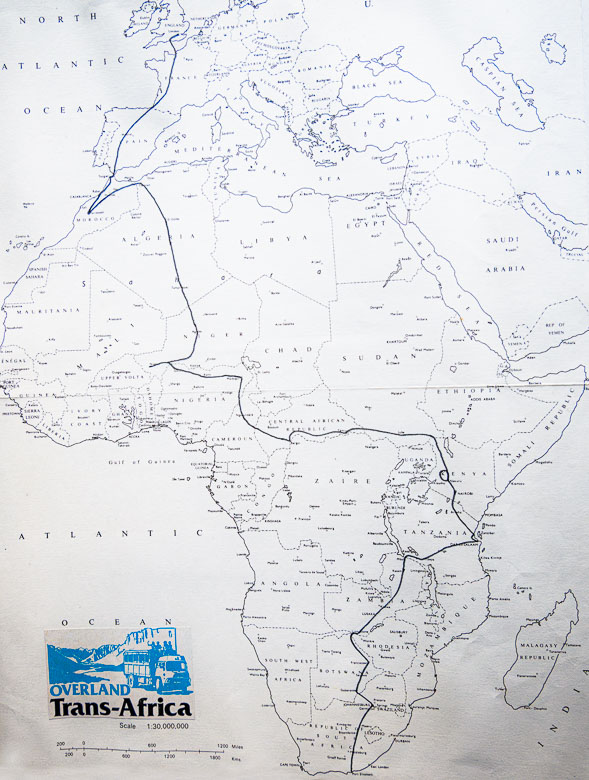
This is the sixth instalment of a four-month trans-Africa trip from Johannesburg to London that I did with Exodus Expeditions in 1980, travelling by ex-army truck and camping. We were not sightseeing, though we did see some incredible sights. Our goal was to see and experience Africa from south to north by whatever route was open. Four months. Twelve people. One truck. Fifteen countries. 18,000 kilometres. Links to the earlier posts are listed at the end of this one.
*******************************
It’s the RSGs that save us; reinforced steel girders. We find four of them almost buried under months of fast growing tropical grasses, off to the side of the road. Without them we’d probably not have been able to build a bridge to get the truck over the river. Without them we’d have been well and truly hooped. But by now we’ve been through so much that looking at a river without a bridge is hardly enough to daunt us; we have become a tight-knit group, because we have to be, and work together to face challenges; even a river without a bridge.
Among all the information issued by Exodus Expeditions about the trans-Africa route there’s this little gem that really says everything: It is essential to be mentally prepared for an African expedition, and part of that preparation consists of the realisation that once out in the depths of Africa there is no such thing as an itinerary or a schedule. There is only an objective – to get to your destination by whatever route is open. It is traversing Central African Republic that this becomes real. Very real. It is traversing CAR that we find ourselves well and truly in the depths of Africa, and it is here we understand more than ever that the journey itself is the destination.
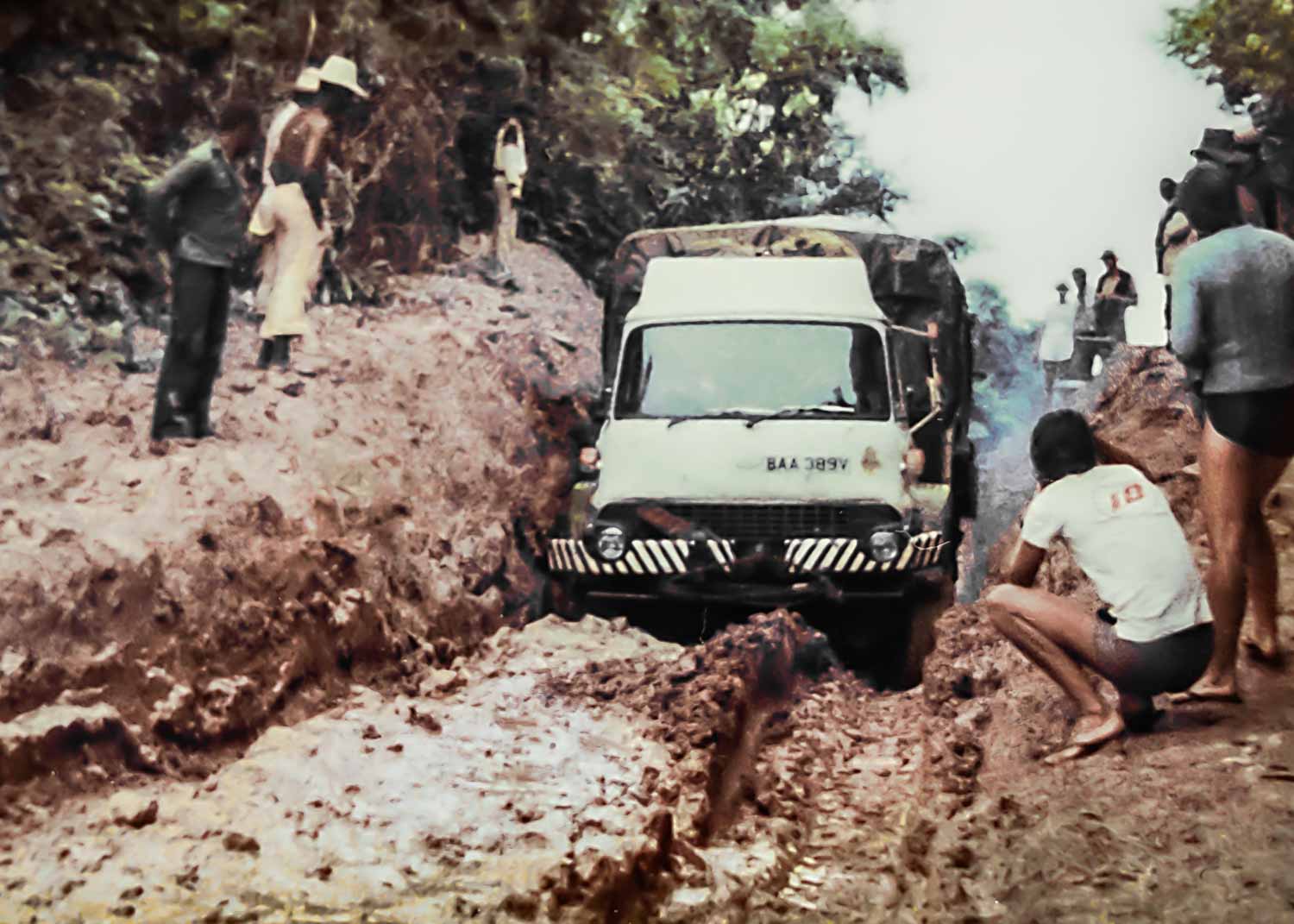
It starts almost as soon as we cross the border from Sudan into CAR, and gets progressively worse the further we travel, the further we are engulfed by the central African jungle. To this day there is only one east-west road across CAR. There are several north-south routes from Bangui, the capital, but first we have to get there. From the border with Sudan travelling west to Bangui it is 1300 kilometres (808 miles). We are travelling just after the end of the rainy season. Most of those 1300 kilometres look like this.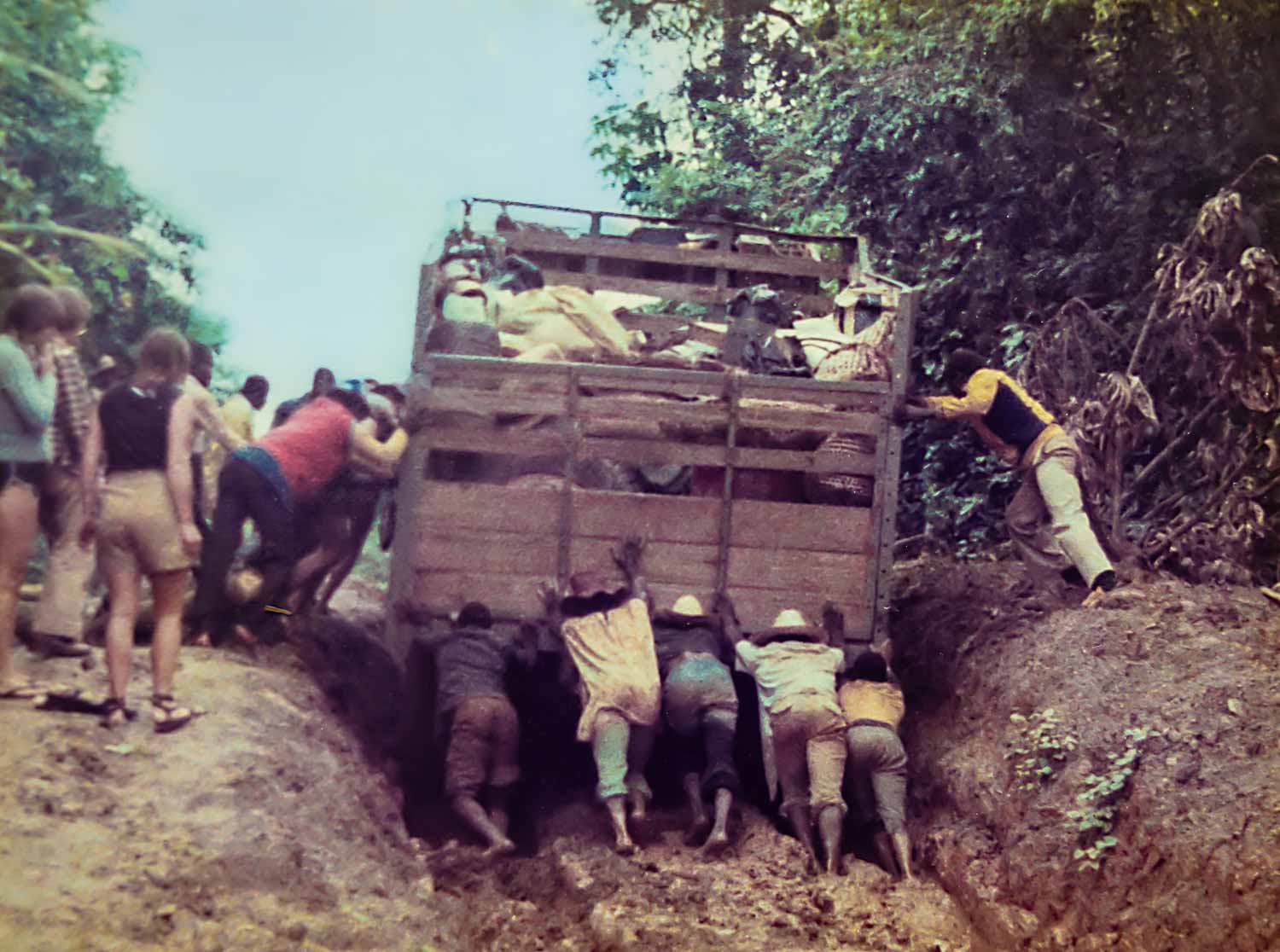
We follow (Route Nationale) RN2 from the border. For the first 600 kilometres (370 miles) it runs more or less parallel to the Mbomou River which forms the border with Zaire, now the ironically named Democratic Republic of Congo. Every photo that follows is of the road; not a small river, not some back-woods track, but the main, and only, east-west artery across the country. We are lucky if we cover 150 km in a day.
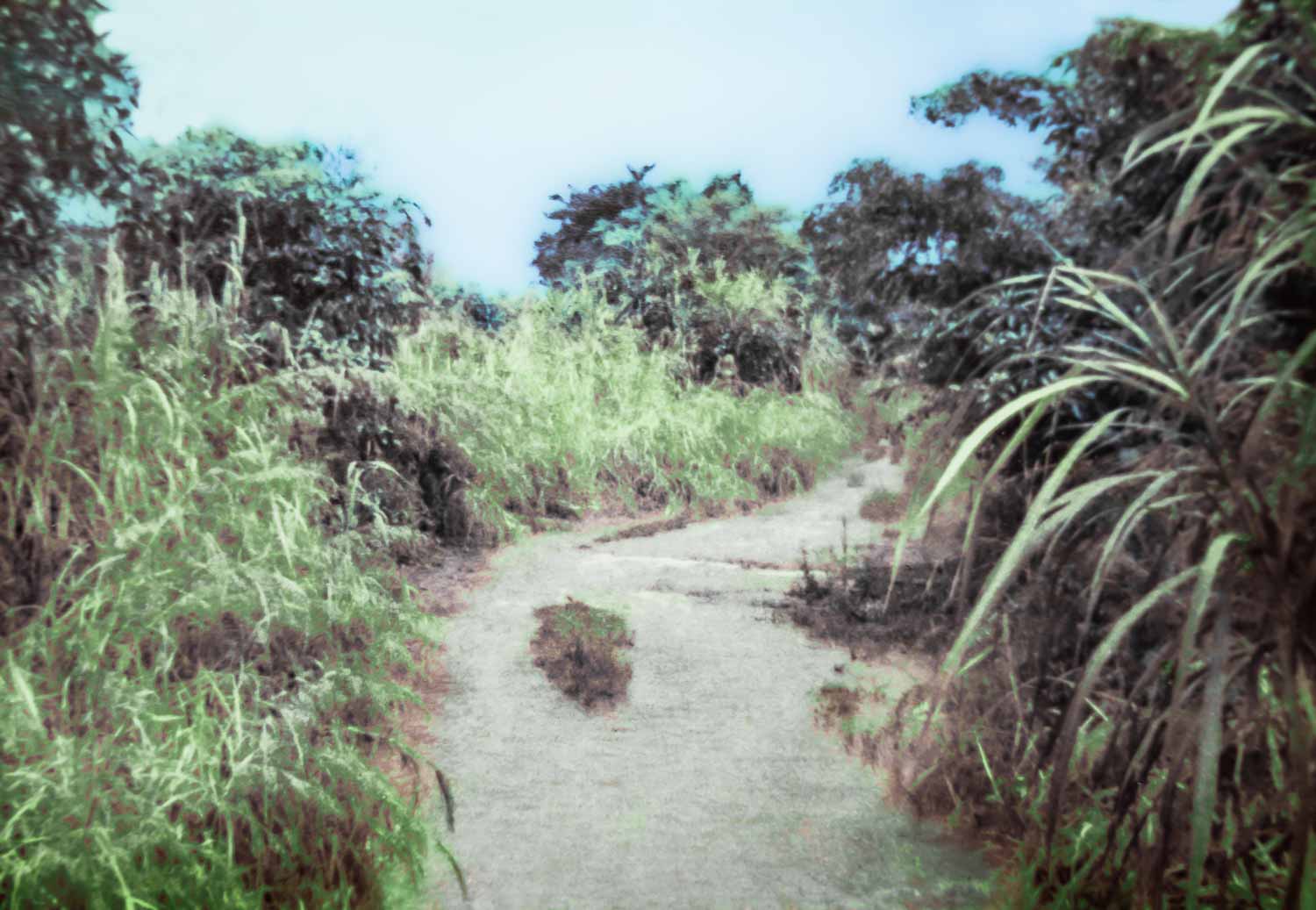
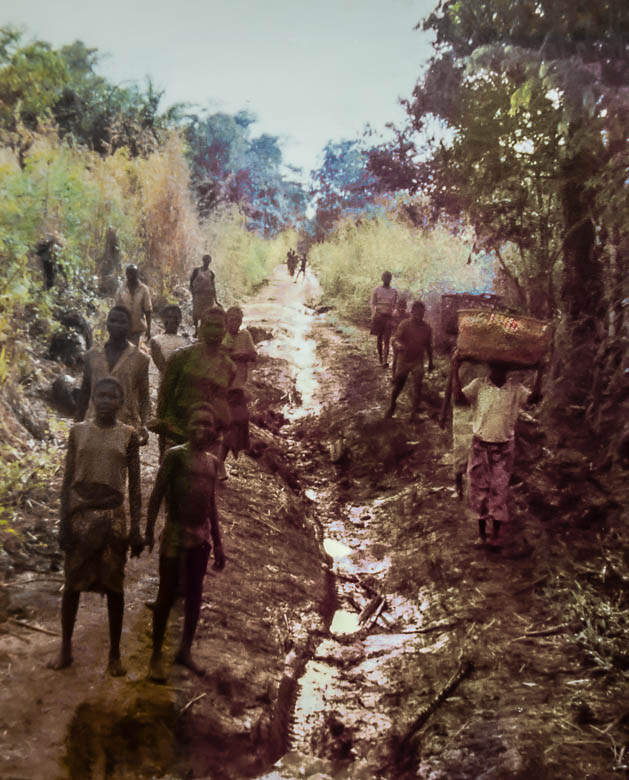
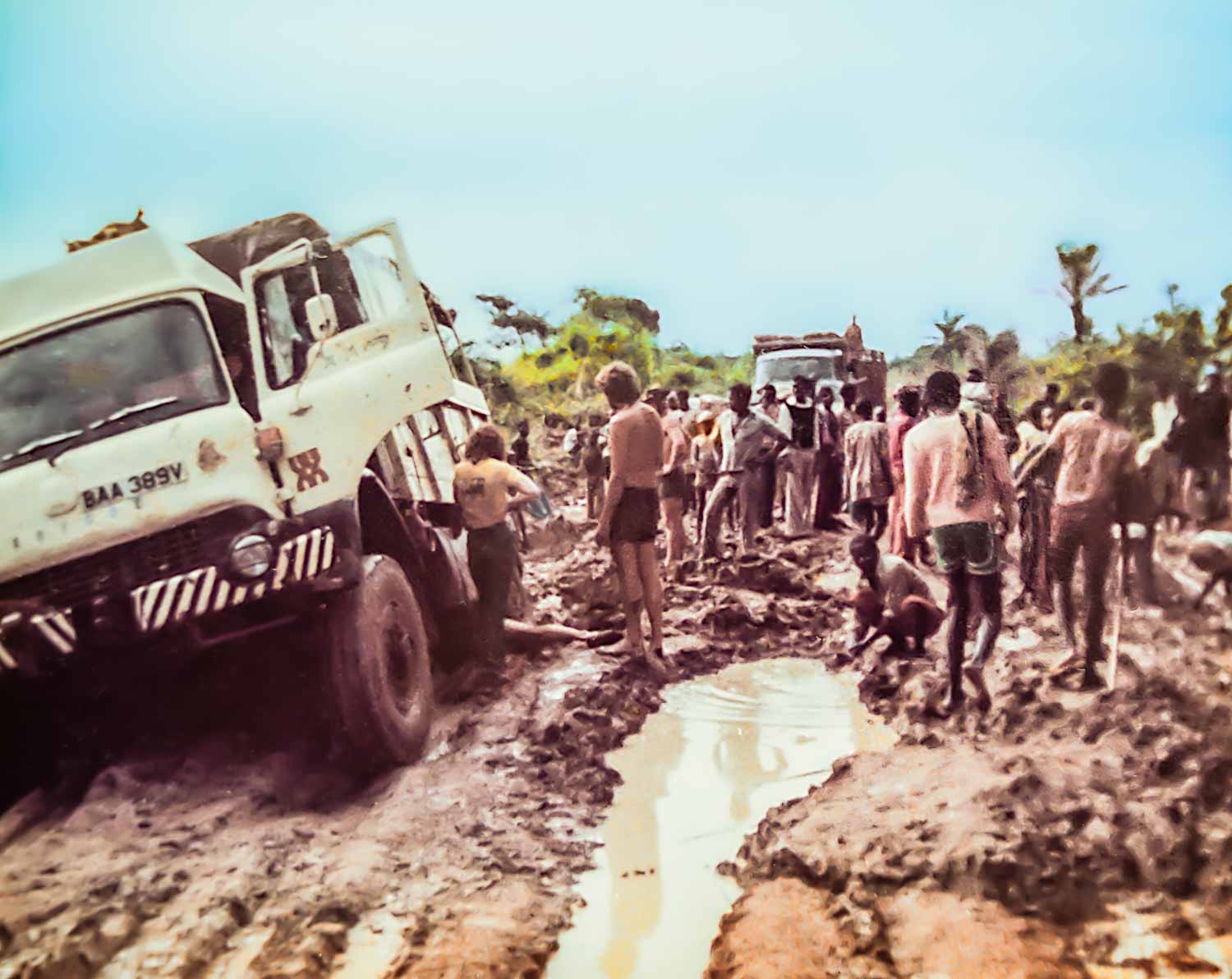
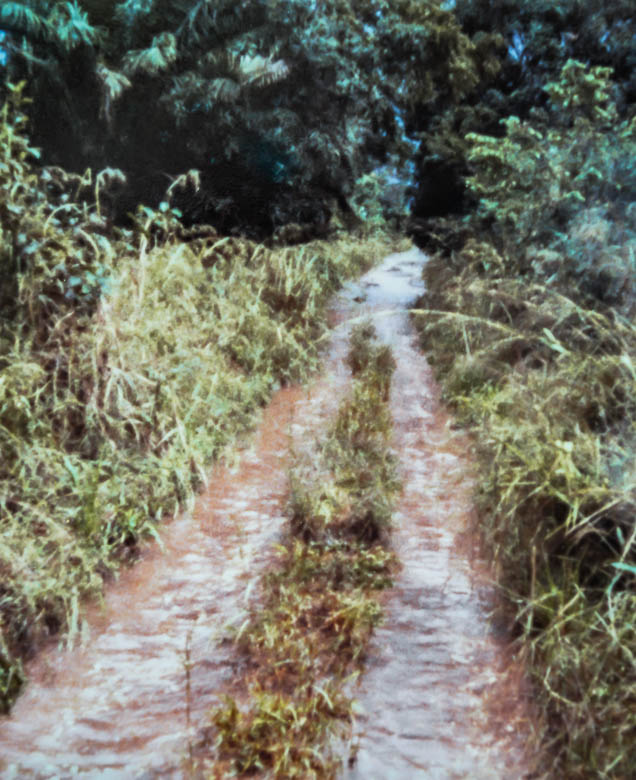
Central African Republic is a landlocked country, right in the heart of the continent. Formerly colonised by the French, it has failed to thrive after being granted independence in 1960. Since then it has been ruled by a series of autocratic leaders, and there have been decades of violence and instability, including six coups. In 1979 the self-styled Emperor Jean-Bédel Bokassa was overthrown in a coup. The former president, David Dacko, was restored to power, but he also was overthrown in a coup in September 1981. Once again, in a country that has known very little rest, with colonisers, world politics, and religions all playing a part in creating internal chaos and conflict, we are lucky enough to be there in a rare moment of peace. As with Sudan, in 1980 things are relatively quiet.
We are less than 200 km from the border with Sudan when we come to the river with no bridge.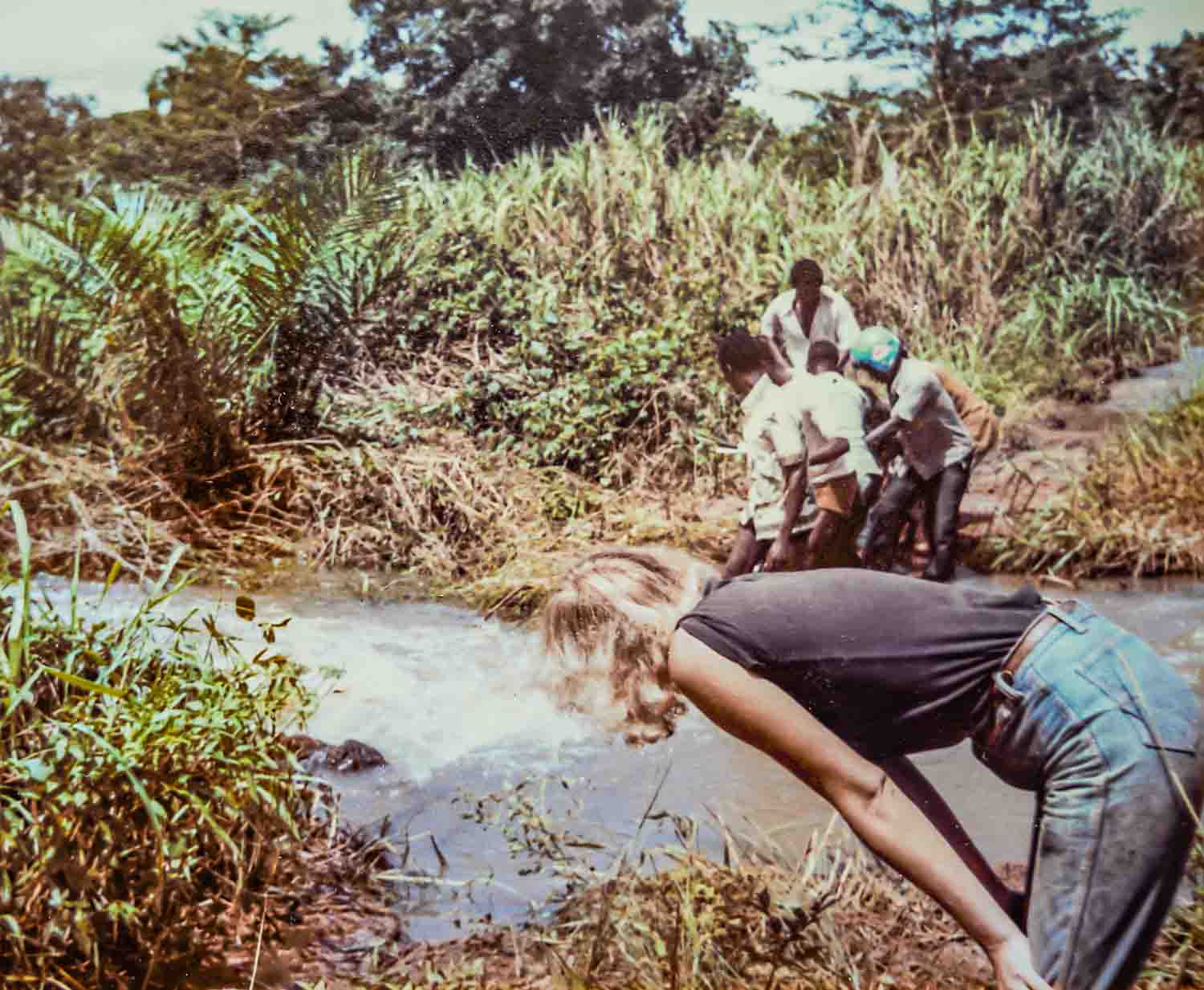
We can see the old broken bridge tangled up where it has been swept downstream. We all start scouting around looking for possible materials to build one – rocks, logs, anything that might be useful, and then someone finds the RSGs! We guessed they’d been transported in to build a new bridge, but then the roads had become impassable so they lay abandoned in the grass.
We lug rocks up from the river bed, and use ropes to haul a couple of big logs to the river. With the logs and the rocks we build a berm on either side to support the steel girders. Then we haul the girders into place.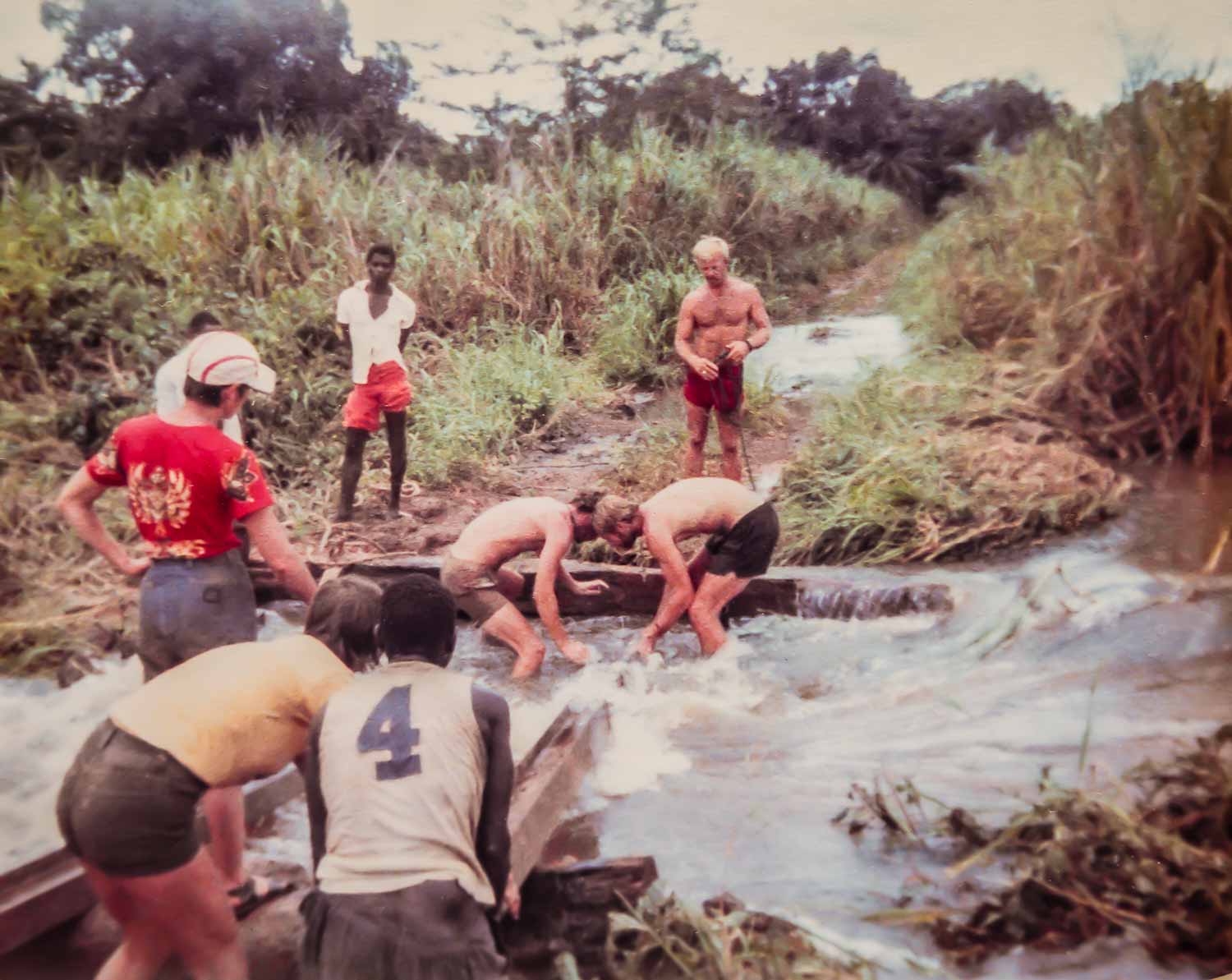
Brett and Craig make sure they are at the exact width of the truck’s wheel base, with one girder on one side, and on the other side two next to each other with the sand mats strapped on top of them.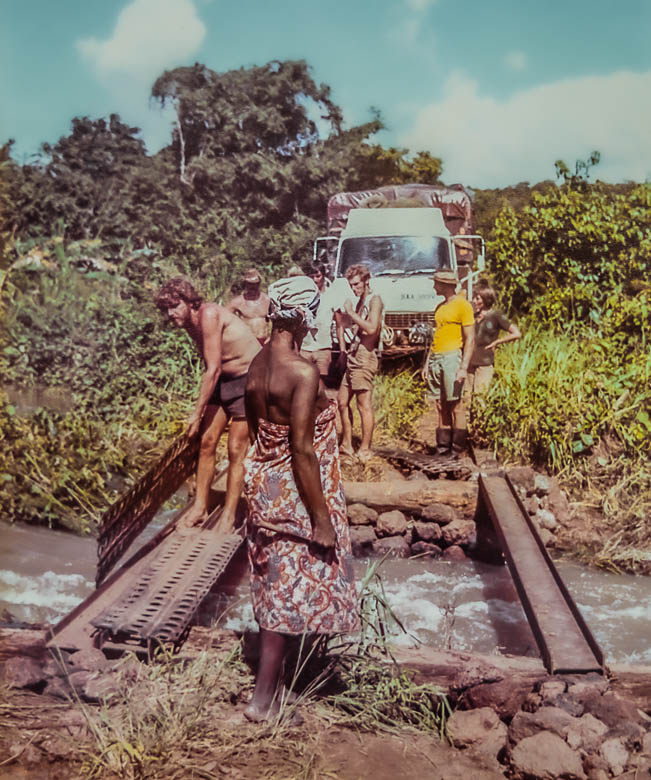
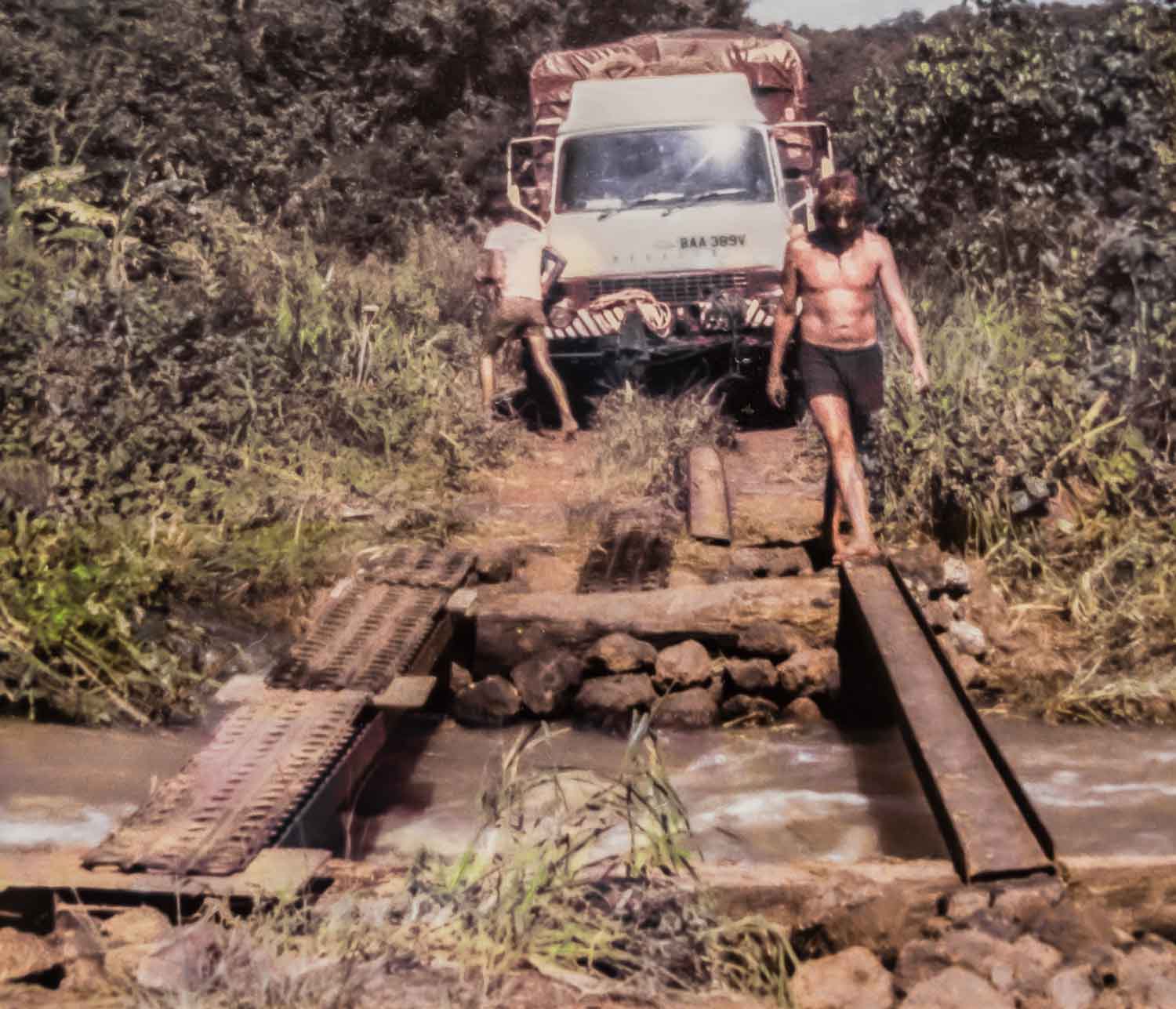
Then, as Brett guides him, Craig starts driving slowly across.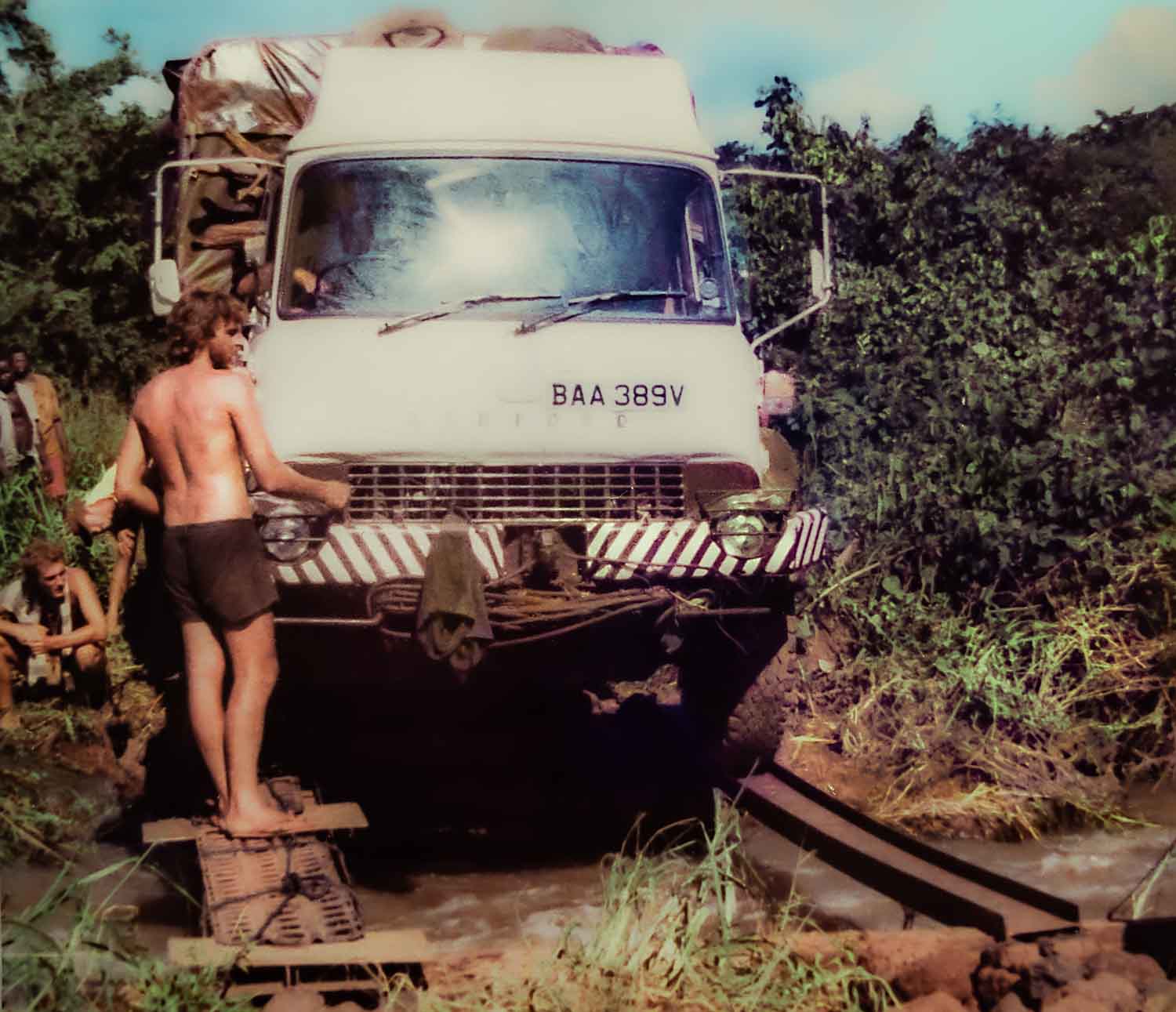
Stop! Back up! It’s clear that the single girder will not take the weight of the truck. So the fourth girder is strapped on top of it to double the strength.
Craig tries again. Slowly slowly an inch at a time, Brett constantly watching.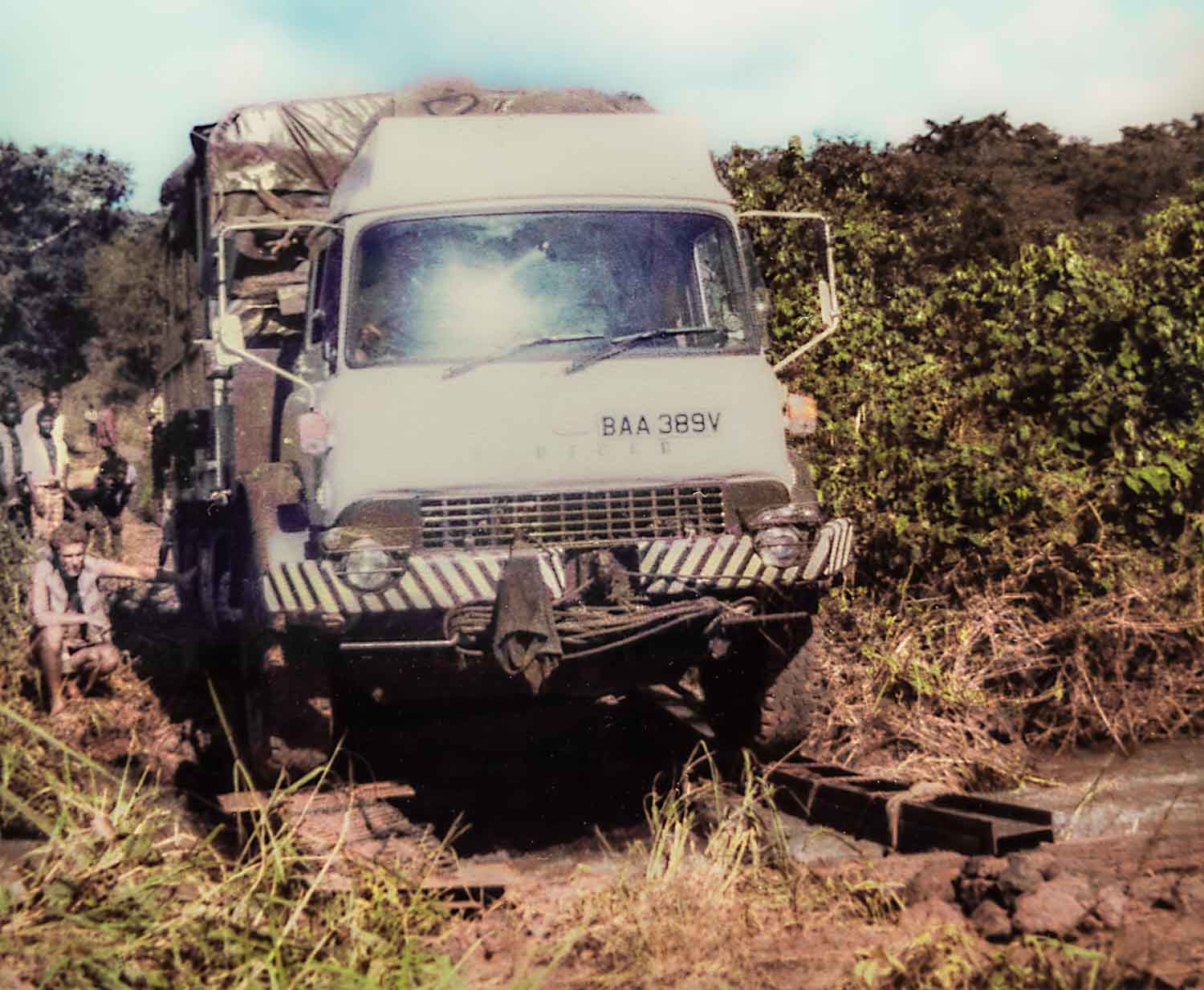
And then it is done. The truck is across the river! Victory!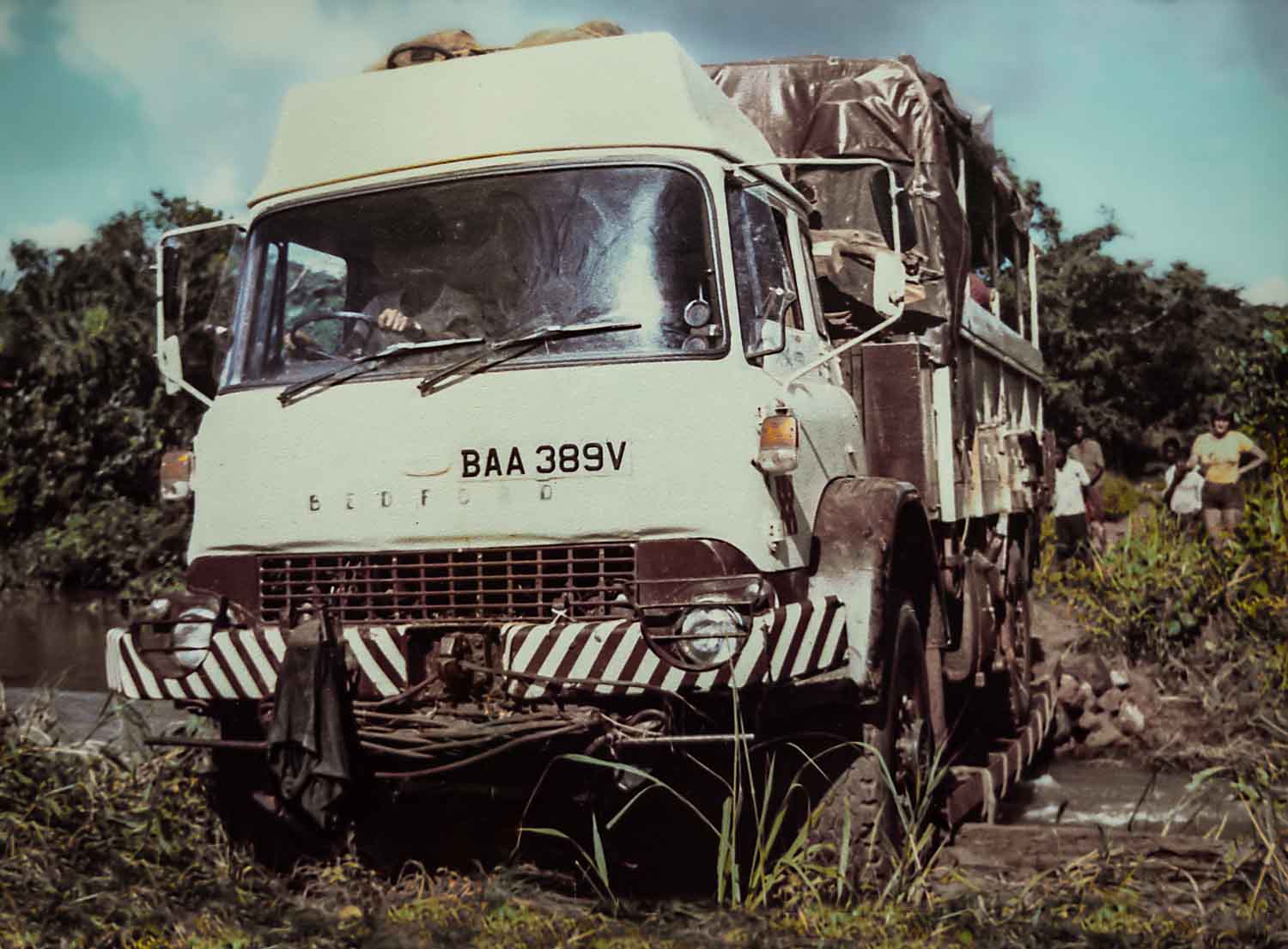
We leave the RSGs in place but of course take our sand mats and ropes, then head to the nearby village to celebrate,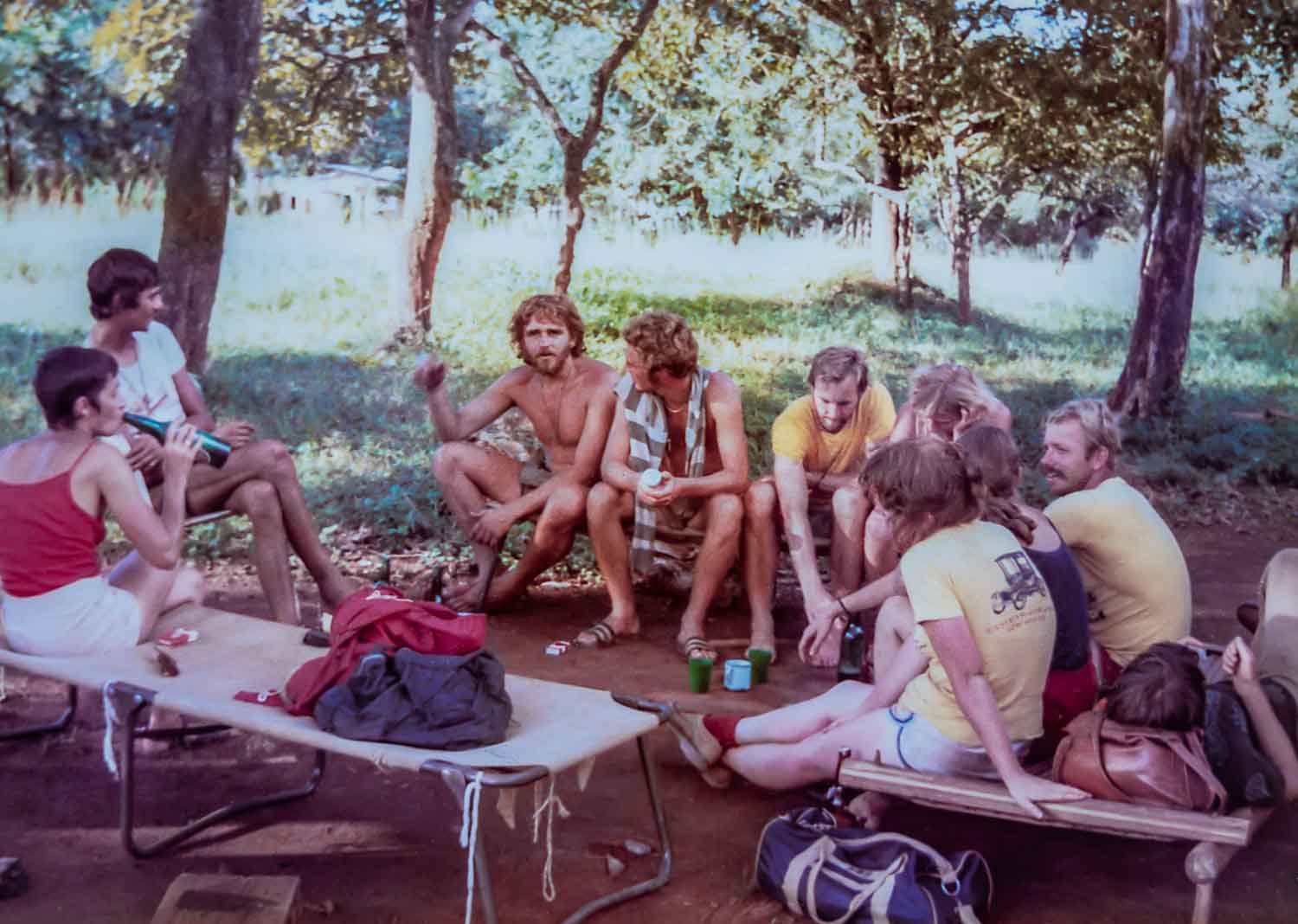
and, in an unusual move, set up camp there for the night. We don’t usually camp in villages, but it’s clear there will be no more traveling on this day. Probably Craig has paid the chief to let us camp there and ensure we are safe.
Some time later a couple of policemen come through in their 4×4 and drive onto the bridge without checking the width of their wheel base. Straight into the drink! So next morning we go back to the river to tow them out.
We have conquered the bridge-less river. Onward!
It’s not that there’s no bridge, it’s just that it’s, um, questionable.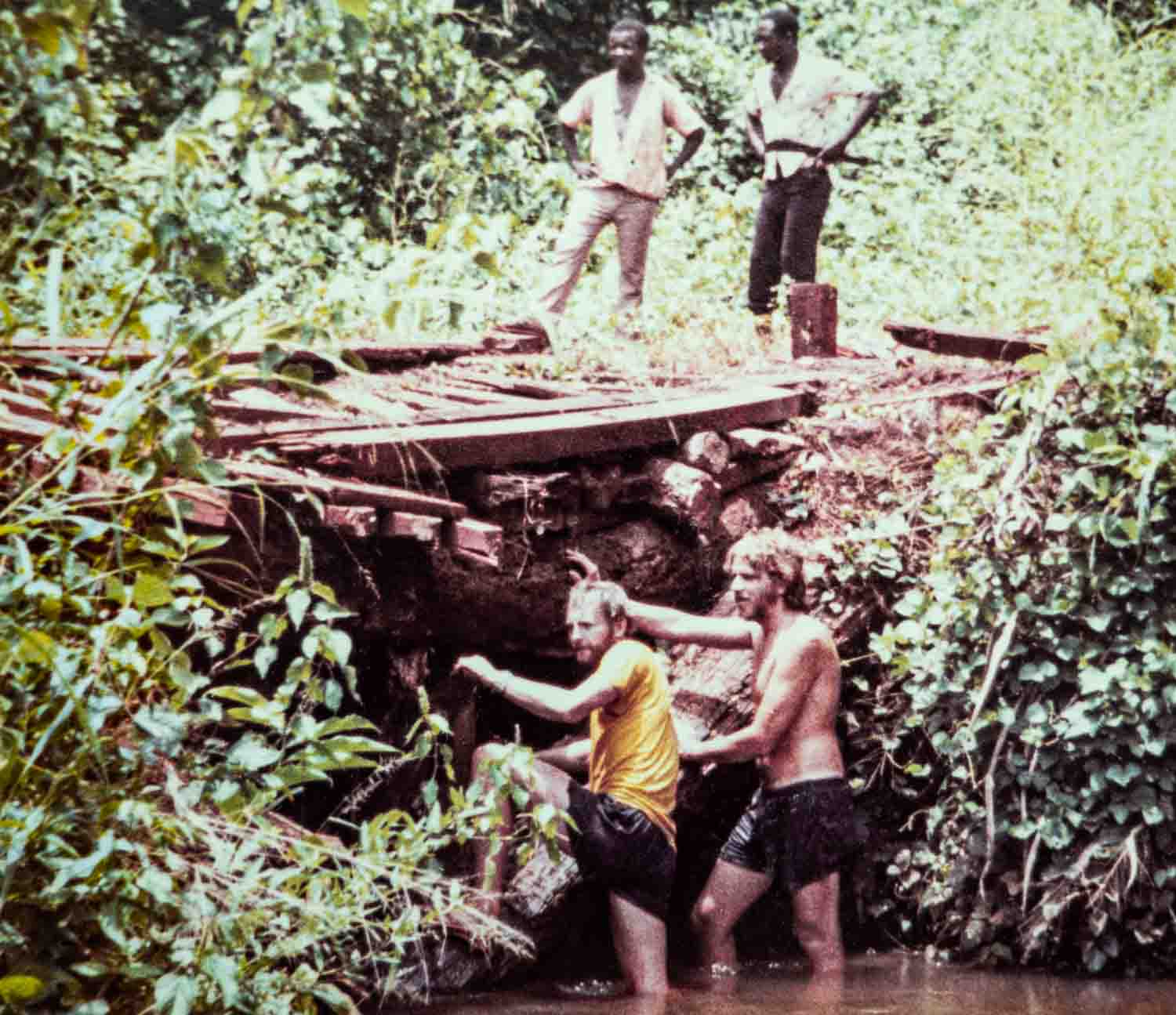
The guys do some makeshift repairs,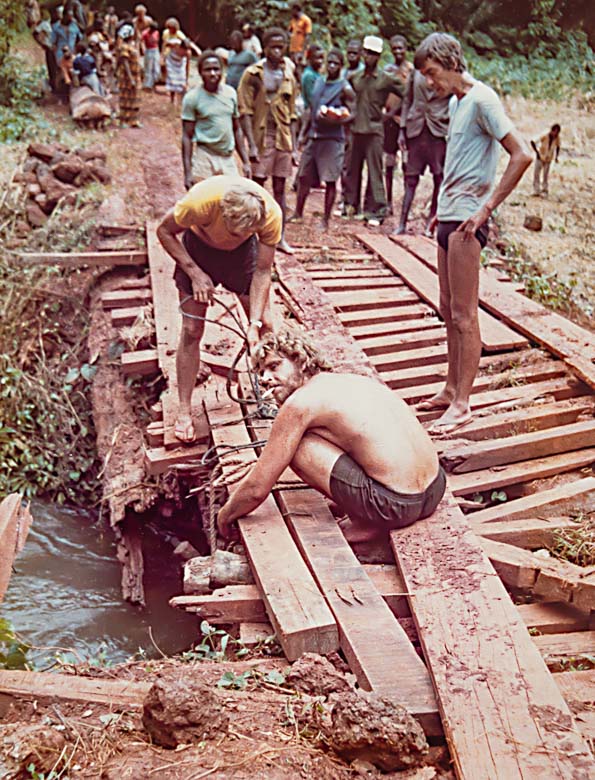
the truck starts over, and we all hold our breath. Victory again!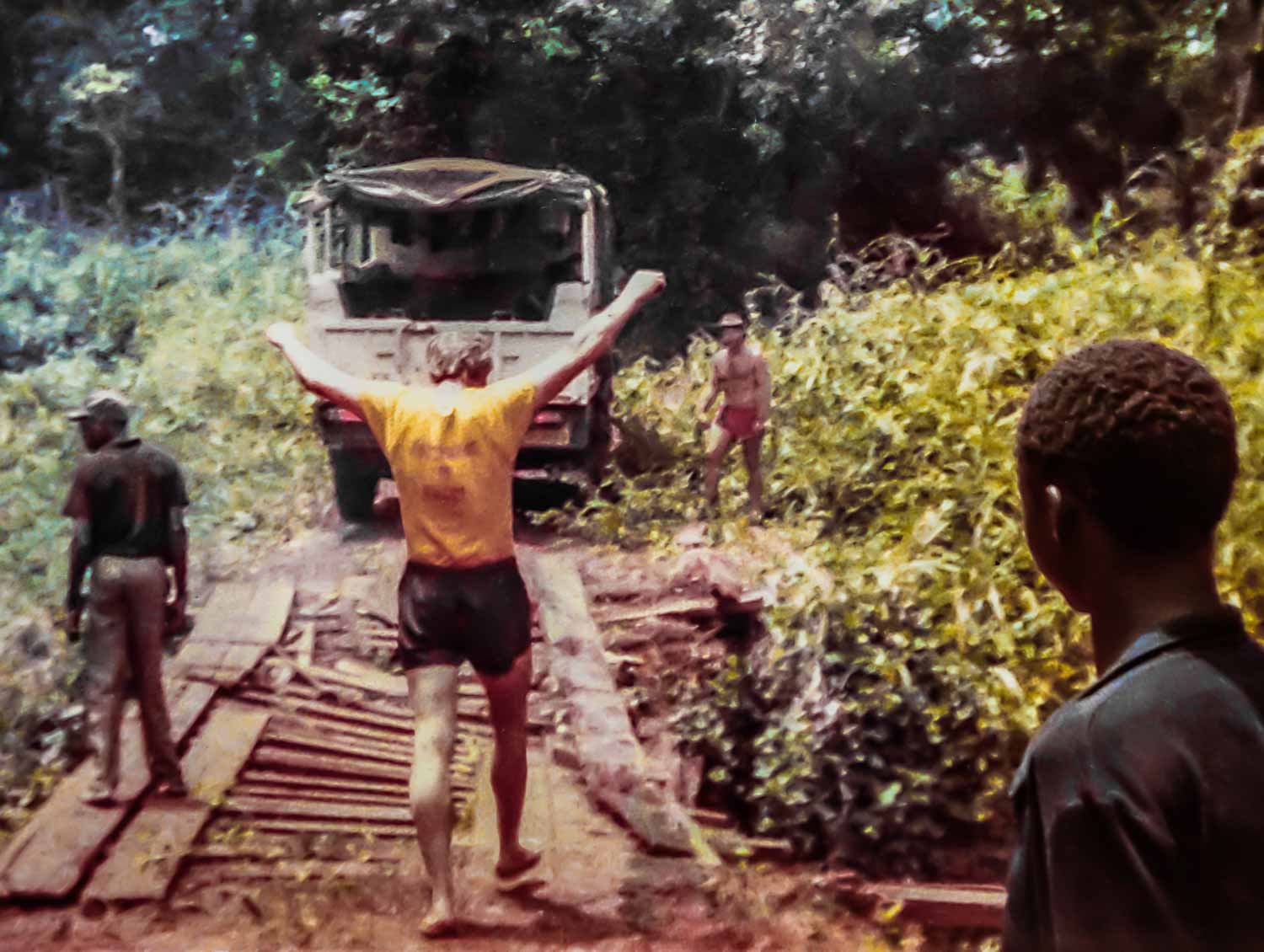
If it’s not bridges, or walls of mud, or stuck trucks that we help on their way so we can get on our way, or a road that looks like a river, it’s ferries. And we are thankful for them being there, and for being functional. There are several ferry crossings on the road to Bangui. Most of them are a simple wooden platform on pontoons.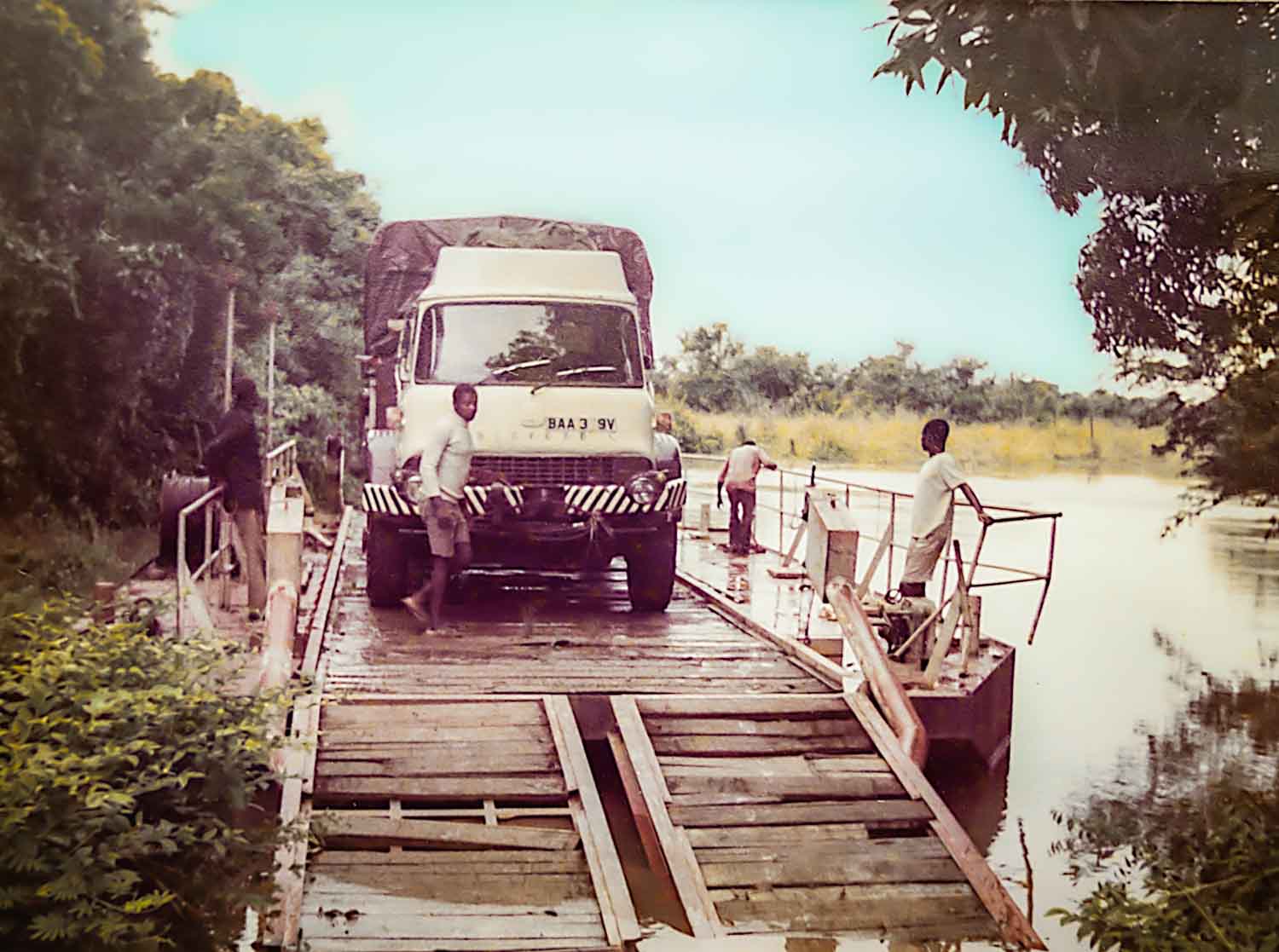
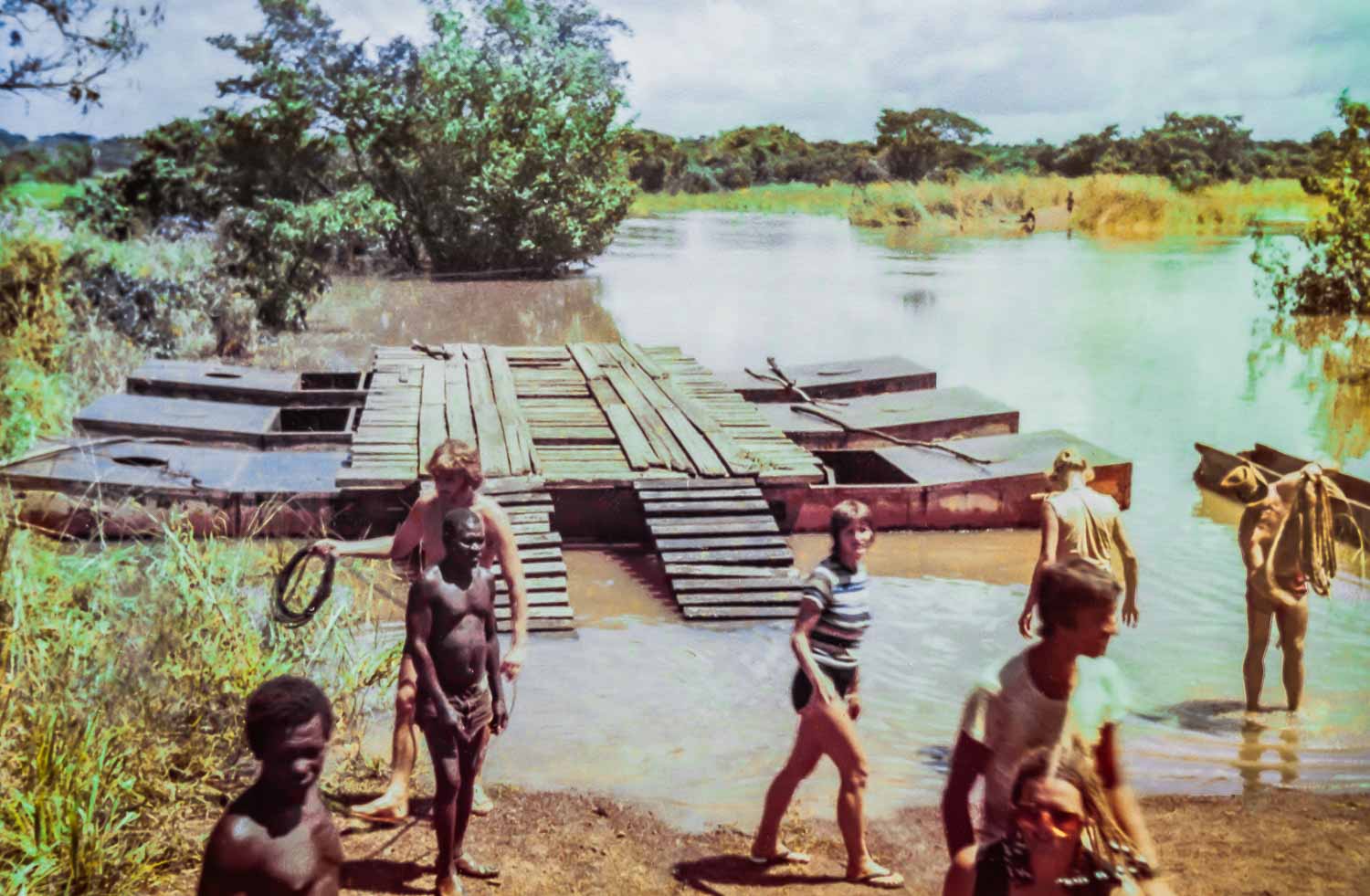
We drag the ramps into place. Craig or Brett drives the truck on, and a couple of locals pole us across while we hang out on the pontoons.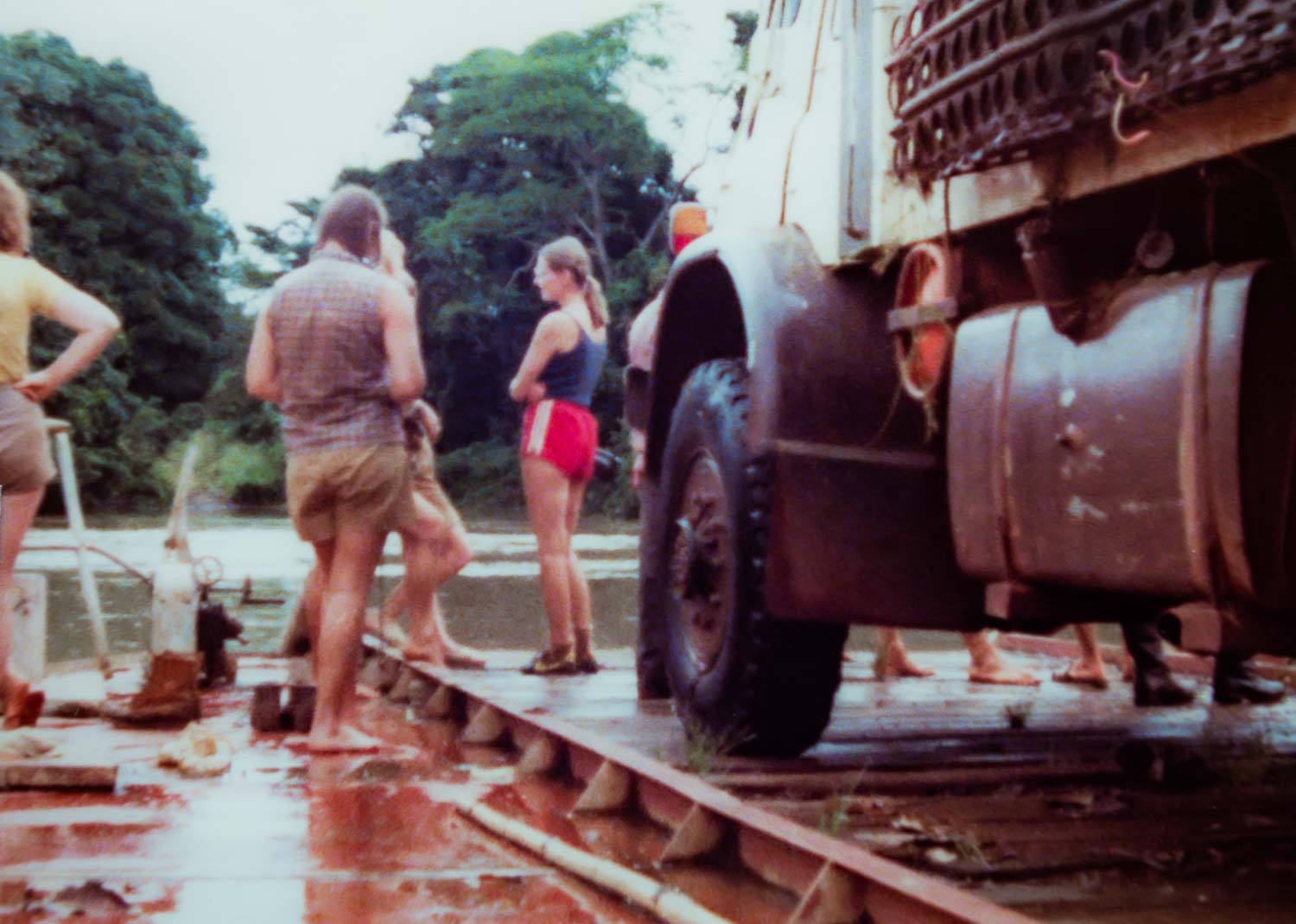
And as the truck lumps and bumps along the road sometimes we walk, and sometimes we sit in the back talking and laughing, continuing to discover each other, and this challenging jungle world.
Every day I marvel at the insects. I’ve never seen so many, or such variety, in every shape and colour you could possibly imagine; one hovers right in front of my face, a perfect pointed oval, the front half red, the rear half white, an exact line separating the two. But it’s not just flying insects. One night Dawn walks a couple of yards away from the centre of camp to clean her teeth. Suddenly she starts screaming. I’ve never seen anyone get their pants off so quickly. In the dark she’s accidentally stepped onto an ants’ nest.
It is here in the central African jungle that I first hear of Dire Straits, but it is not some Brit rock band that is our night music. Every night I marvel at the noises that rise up from the jungle that surrounds us; monkeys howling, crickets chirping, birds whooping and whistling. There are few we can identify, but it’s this constant cacophony that lulls us to sleep.
We wild camp whenever possible, but occasionally camp in a village. There’s a huge storm. It rains as only it can in the tropics; a sheet of water that drowns everything, makes the trees quiver, the leaves shiver, the lush grasses bend to the ground soaking up what they can, and turns all else to mud. That night we camp in a village, the only place to find some flat ground. Next morning we have enough dry wood at least for a cup of tea.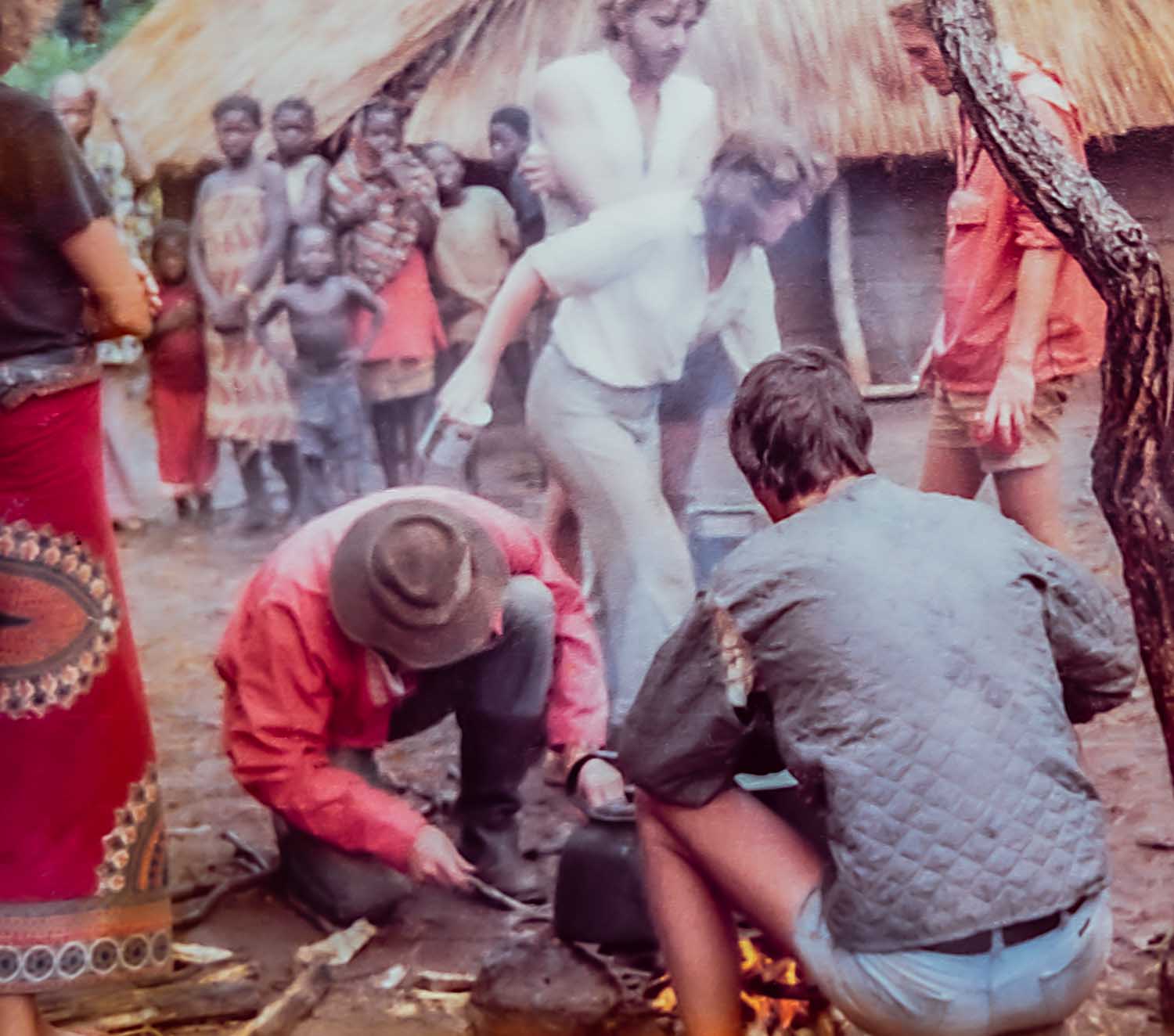
We camp in the grounds of the Polish Catholic mission at Rafaï, and are grateful for the respite from pushing through the mud.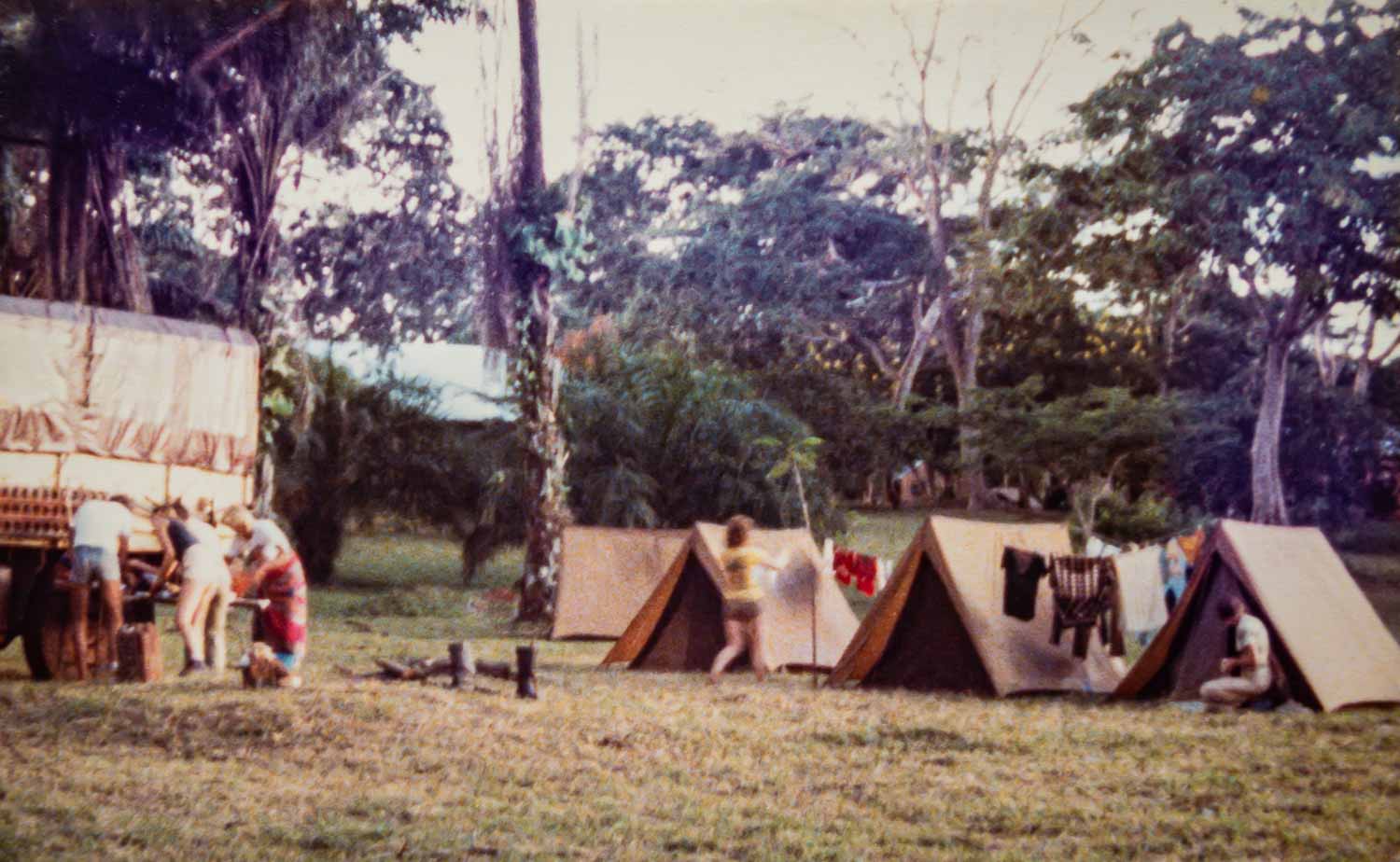
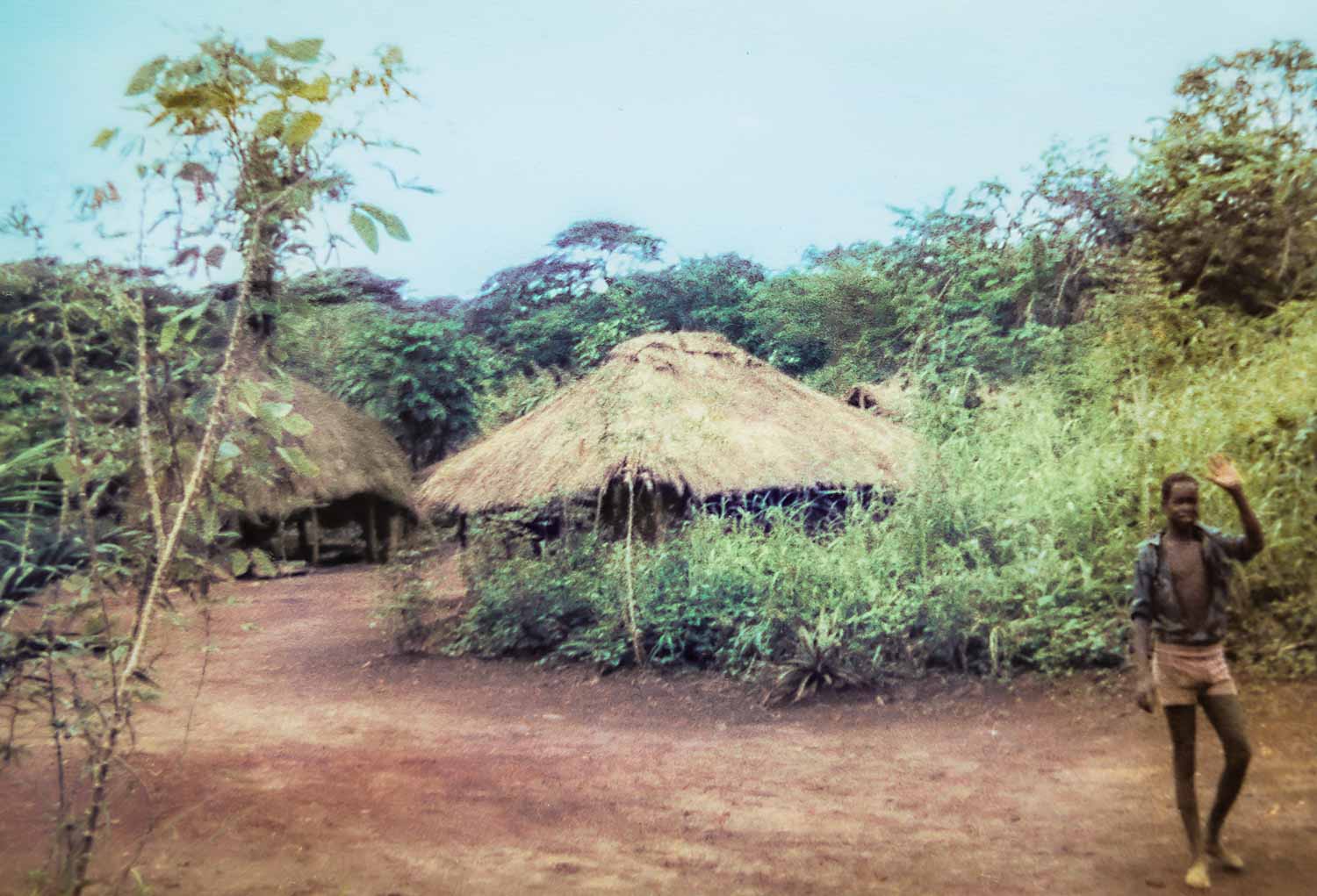
We pass many villages,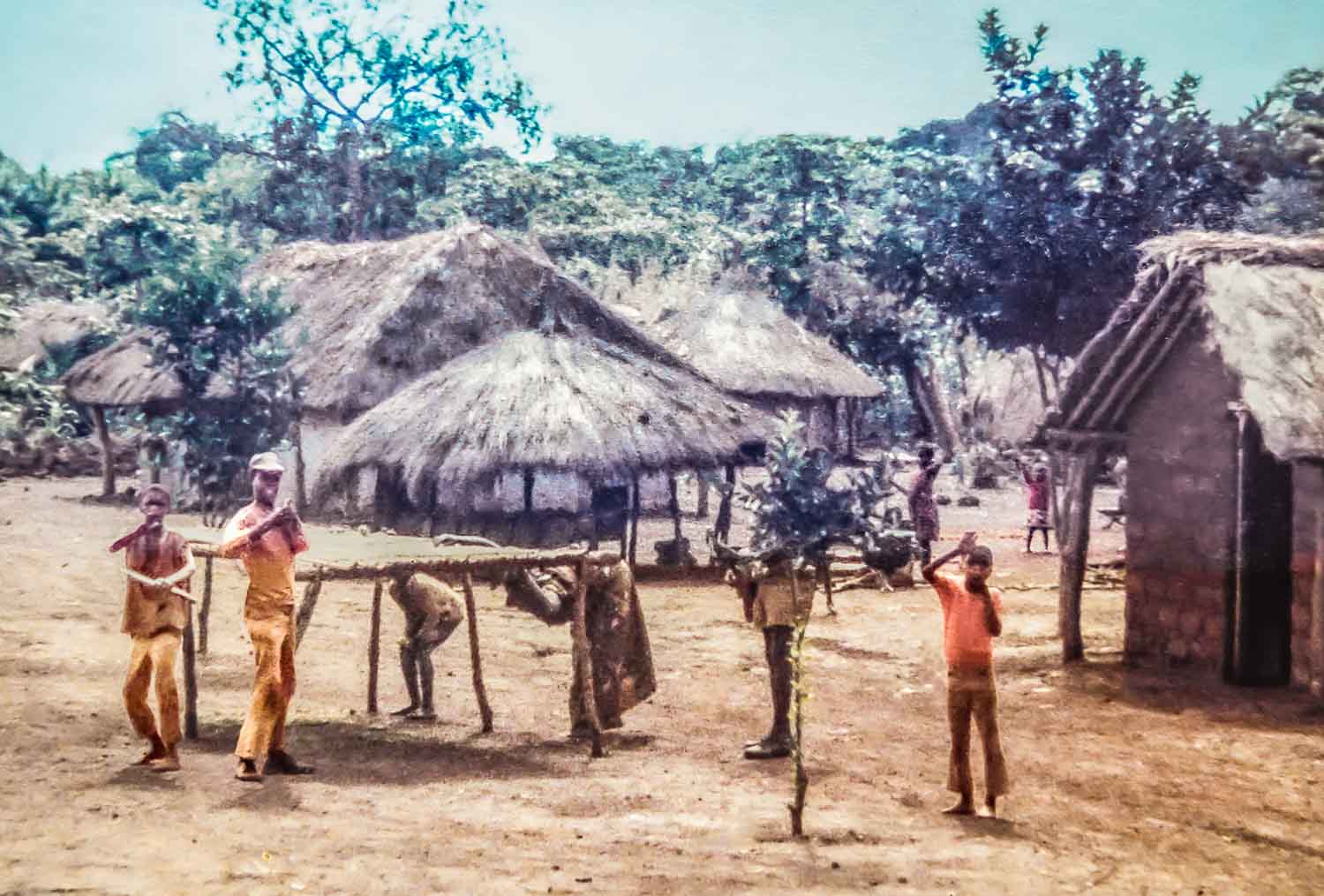
and villagers.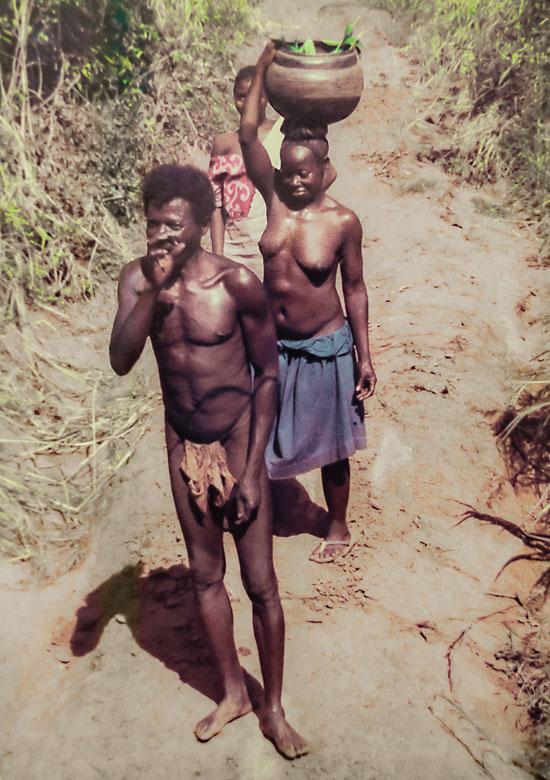
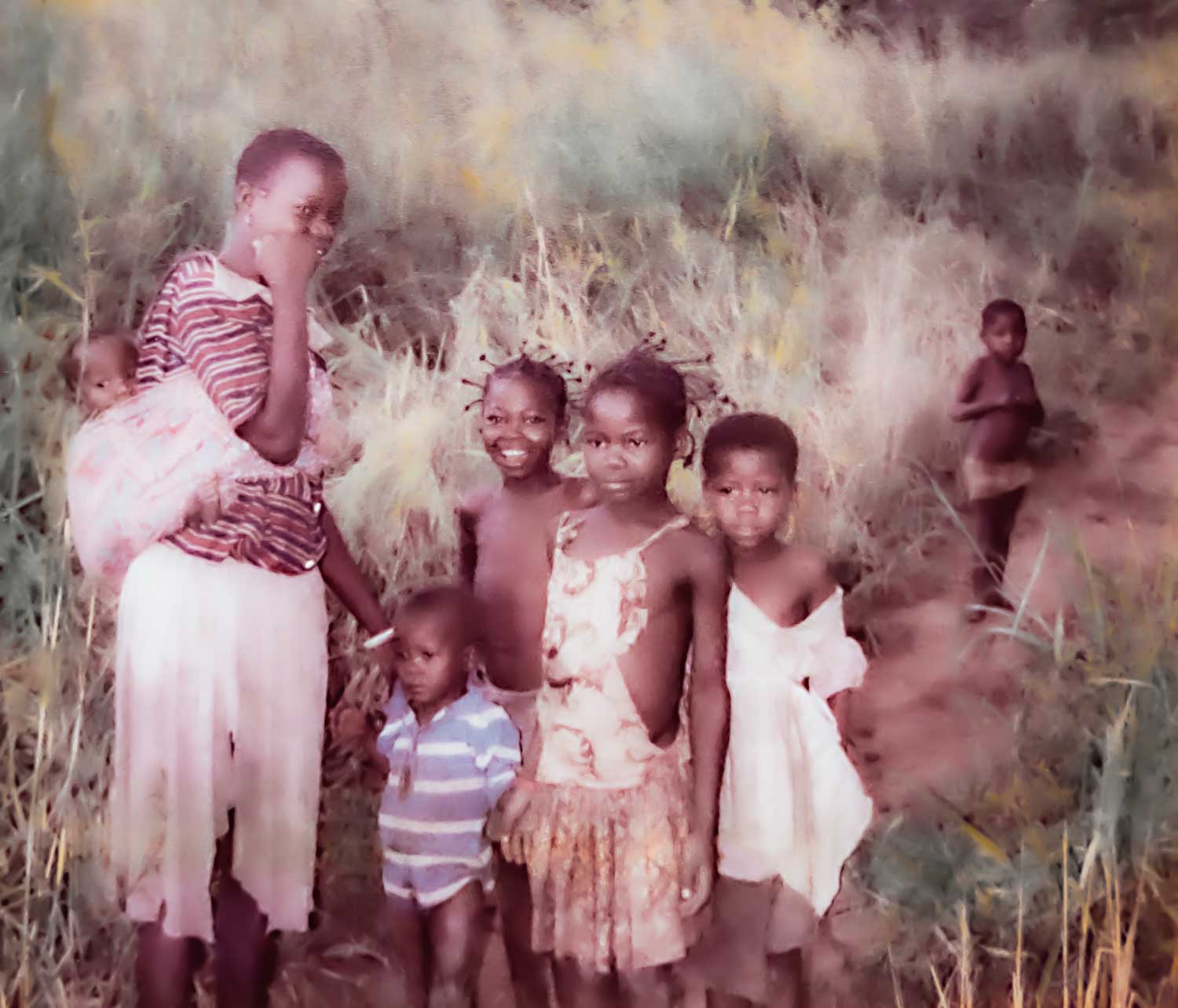
They are unfailingly curious and friendly. They stare and smile and wave, the children running after us for a bit when the road allows it. We stop briefly in the village markets selling veggies and peanuts and kitenges (printed cotton fabric similar to a sarong).
Eventually at Bangassou the Mbomou River joins the great Ubangi River and we get our first glimpse of it.
From Bangassou we follow RN2 as it heads west for a little, and then north to Bambari, west to Sibut, and then south to Bangui, right by the Ubangi River, which forms the border with Zaire to the south. But first we have to get there . . . . . .
It’s a long way to get to Bangui
It’s a long way to go
It’s a long way to get to Bangui
To the sweetest town I know
Good-bye Nairobi, farewell Yambio
It’s a long long way to get to Bangui
But we’ll make it I know.
It’s a hard road to get to Bangui
All the bridges are down
It’s a hard road to get to Bangui
Mud and pot-holes all around
All the rivers are swollen, jungle closing in
It’s a hard hard road to get to Bangui
But in the end we will win.
All the good things are there in Bangui
French pastries and cheese
All the good things are there in Bangui
A shower if you please
Dinner in a restaurant, candies cakes and wine
All the good good things are there in Bangui
And we’ll get there in time.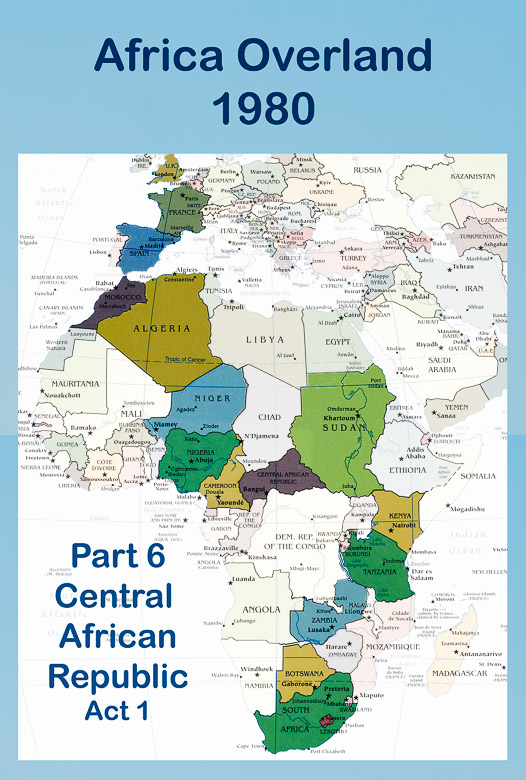
Next post: The ten-hour bog, dancing with villagers, a warm waterfall wash, and an urgent quest for help in Bangui. Oh yeah, and the fight I mentioned in post 4.
Disclosure:
1. I’ve changed the names of everyone involved for privacy
2. Obviously any photo with me in it was taken by another member of the group, but I’ve no idea who. We all swapped photos when we got to London.
Previous posts:
1. The Drums Of Africa
2. Tanzania Mania
3. Wildlife And Tribal Life In Kenya
4. The Opposite Of Glamping
5. Turn left At Sudan
All words and images by Alison Louise Armstrong unless otherwise noted
© Alison Louise Armstrong and Adventures in Wonderland – a pilgrimage of the heart, 2010-2024.

 Adventures in Wonderland
We did sort of the same trip at more or less the same time (1980) and oh those roads and bridges. And that orange mud, but at least the water meant rivers, and opportunities to wash. Those kids who came to look at us and follow us – they were so incredibly cute. Amazing times
LikeLiked by 1 person
Really were amazing times for sure! Looking back I can hardly believe what we did. Sounds like you had a very similar experience. I’m so glad I got to do that when it was still possible. No one goes through CAR these days.
Alison
LikeLike
Brings back memories of pushing a turkc through sand or mud. Africa delivers it all.
LikeLiked by 1 person
Oh yeah, Africa definitely delivers it all. We had *no* idea what we were getting ourselves into, but you sure learn how resilient you are.
Alison
LikeLiked by 1 person
Yet another fascinating and inspiring blog post, Alison! While I haven’t been on an African overland adventure, I can easily see why it is essential to be mentally prepared for an African expedition as situations sometimes change bringing unique challenges and you have to be prepared to tackle the problems if you encounter any along the way. While it’s all part of the adventure, going on a trip where you’re travelling all the time and taking on new experiences is a different type of stress. You need to prepare for it. You need to understand that you’re going to have to take breaks. You’re going to have to step back at times. You’re going to have to manage your energy, your time and what you do. If you don’t, you’ll burn yourself out – identifying your strengths, your weaknesses, and your knowledge gaps can make a big difference. Thanks for sharing, and have a good day 🙂 Aiva xx
LikeLiked by 1 person
Thank you so much Aiva. I’m not sure any of us really prepared for it. Even though we got a lot of information from Exodus Expeditions ahead of time it’s impossible to understand what the journey would be until you’re actually doing it, and every trip is different. I’m amazed by what we accomplished. And looking back on it I have new found respect for the expedition leader, and a new found appreciation for the enormous responsibility he shouldered. For sure he and the co-driver managed their energy and time as best they could, taking breaks from us whenever possible. And we all did too – napping in the truck, spending time in silence. It’s only now in retrospect that I understand the resilience I developed because of that Africa trip.
Wishing you and your family a good day too xo
Alison 🤗
LikeLike
🥰🥰🥰
LikeLike
Every one of these posts brings incredible experiences. So. Much. Water! And mud! It’s a whole different way of traveling than by interstate or airplane. Much as I’m enjoying the stories, I do not think this type of travel is for me (even when I was younger).
LikeLiked by 1 person
The next post brings more water, and mud! But after that things got a little quieter through Cameroon and north to Morocco. There were some adventures, but nothing quite like coming through the jungle.
Lol, I acknowledge that this kind of travel is not for everyone. I suspect I’d do it again if I had the chance 😁
Alison
LikeLike
Africa is on my bucket list, and your journey from Johannesburg to London sounds incredible! The way you navigated through 15 countries, dealing with rivers without bridges and challenging roads, is truly inspiring. It must have been an unforgettable experience, especially working together as a tight-knit group. I can’t wait to explore the diverse landscapes and cultures of Africa myself one day!
LikeLiked by 1 person
Hi M, nice to hear from you! That trip through Africa was definitely the wildest thing I’ve ever done, and for sure an unforgettable experience.
Africa is amazing! I hope you get there one day.
Alison 🤗
LikeLike
I admire your tenacity. Easy to see why everyone must get along and pitch in.
The photo with the 5 children and baby on its mother’s back is so cute. That’s the kind of photo I’d have enlarged and hanging on my wall as a memory.
I also got stung or bitten by some insect when we broke down on the Dalmation coast and that was the quickest anyone had seen a girl take off her jeans. We never found the insect, but the bright red bite mark was about 5-6 inches in circumference on my inner thigh. The next night I found a scorpion in my tent and I kept hitting it with a tent peg mallet until it was squashed to mush. Everyone kept saying “it’s dead, Vicki, it’s dead!” “you can stop wacking it now.” LOL
LikeLiked by 1 person
Thanks so much Vicki. We just had to get along, and deal with challenges as they arose or we’d have never have made it through.
So interesting that you mentioned the photo of the group of kids and the woman with a baby – I’ve had exactly the same thought and plan on having it printed. It has inspired me to get a bunch of my photos printed to put up on the walls.
I had to read your insect/scorpion story to Don. We both had a chuckle about you annihilating the scorpion. The insect bite sounds just plain scary.
Alison
LikeLike
Staggering! I can’t imagine plying that “road” for so long. I think I would have relaxed into the idea that the goal was to figure things out and keep moving, but I might have had a few very nervous moments in there!
LikeLiked by 1 person
At this point in the narrative we were only half way there! But had covered most of the major obstacles. I think we all had some very nervous moments, probably none more than Craig. He was the one carrying all the responsibility and we all just relied on him. Thank goodness for his ingenuity and his calm leadership. It’s only in retrospect that I’m beginning to get how staggering the whole journey was.
Alison
LikeLiked by 1 person
And I thought the roads in Africa were bad 25 years ago, they were a breeze compared to these! A day or two of this would have been manageable but to travel these roads, building bridges as you go, for so long must have been very stressful, especially for the drivers What an amazing journey you’re re-living for us Alison. I’m really enjoying it. Maggie
LikeLiked by 1 person
I’m sure it was all majorly stressful for our expedition leader, and the co-driver. They were the ones who carried all the responsibility, especially Craig. And I can’t even imagine what it was like for him to drive the truck over that bridge we built. I don’t remember feeling stressed, well a little maybe, we knew we were living on the edge, but I had total faith in Brett, and especially in Craig. He’d been doing these trips through Africa for 4 years already so he was pretty experienced at it all.
Re the roads I think it depends where you are. This same east-west road in CAR is just the same today as it was back in 1980. It still becomes impassable during the rainy season.
Thanks Maggie, I’m glad you enjoying my story of Africa. I’m having a great time putting these posts together. It’s amazing to re-live it.
Alison
LikeLiked by 1 person
Yikes! What a resourceful group you were! And now there is only one east-west road to speak of. This becomes more and more of an adventure as you move along.
LikeLiked by 1 person
Yikes indeed! We really had no idea what we were heading into. And yes, it definitely became more and more of an adventure, but we had no choice but to press on. And we all arrived safely in London. Eventually.
Alison
LikeLiked by 1 person
After reading this post, I’m never complaining about bad roads in Indonesia ever again! Bama and I have driven on some stony or pebbly stretches and bumpy dirt tracks in our travels around the islands, but nothing comes close to the muddy quagmire you’ve shown us here.
I was floored that you literally had to build bridges as you went along —that tells us so much about the determination of the whole group and your collective ability to think on your feet. Driving across the RSGs and sand mats must have been so nerve-wracking for Craig. And that photo of the tea being made as the villagers look on speaks volumes about the rarity of seeing Westerners in those parts.
LikeLiked by 1 person
That muddy quagmire still exists in pretty much exactly the same way. From Bangi east to Bangassou in the dry the road is plowed smooth. I doubt they go further east than Bangassou. Most of the population lives west and northwest of Bangui so that east-west artery is less important and still becomes impassable in the rainy season. It’s still the same in the southern part of Cameroon too. Not enough money, and not enough population to keep the roads functional. It’s only for the truly intrepid, even now.
We had no idea we’d be building bridges! I’m pretty sure Craig also had no idea. He’d been leading groups back and forth through Africa for four years and I’m pretty sure this was one of his more challenging trips.
And yes, I do think we Caucasians were a pretty rare sight.
Alison
LikeLiked by 1 person
What an incredible adventure, Alison. I laughed at our Peace Corps training camp in the Sierra Nevada Mountains of California in 1965 when they had us fall trees and build a bridge. Apparently it was good training after all. Fortunately, I never had to use that.
LikeLiked by 1 person
The entire Africa trip was truly epic. I look back and am amazed at what we went through and what we achieved. That bridge could have been such a huge disaster. And I’ve no idea what we’d have done without the RSGs.
Yes, a good thing they taught you how to build a bridge even if you never had to use it; for sure it was a possibility as you now see.
Alison
LikeLike
Good memories, Alison, with the rough spots smoothed out over time. I’ll bet it was great for bonding. Do you still keep in touch with any of the people who traveled with you!
They also brought in a crate of live chickens one night and said here’s dinner. Of all the trainees, I was the only one who had ever chopped the head off of a chicken, gutted it and plucked it! Grin.
LikeLiked by 1 person
Sadly I haven’t kept in touch with any of them. Lynne was a fellow Aussie, but it was another year before I returned to Oz and by then she’d moved on. I remember the last name of only one of them and I’ve a lead on her whereabouts/contact info. Fingers crossed it’s her.
LikeLike
Hope you succeeded, Alison. That would be great to catch up!
LikeLiked by 1 person