10 February 2023
It rises in the Budawang Mountains 220 kilometres (137 miles) south of Sydney and 50 kilometres (30 miles) inland from the coast. The Aborigines call it Bhundoo, meaning Big Water, though most Australians know it as the Clyde, and up there in the Budawangs at first it’s no more than a trickle.
It begins a bit north and east of the Sassafras National Park campground in a barely inhabited land thick with forests. There are no roads in to the river at this point. It flows undisturbed beneath a lush canopy, home of woodland birds and animals. There’s a lookout from the Mount Bushwalker trail that allows glinting glimpses of it on a sunny day, way down below beneath the trees.
Pushing relentlessly towards the sea the river has sculptured a land of remarkable features, and has been given names to match its majesty: Monolith Valley, Shrouded Gods Mountain, Byangee Walls, and the Ettrema Wilderness.
It flows generally south, more or less parallel to the coast, picking up speed and volume as one by one it is joined by nine tributaries, each of which has its own beginning in those same lush mountains. Almost 100 kilometres (62 miles) later, and after descending over 600 metres (1970 ft), it turns east and drowns a wide valley. By now a tidal estuary, after 125 kilometres (78 miles) it finally meets the Tasman Sea at Bateman’s Bay on the south coast of NSW. It is one of the few major rivers in eastern Australia that has not been dammed.
This river has no polluting industries or sewage outflows in its catchment. It is one of the cleanest, least polluted waters of any major river in Australia. It flows first through Budawang National Park. Meandering now, it continues through several State Forests and then Clyde River National Park. Here there are numerous swimming holes providing cool relief on hot summer days, and here too are platypus and native bass in the same cool water. It is an idyllic place.
From Nelligen, about 20 kilometres (12 miles) inland from its mouth at Batemans Bay, the river is navigable for larger craft, and historically the settlement of the area depended on water transport between the two towns. Except for the oysters, which I’ll get to in a bit, river usage today is all recreational: sailing, river and ocean fishing, cruises, sailboards, outboard motor boats, jet skis, and house boats.
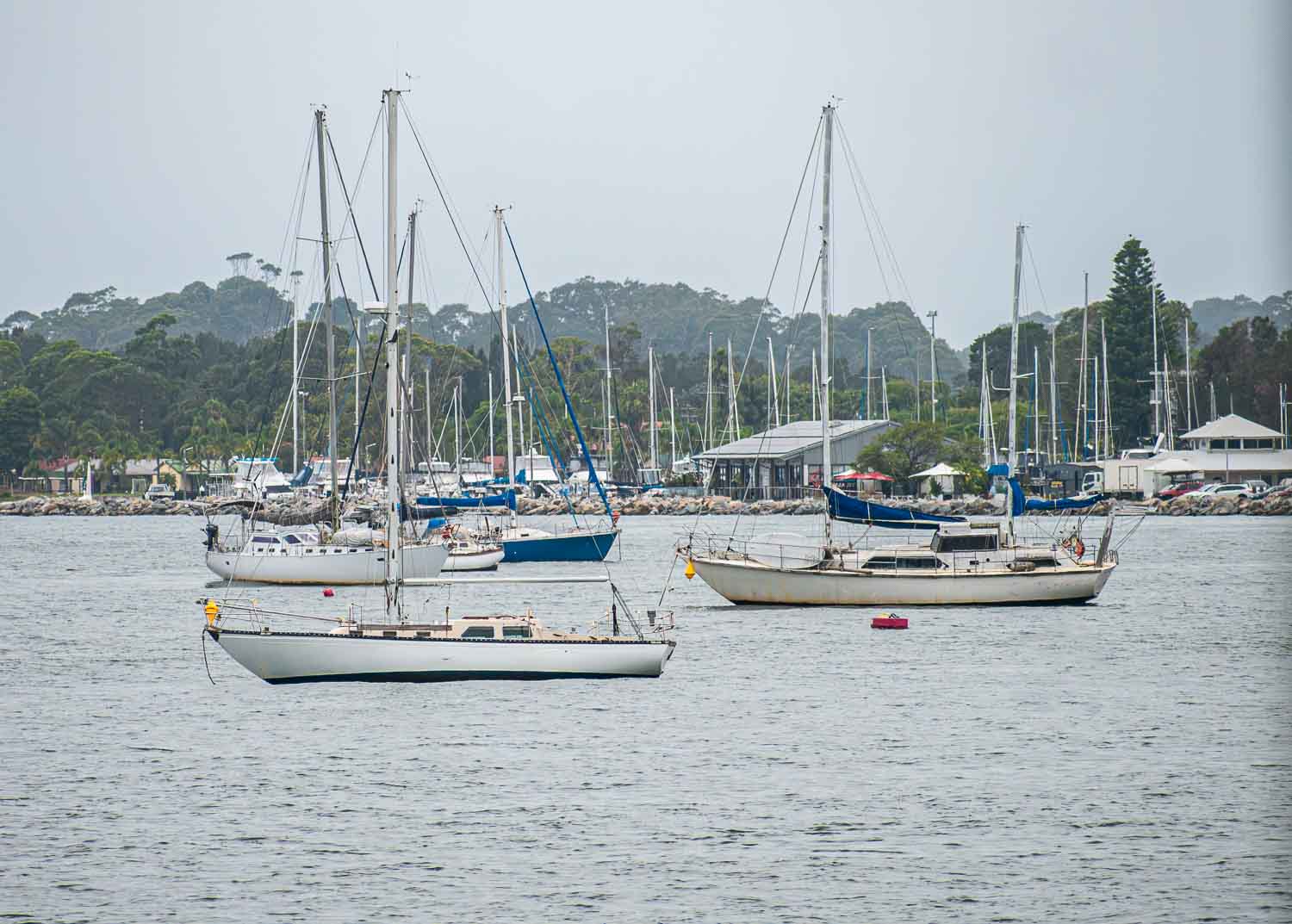

It’s a mizzle-grey day, low brooding clouds fill the sky, but we are not discouraged. The six of us have been to Batemans Bay more times than we can count, but we’ve never experienced a cruise on the Clyde River. Today is the day. Who cares about a few clouds? Or even a little rain.
But first food! There’s an iconic Batemans Bay fish-and-chip shop called the Boatshed, right by the water, that sells river cruises along with fish, prawns, oysters, and of course chips.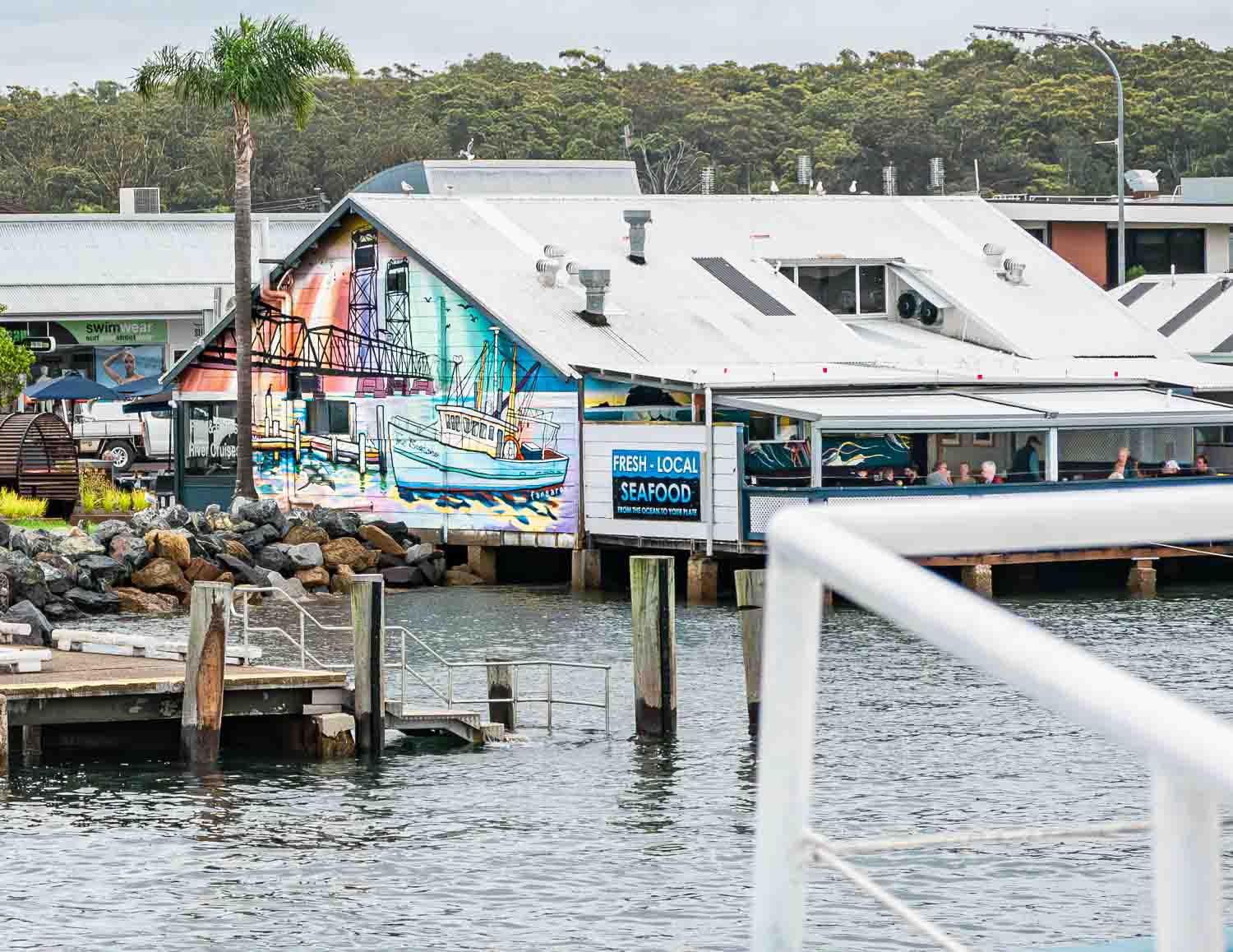
So we order lunch and head to The Escapade docked right outside, for an escapade up the river to Nelligen.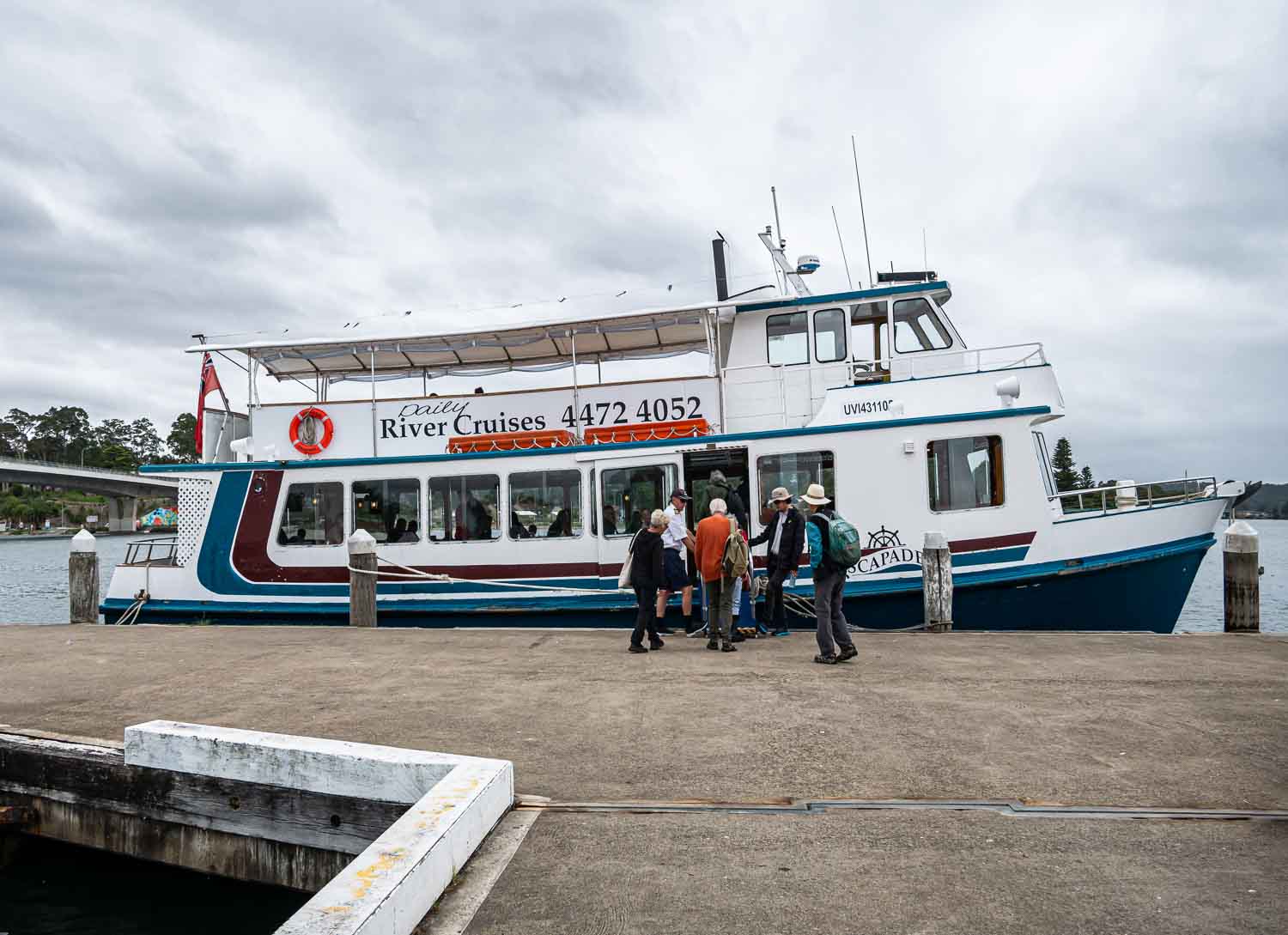
Everyone finds a seat,
lunch is delivered,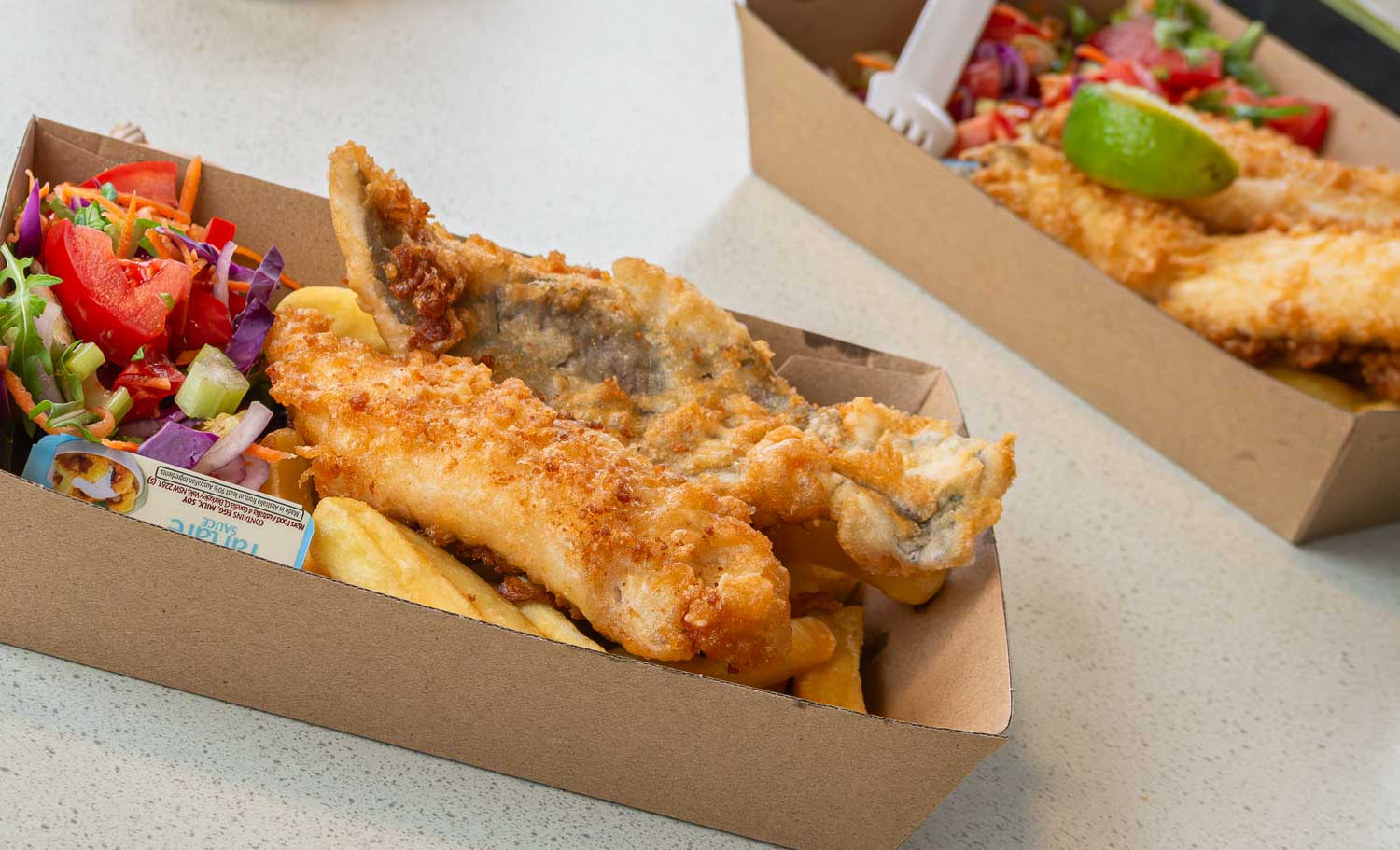
and the captain gets us underway.
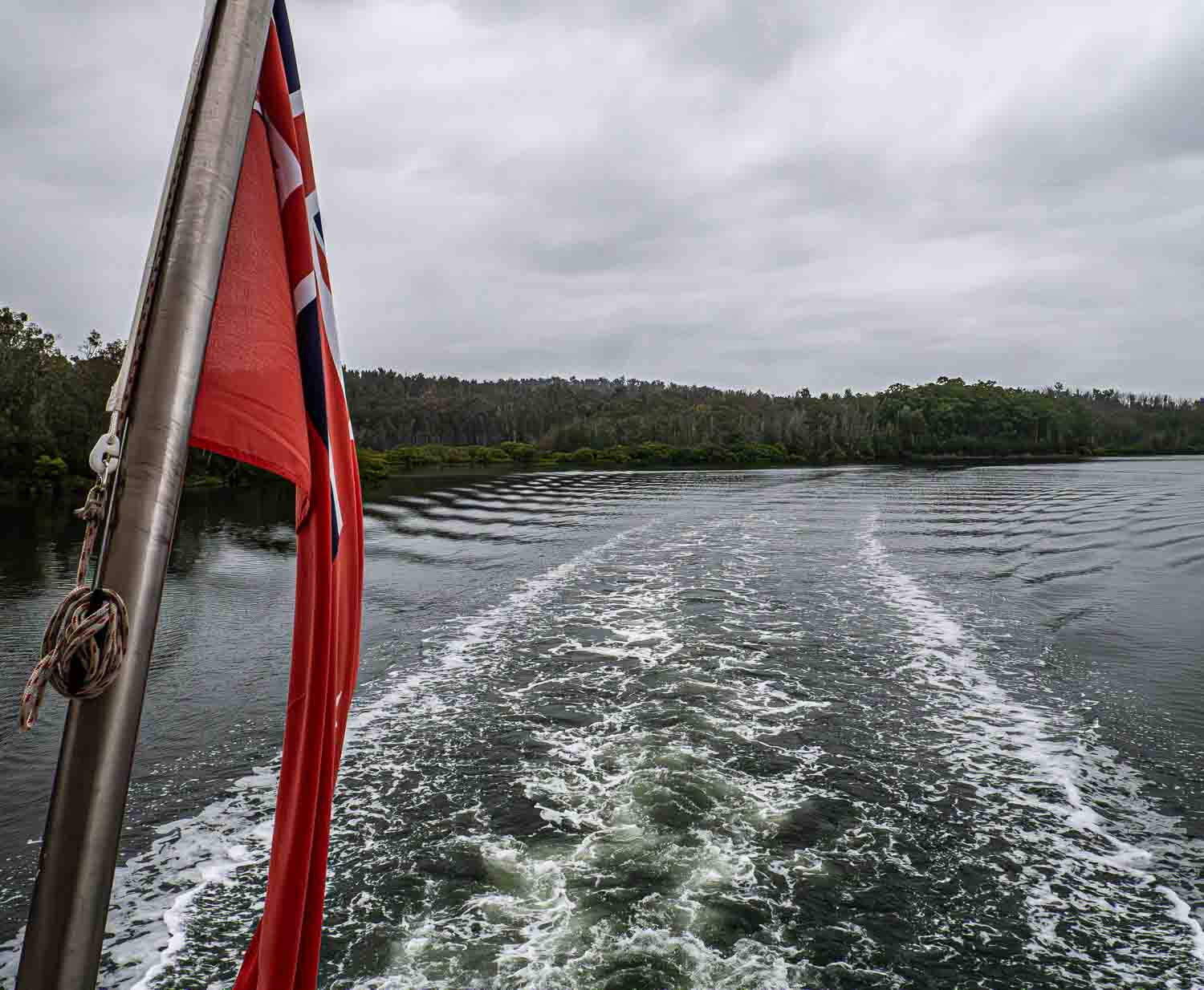
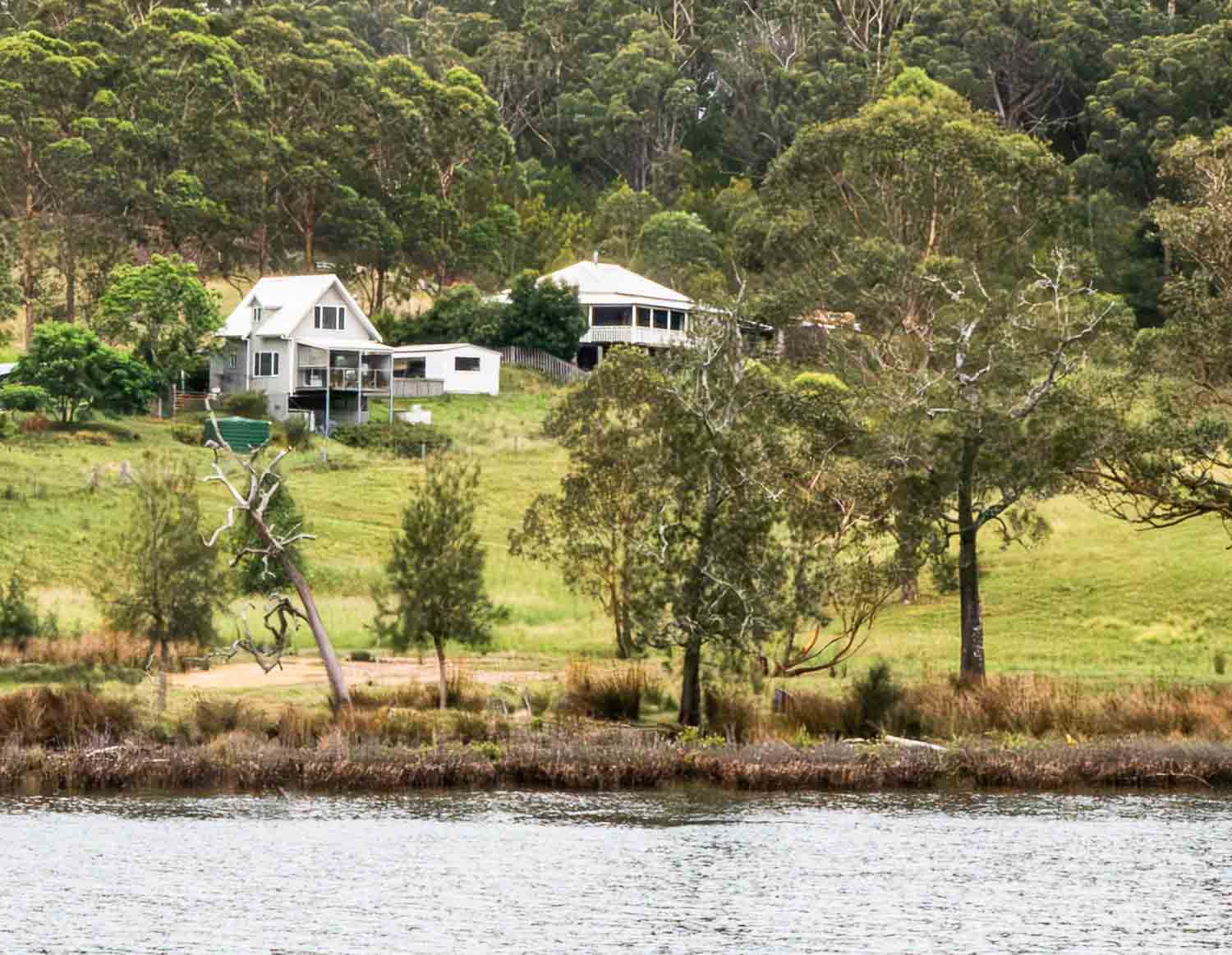
There are occasional homesteads,
and in the 1.5 hours that it takes to reach Nelligen we see a few fishermen hoping to catch flathead, bream, or estuary perch,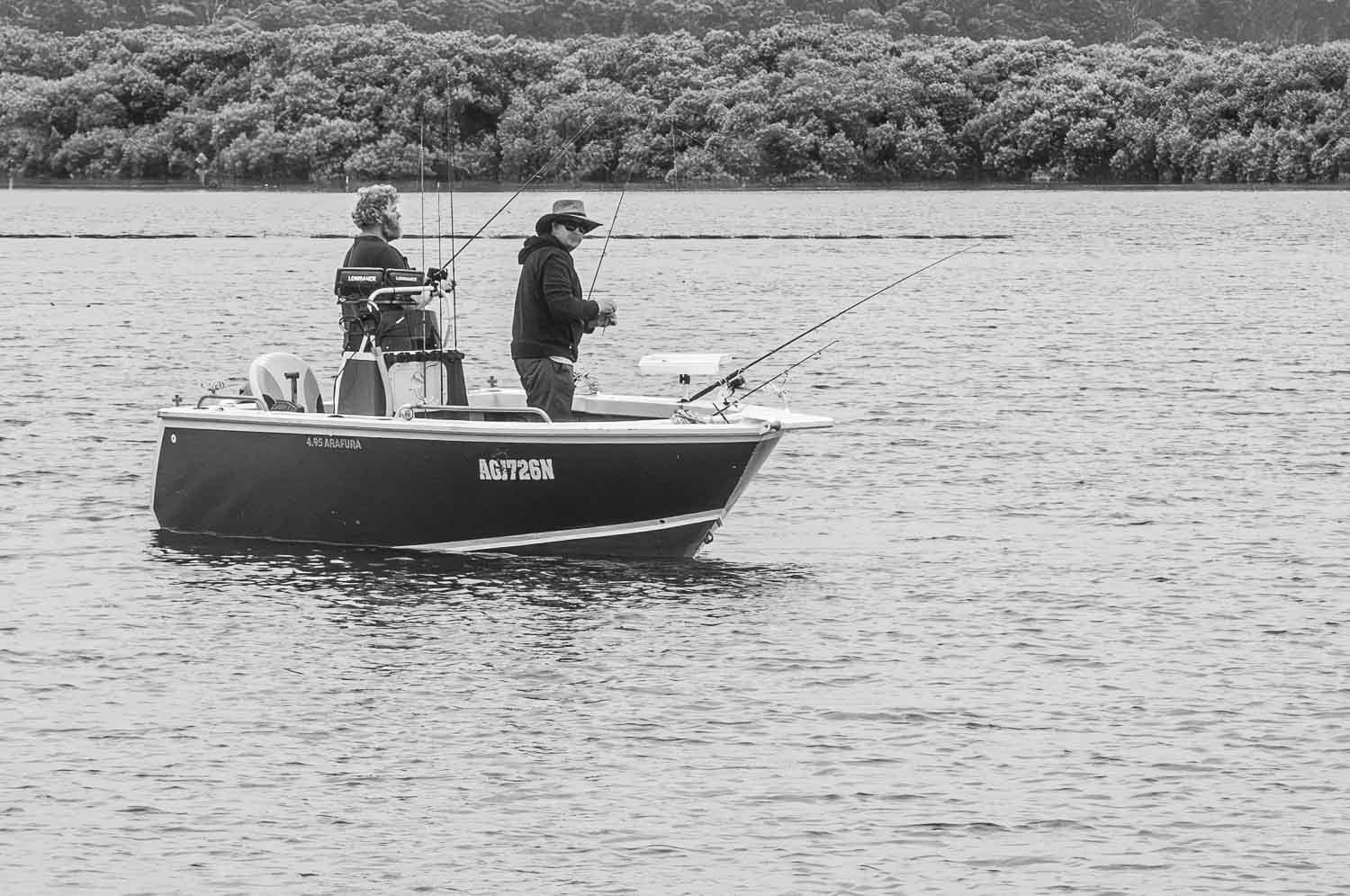
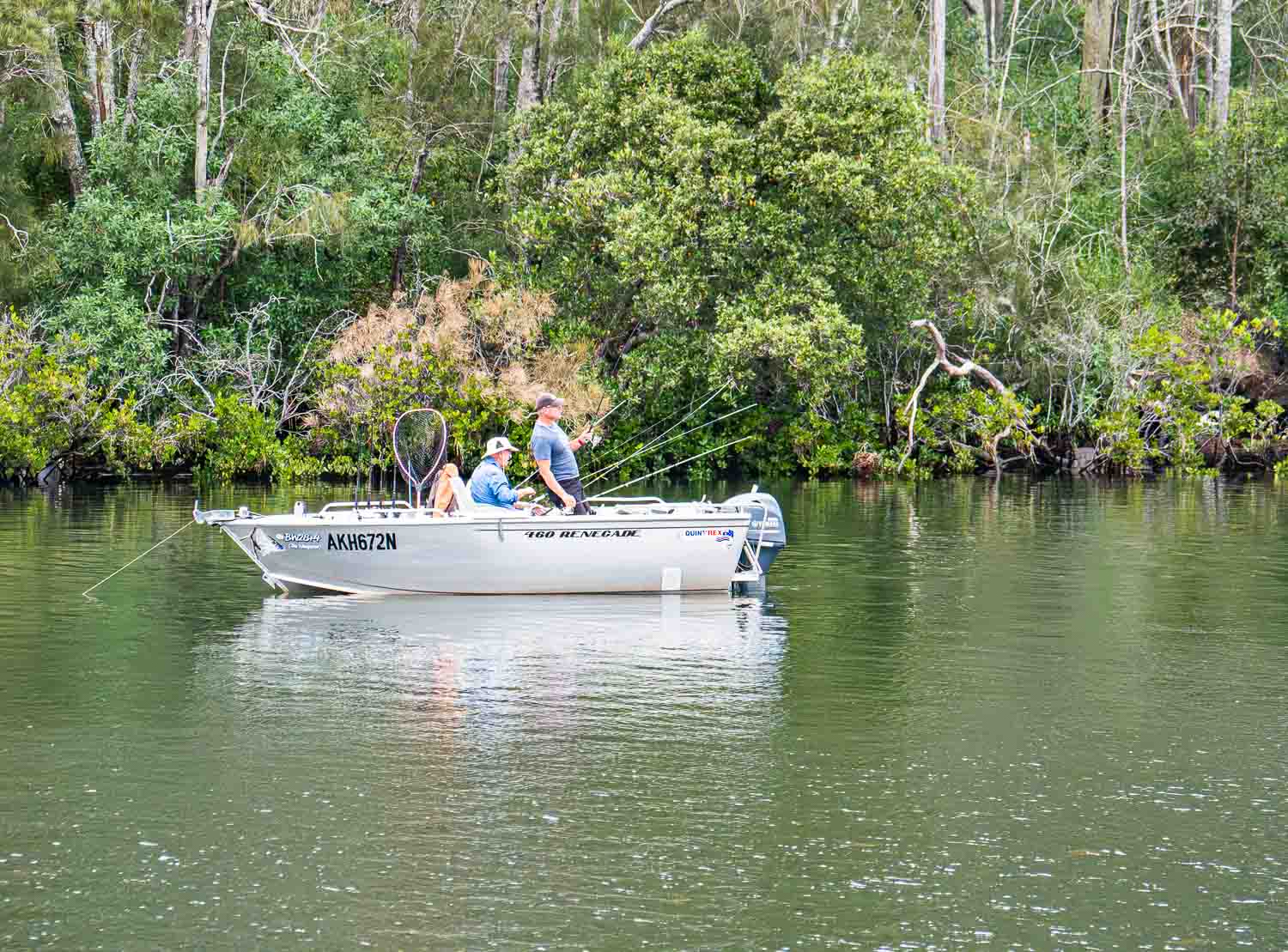
but much of the journey is a slow lazy meander through the untouched wilderness of Clyde River National Park.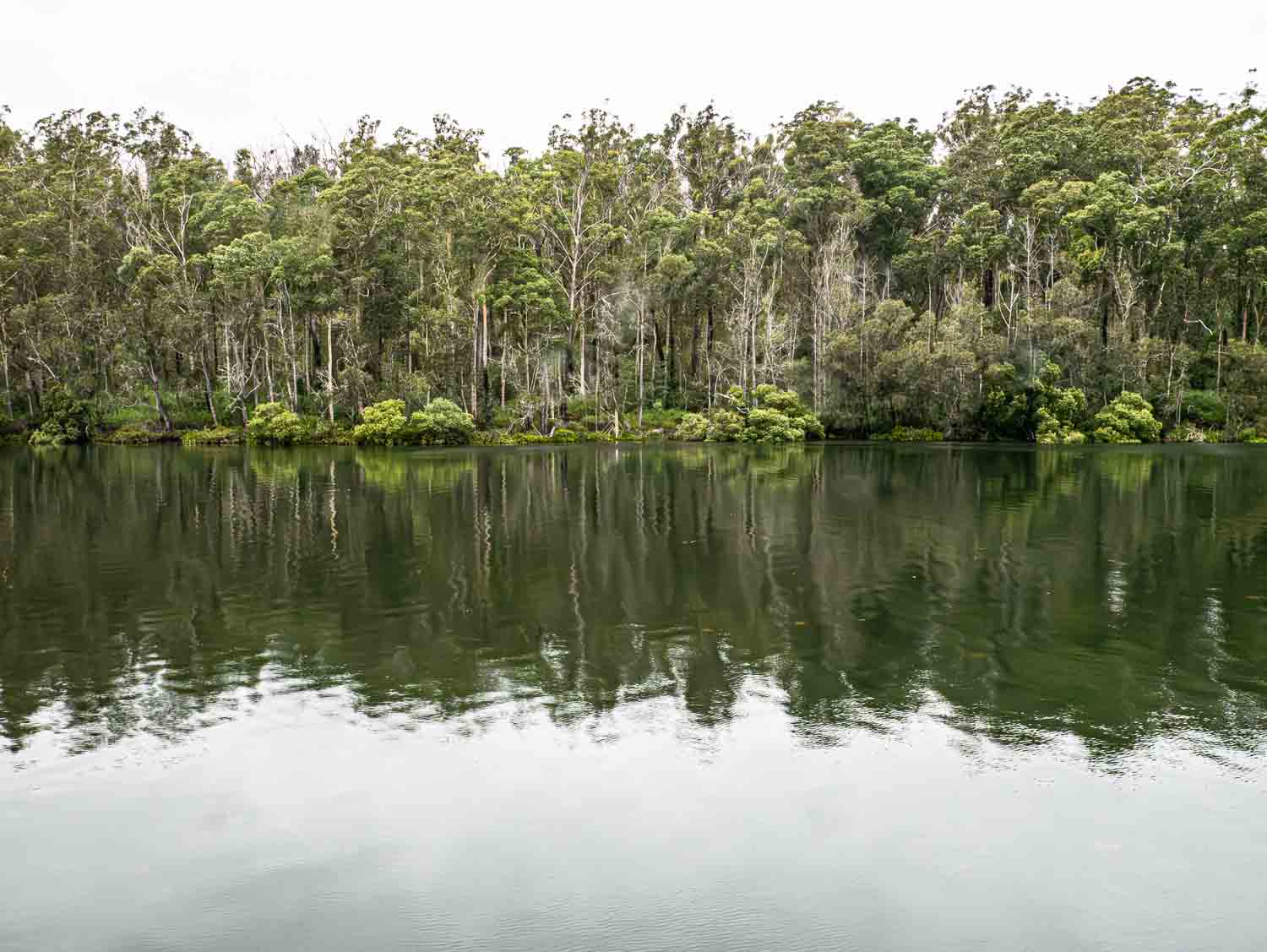

The village of Nelligen is a sleepy place on the bank of the river, both town and river hardly noticed in the mad dash on Kings Highway from Canberra to the coast. By road, once you cross the bridge at Nelligen, you’re only ten minutes from Batemans Bay. By river it’s a whole other world.
The town’s history is rich; gold prospectors, bushrangers, and steam ships have all called it home. Now it’s all empty streets, hundred-year-old weatherboard “heritage” houses,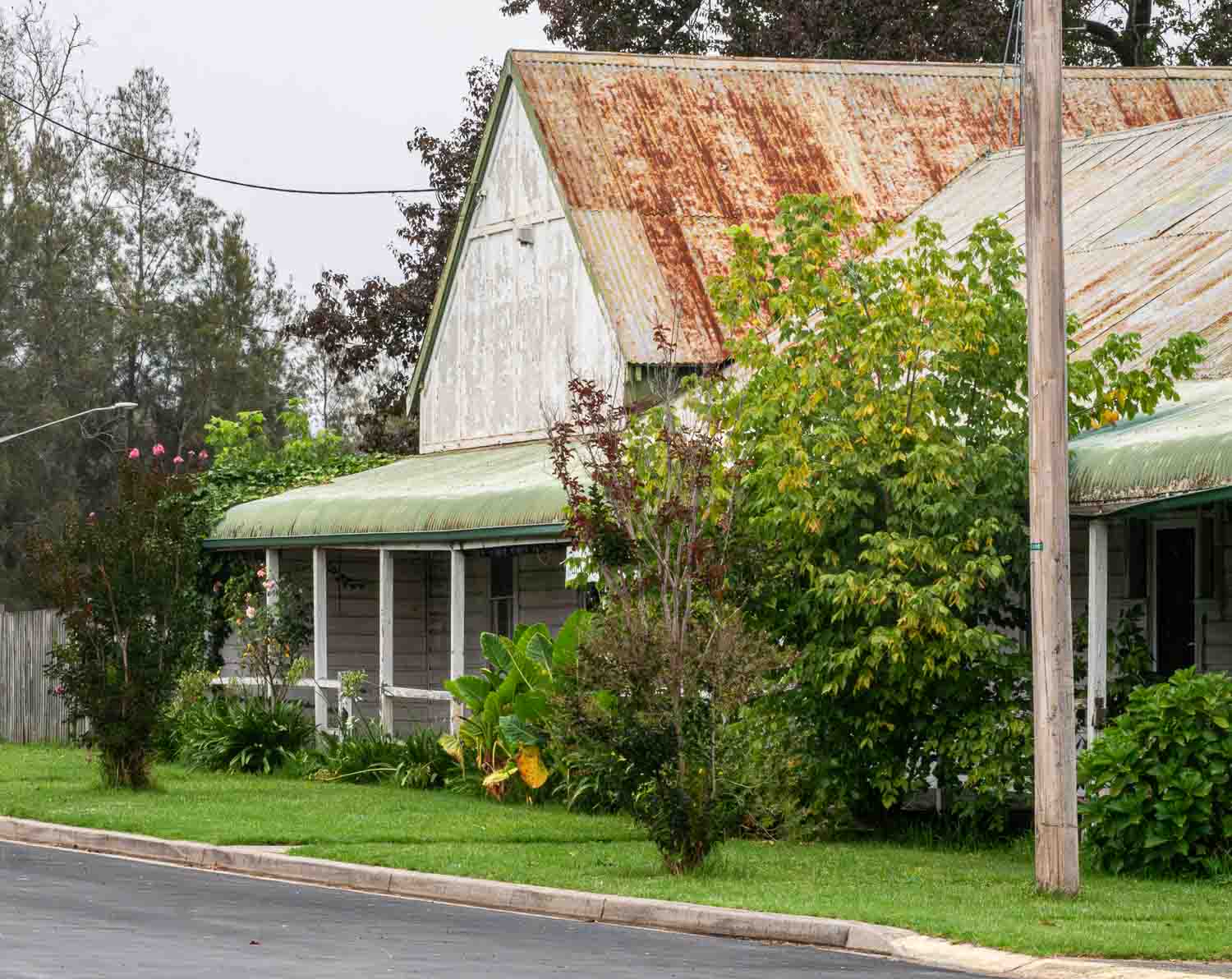
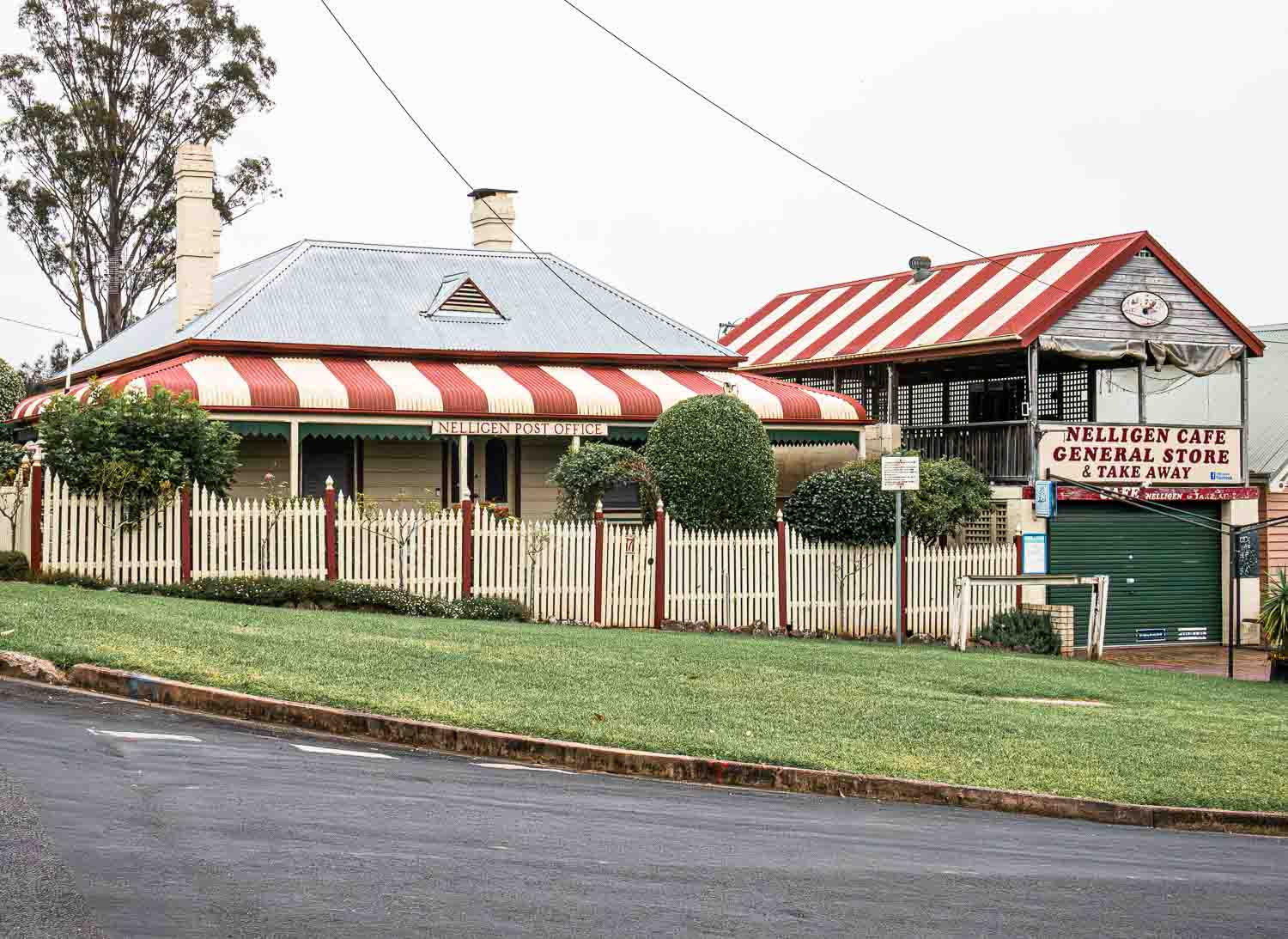
and a church converted into a home.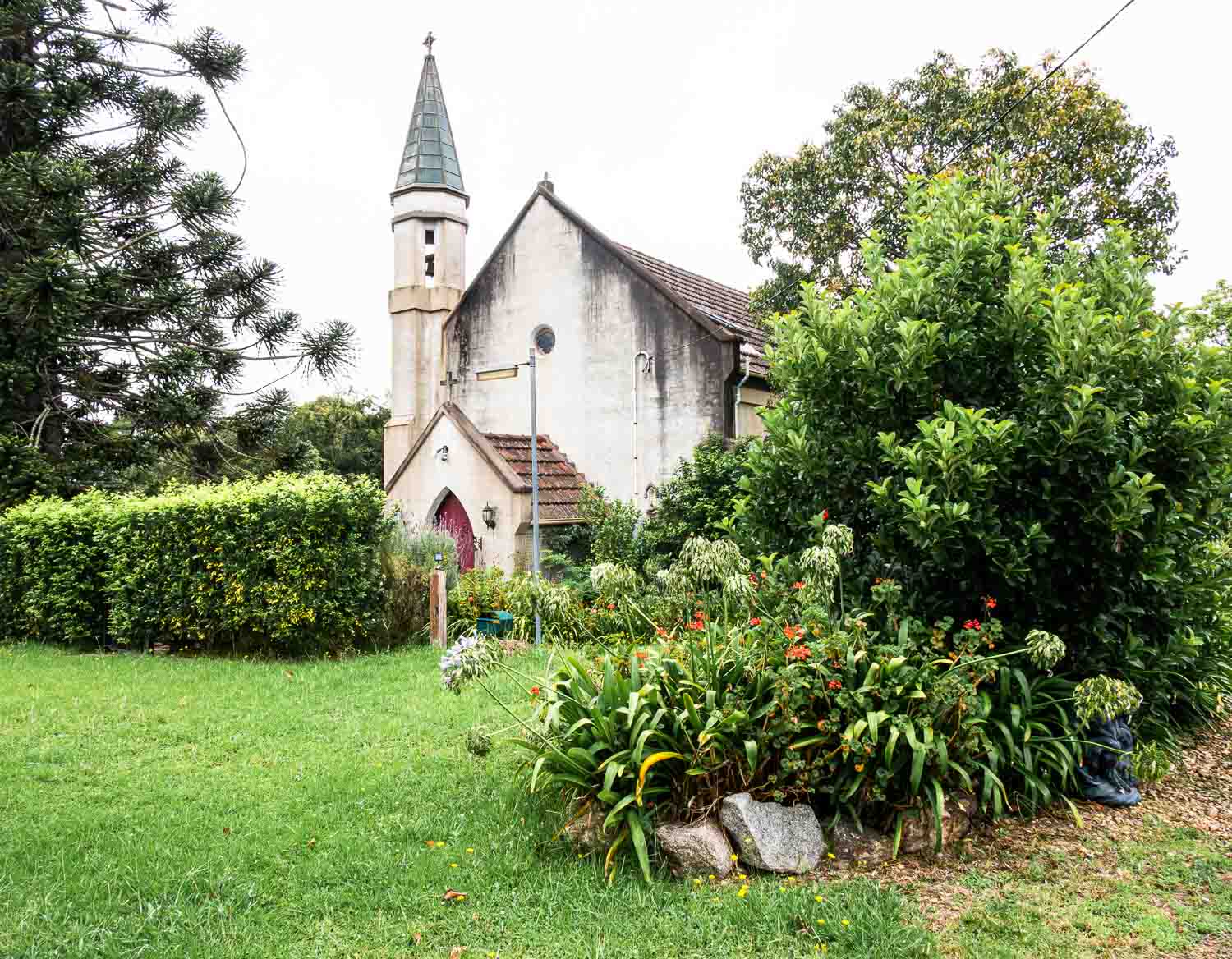
We eat ice cream at The River Cafe, and climb the hill for the view.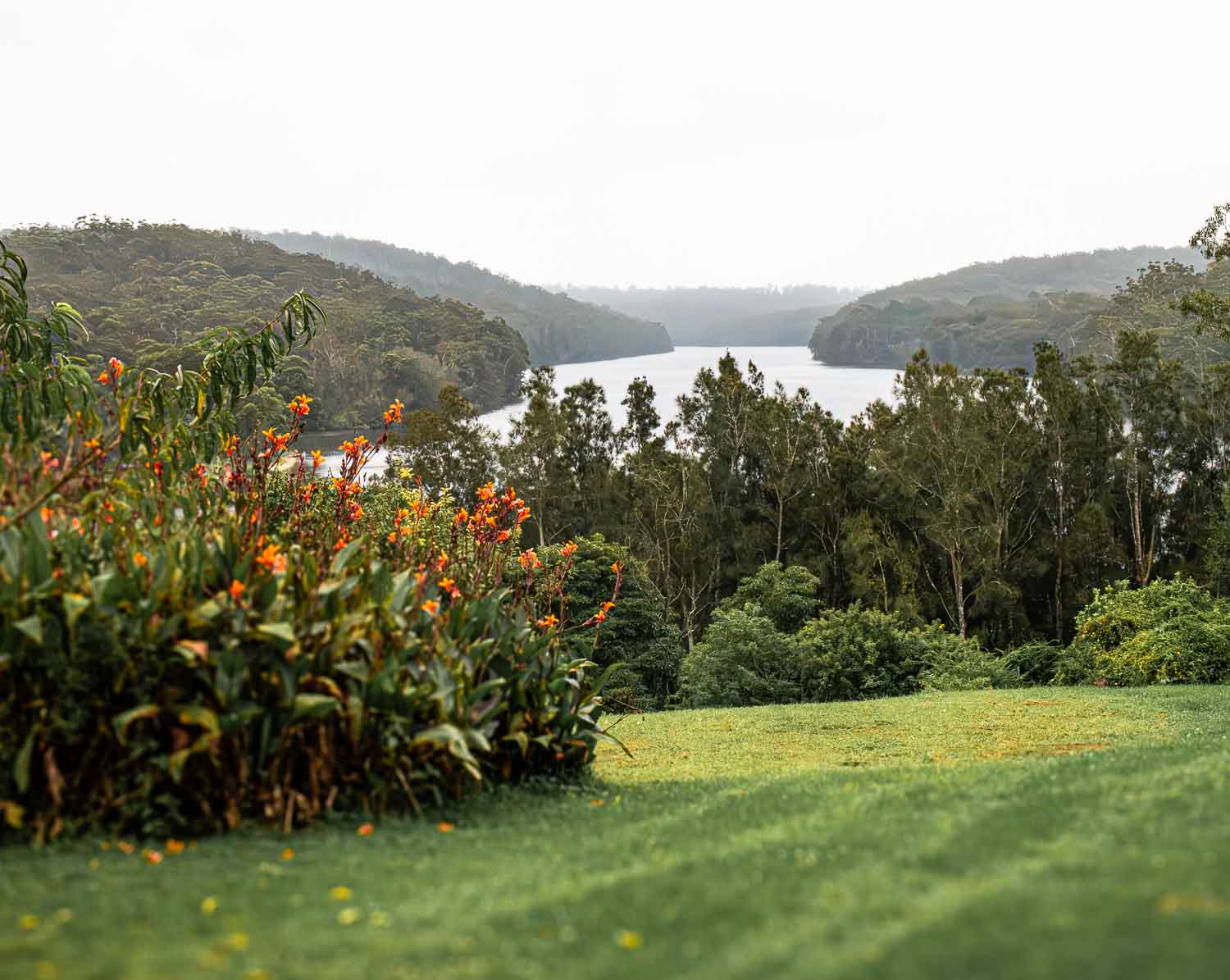
The tranquillity of the river is matched only by the soothing silence of the surrounding forests. Except for this!
The best entertainment in town, this teenage girl shows off her trick-riding skills and teaches her younger brother to do the same. What a swell party this is! In swelligant elegant Nelligen!
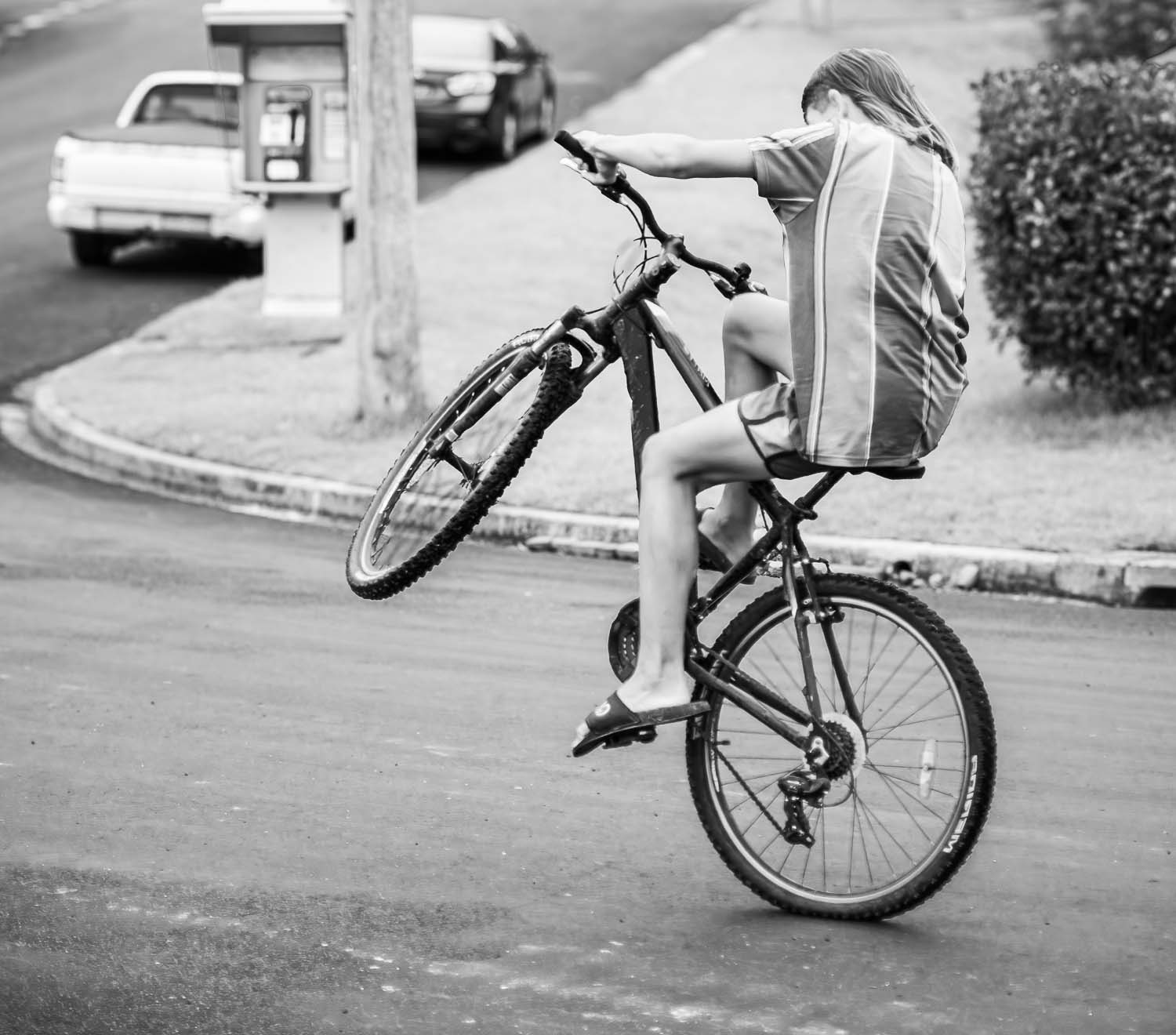
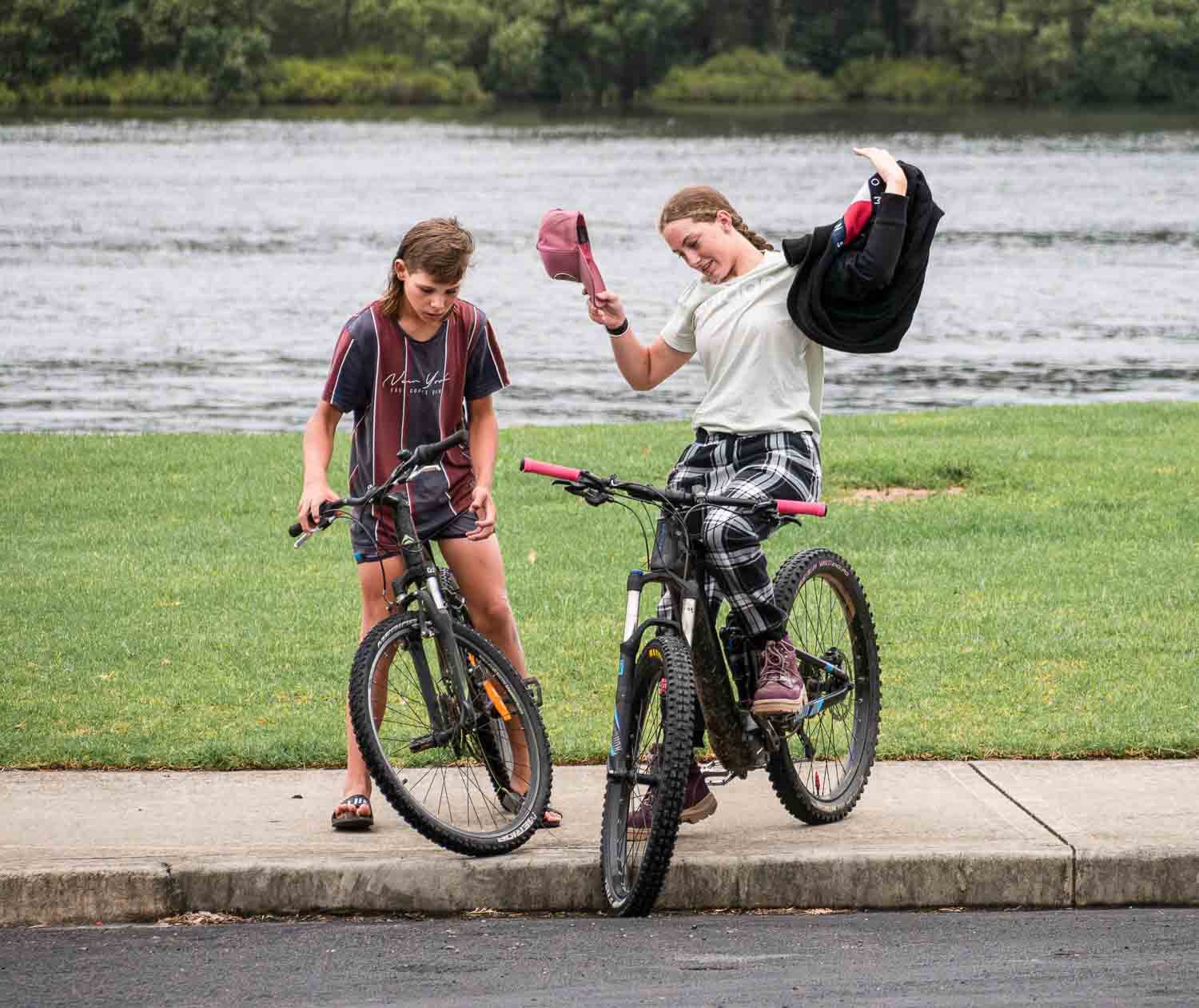
And then, after crossing the grassy bank, rejoining the boat,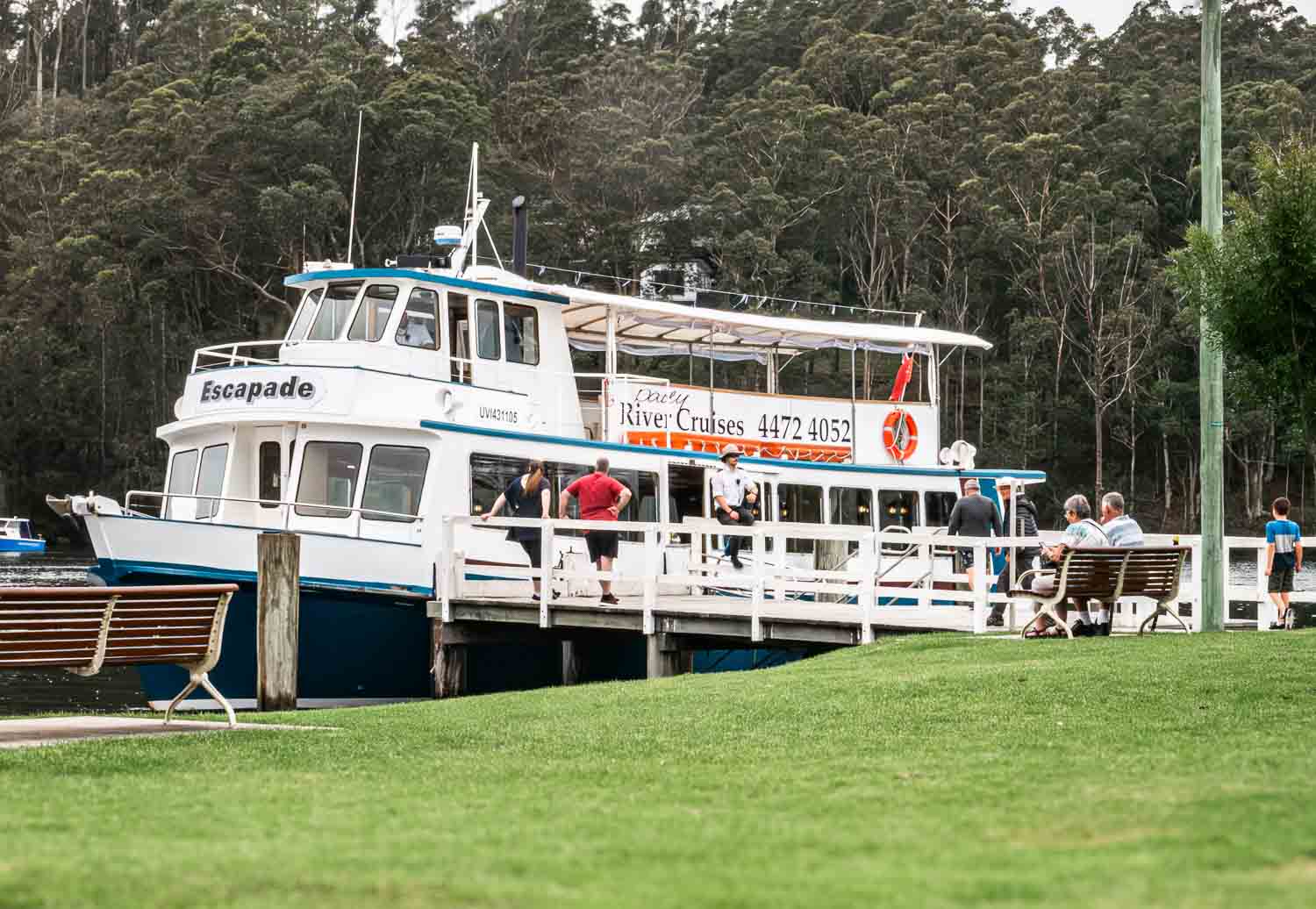
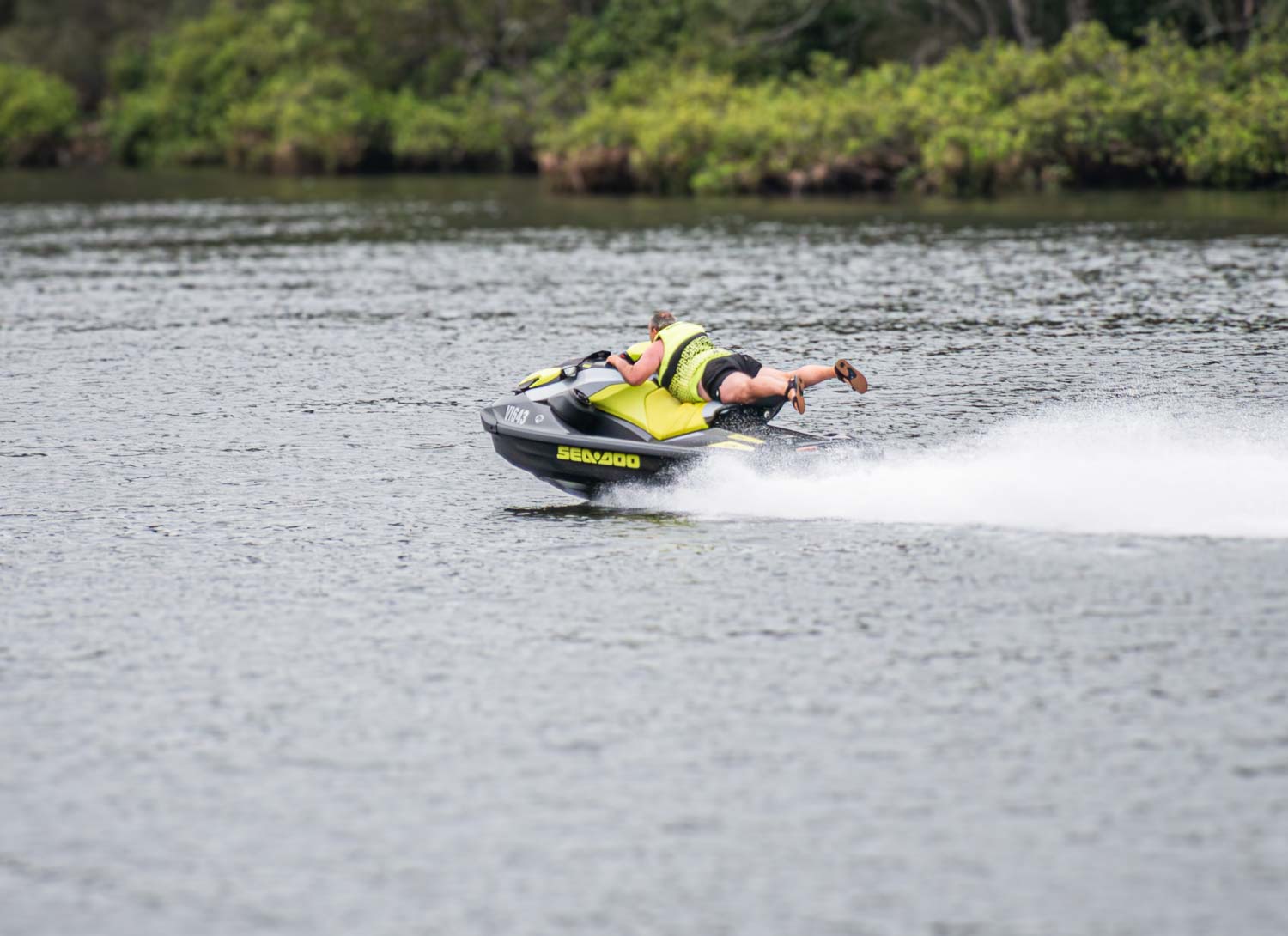
and heading down river, there’s this! A couple of mad men trick-riding on jet skis.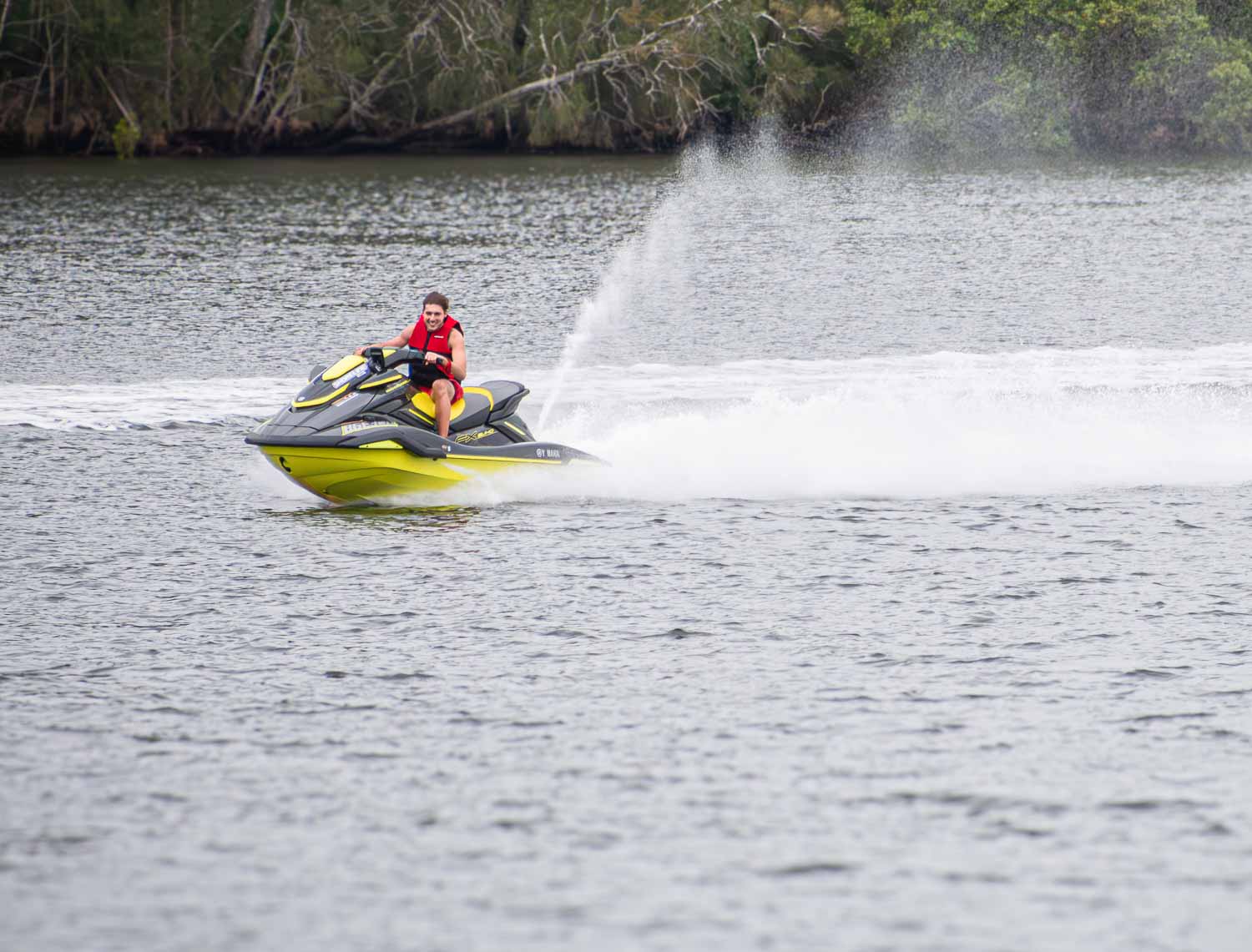
After a while a new captain briefly takes the mike for the return journey. He’s pretty tickled by the opportunity.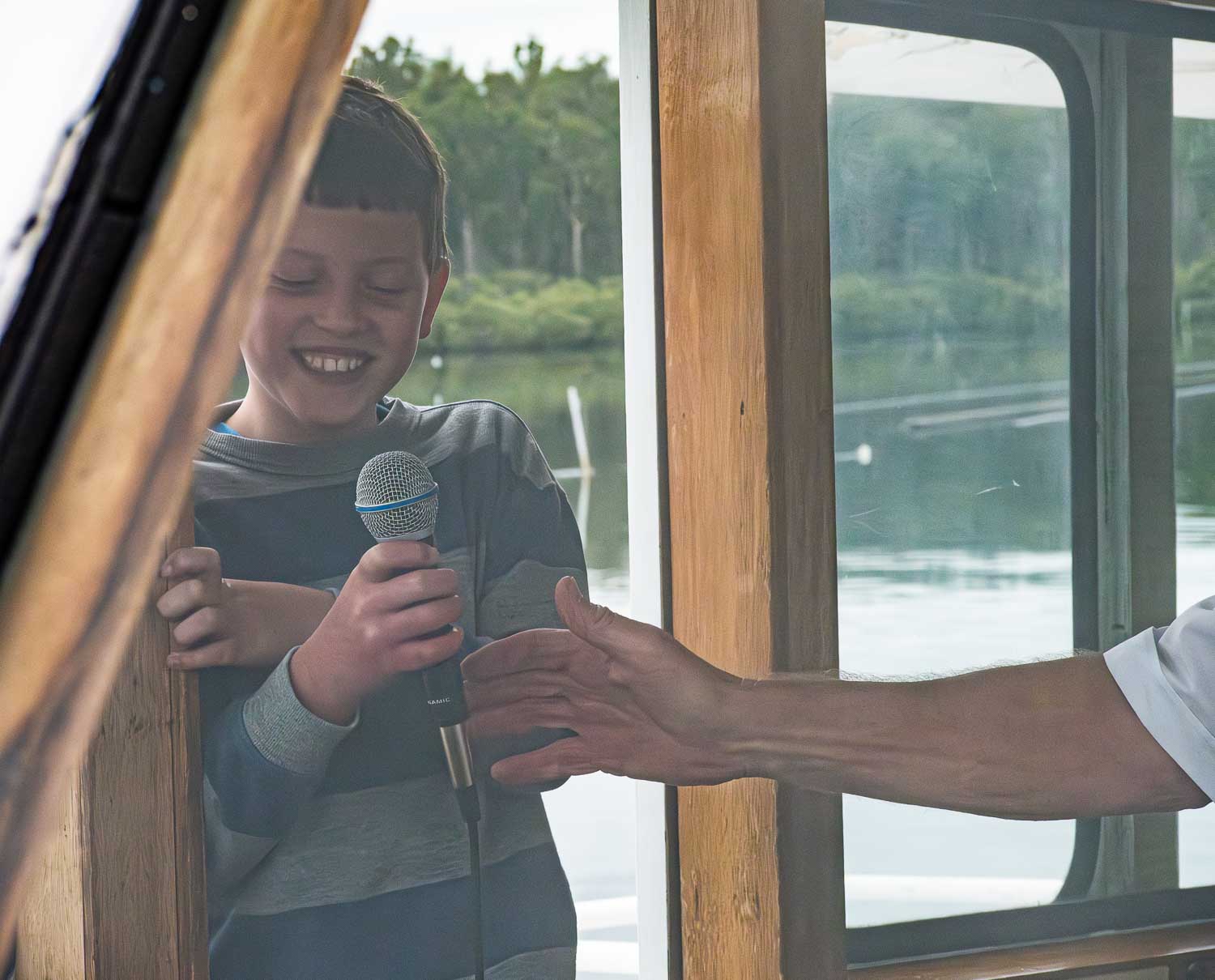
Now back to those oysters. The tidal estuary of the Clyde is the home of “the best oysters in the world”, a claim based on the quality of the water and the breed of oysters – the Sydney Rock Oyster. Apparently connoisseurs attest to this; I’m no connoisseur, but we’ve never been to the coast without having oysters at least once, sometimes buying huge bags and shucking them ourselves. I don’t know whether or not they’re the best in the world, but I know for sure they’re really good. And definitely better than the oysters we had in Croatia that made us all sick – never a good recommendation. Way back when I was a teenager and lived in Sydney my sister and I would eat fresh natural rock oysters, literally off the rocks.
With an annual production of over 6 million dozen oysters worth Au$50 million, oyster farming is the oldest and most valuable aquaculture industry in NSW.
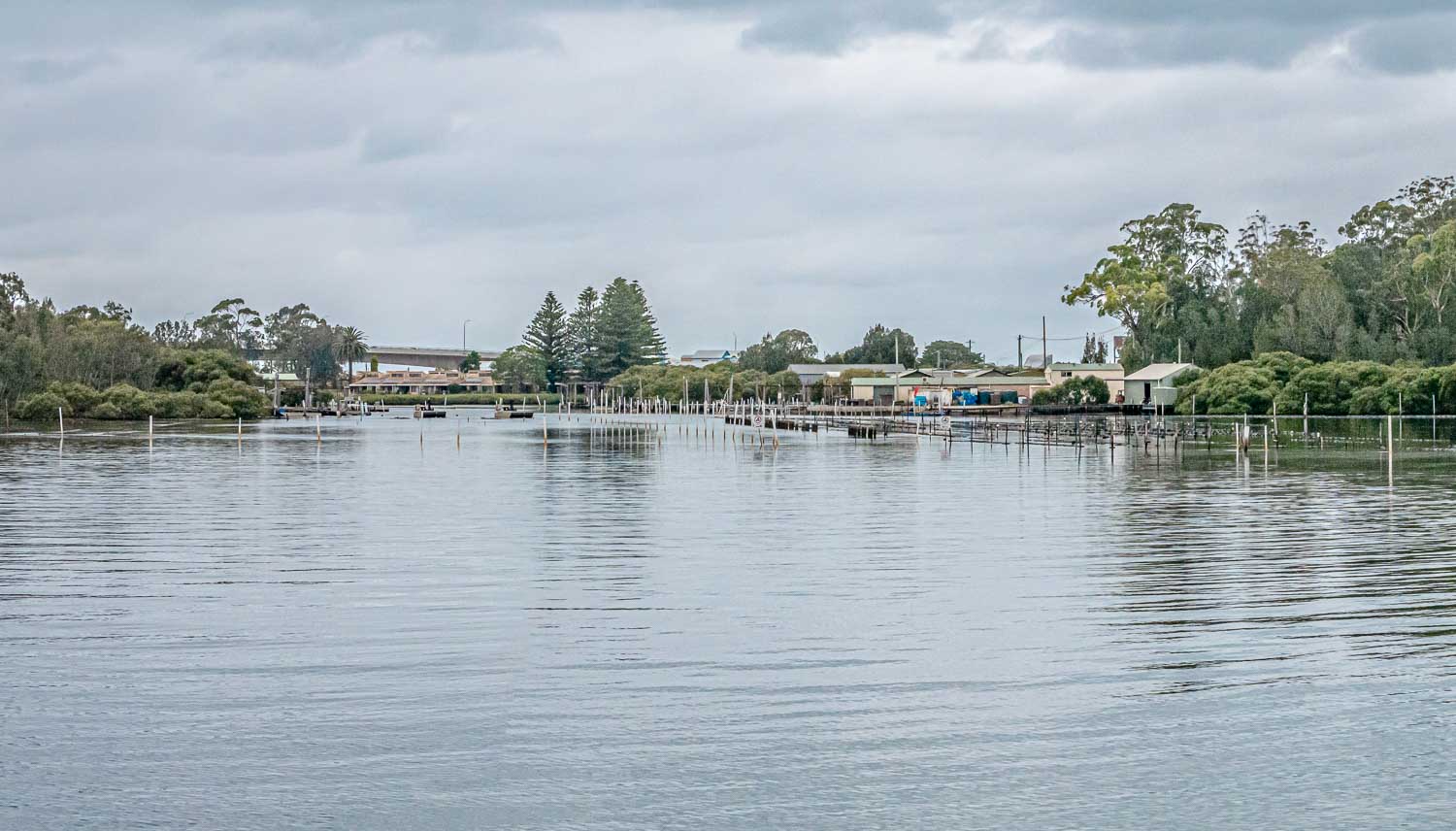
As we travel on the river signs of oyster farming are with us almost the entire way – the small work sheds right down by the water,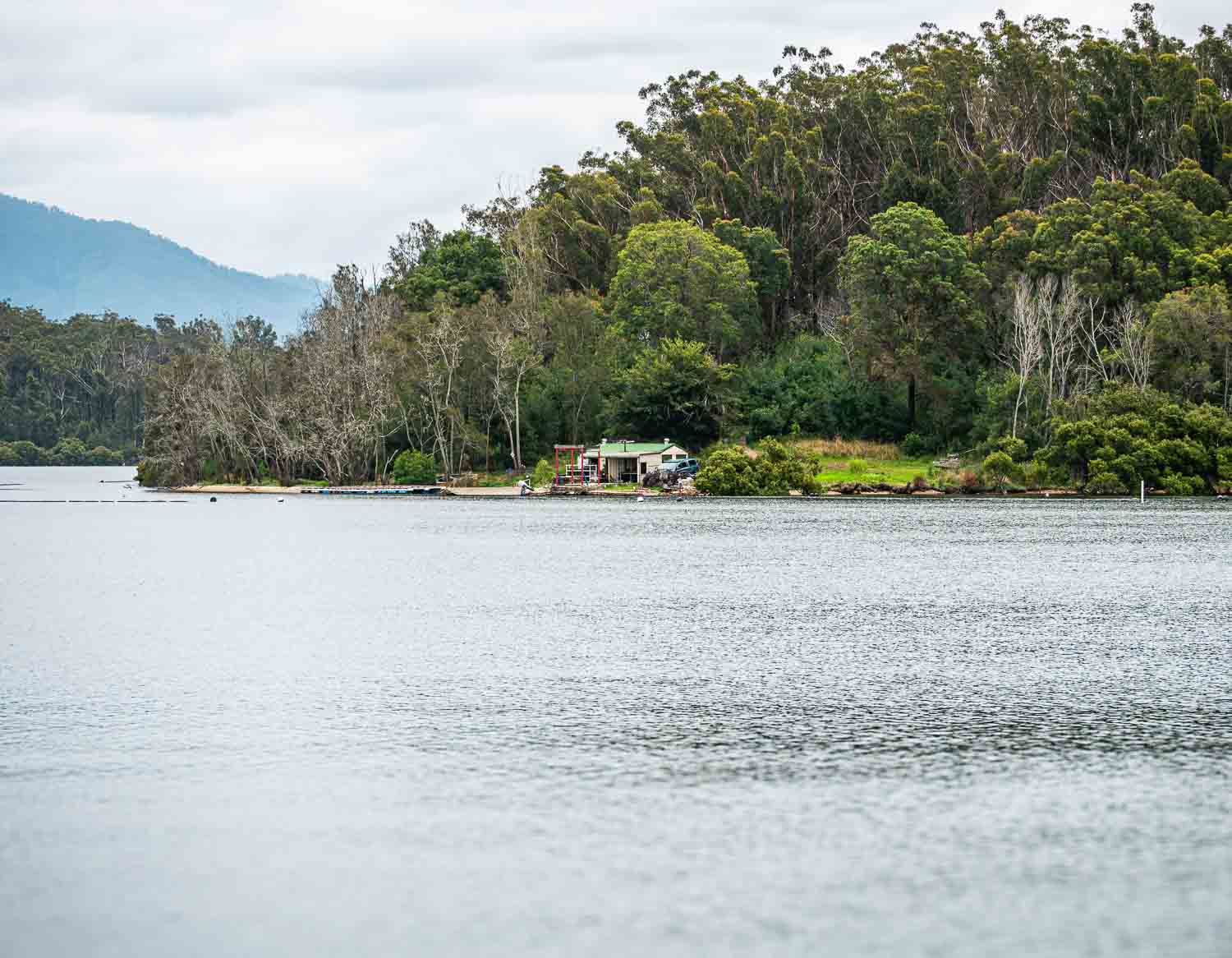
the rows of stakes that allow the trays to rest in the water,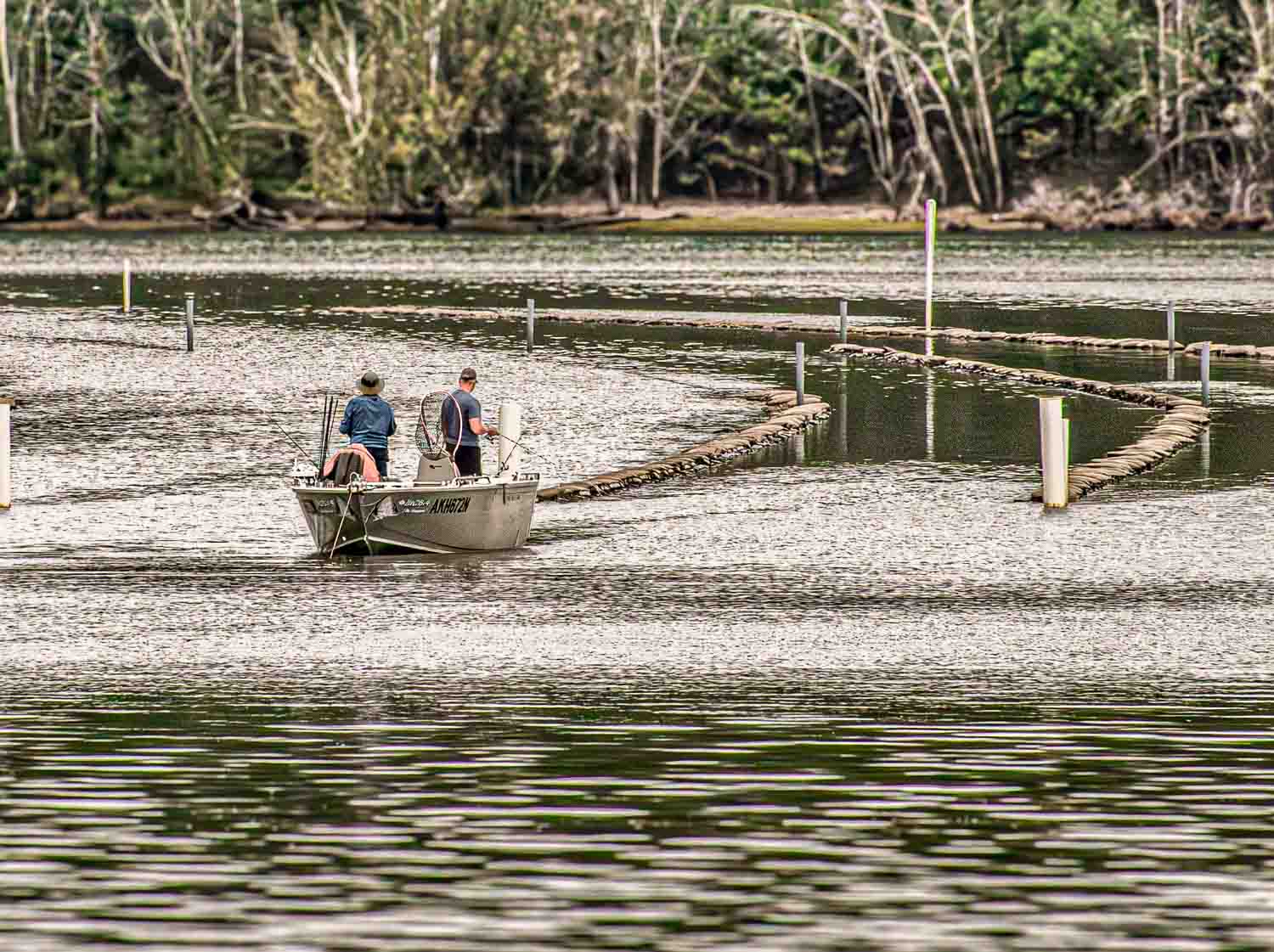
and farmers harvesting from a flat-bottomed boat as they pole between the lines to collect the trays.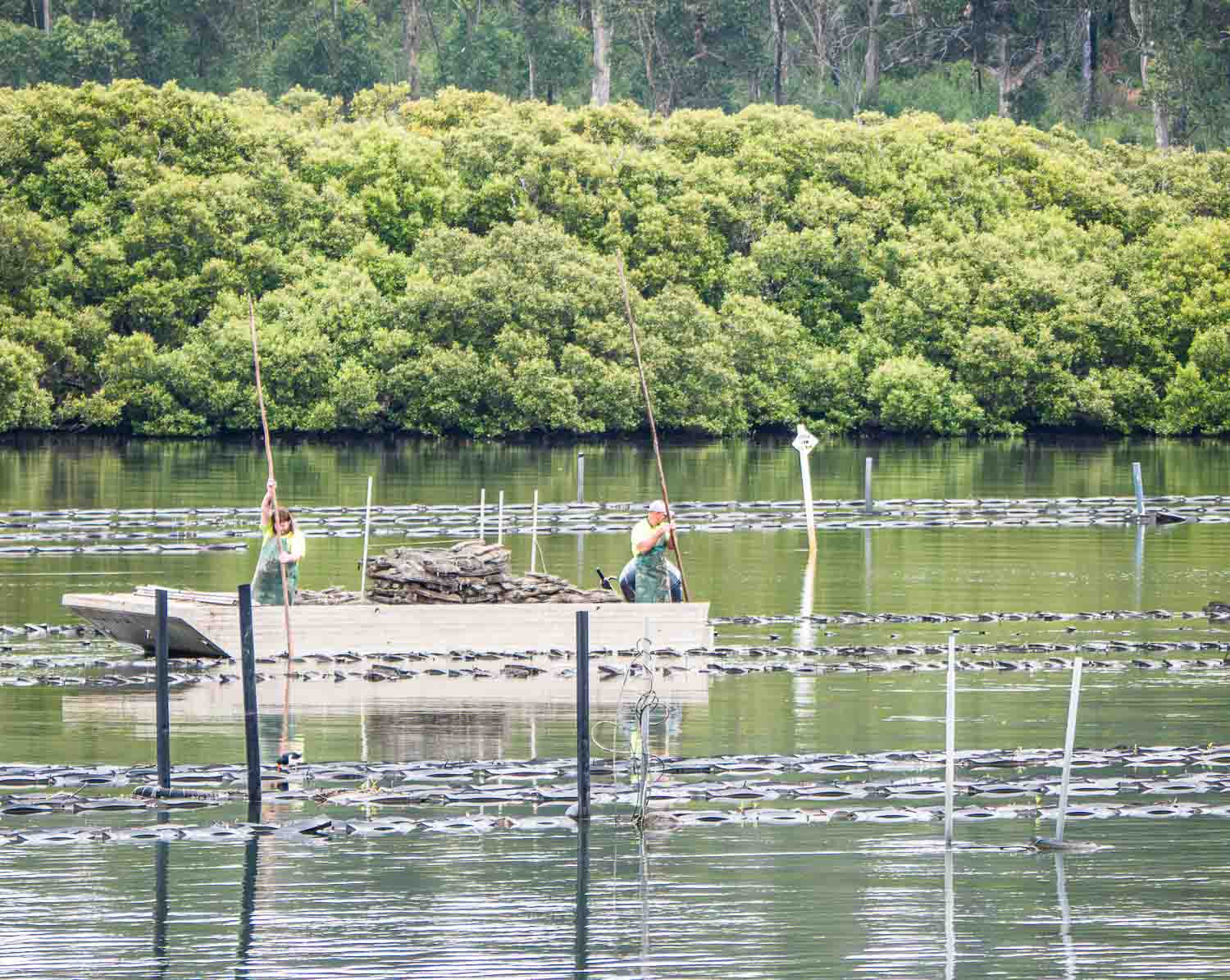
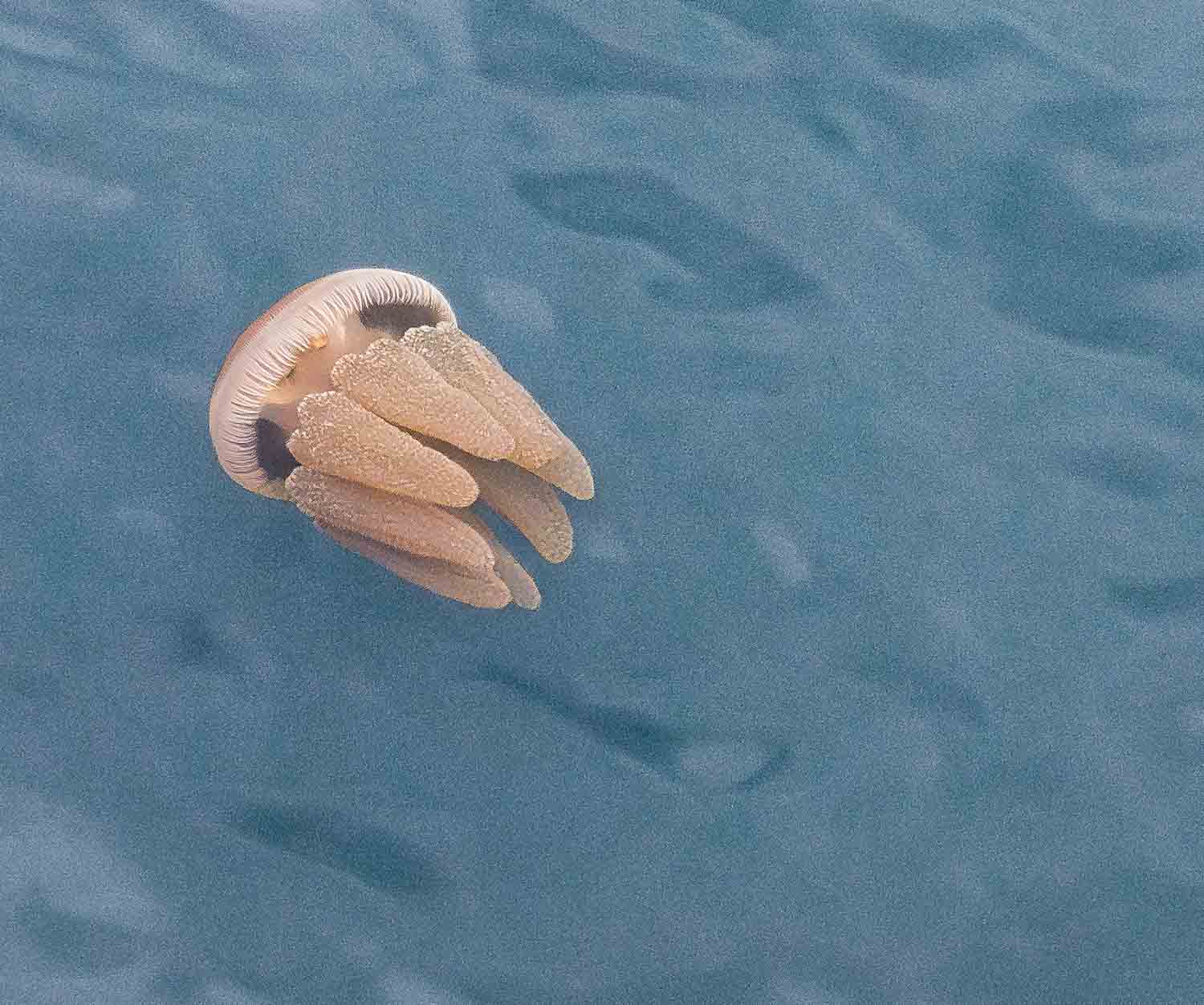
And then we see the jellyfish! The correct name is Jelly Blubber; an alarmingly prosaic name for such beauty. As we cruise slowly along they drift by the boat surrounding us; hundreds of them!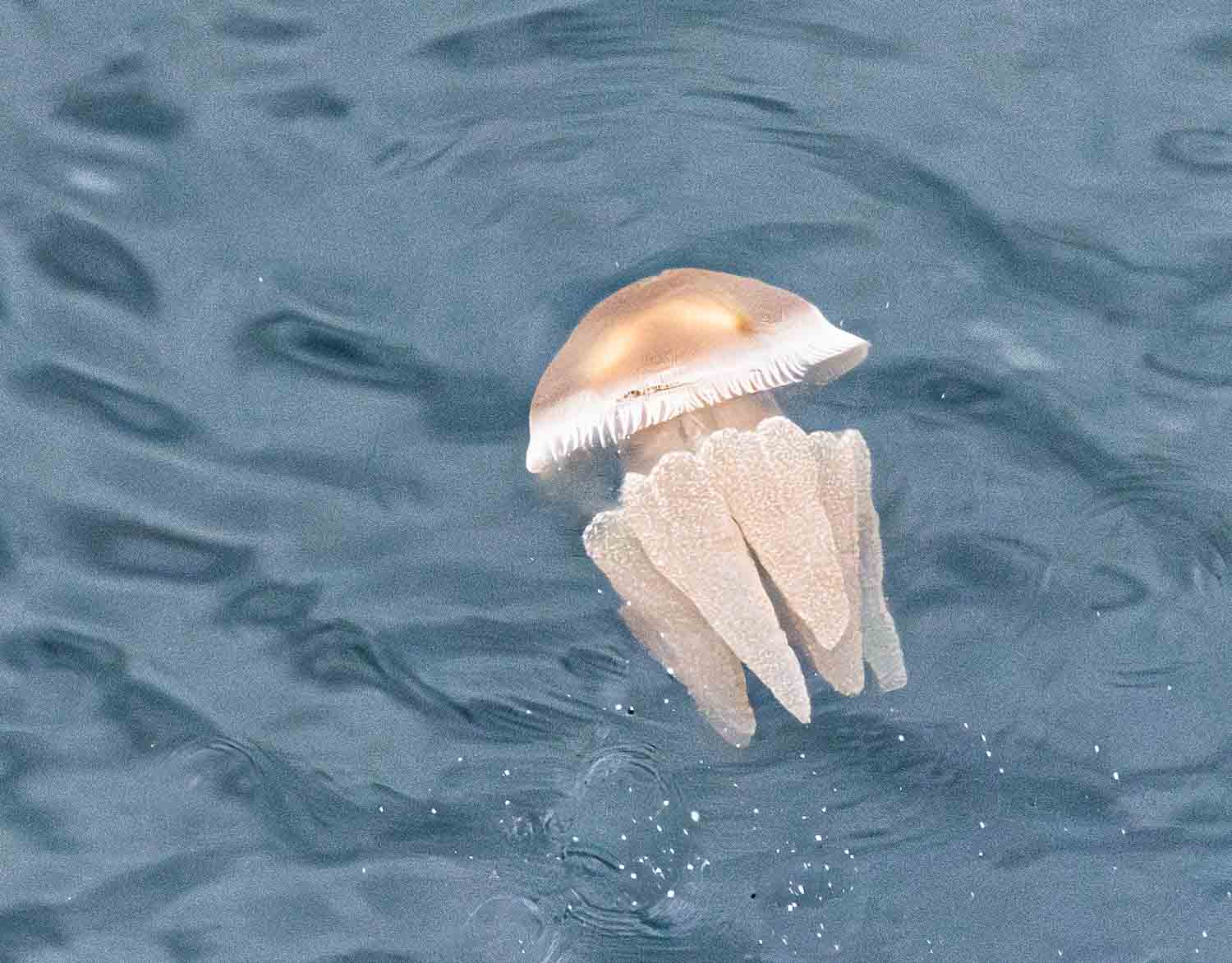
They’re the most common jellyfish on the Australian east coast, and unlike other species, their sting is not serious. They absorb nutrients through their short, fat tentacles, and they’re usually found on the ocean floor. Pre-dawn or when it’s cloudy they often rise to the surface. They arrive in huge numbers in what seems to be a couple of days, and then can disappear overnight.
No mouth. No brain. Cannot communicate. Feel no pain. And yet here they are swarming around us in the hundreds and thousands, many at the surface, many a little deeper down.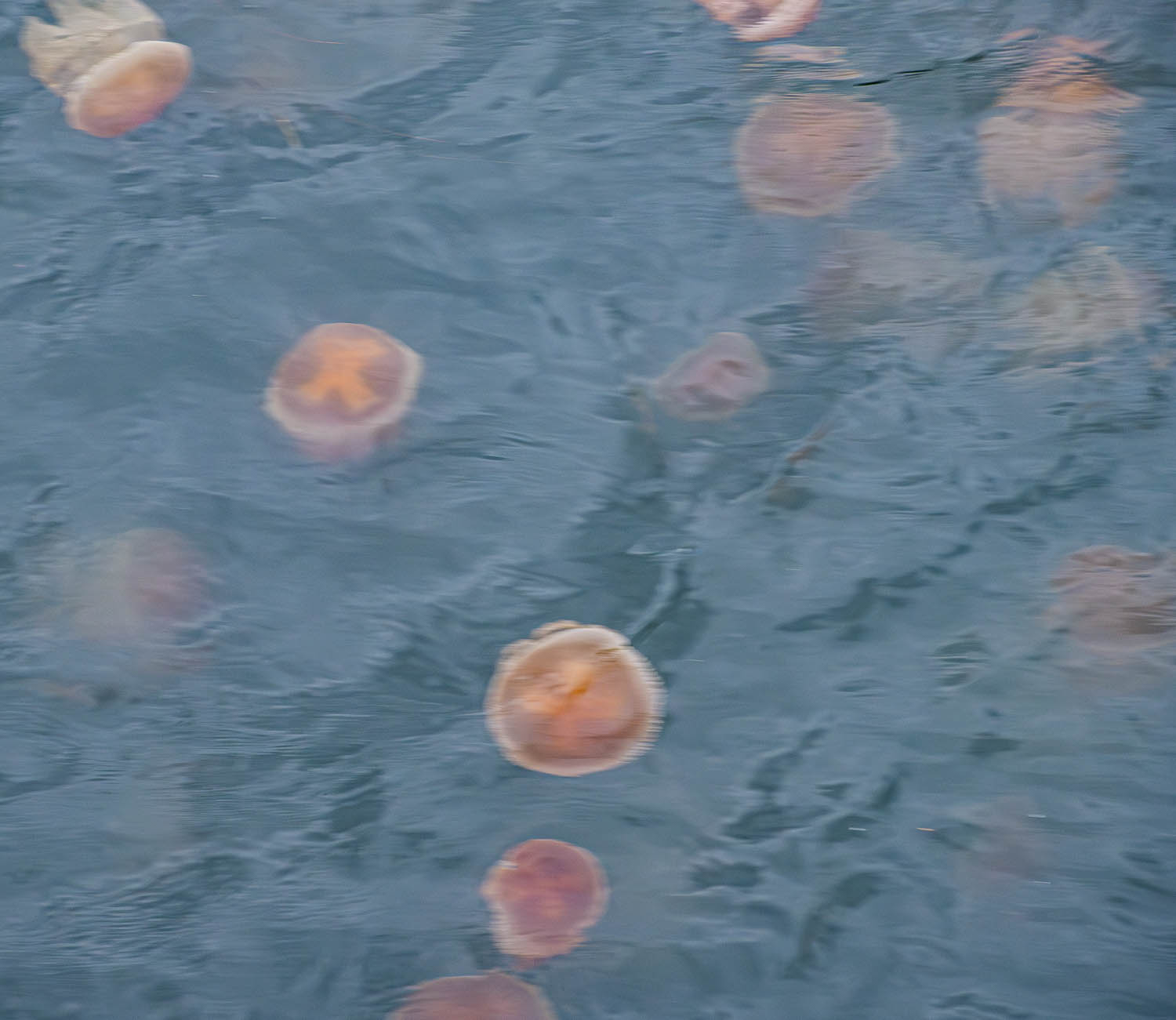
We go to the top deck
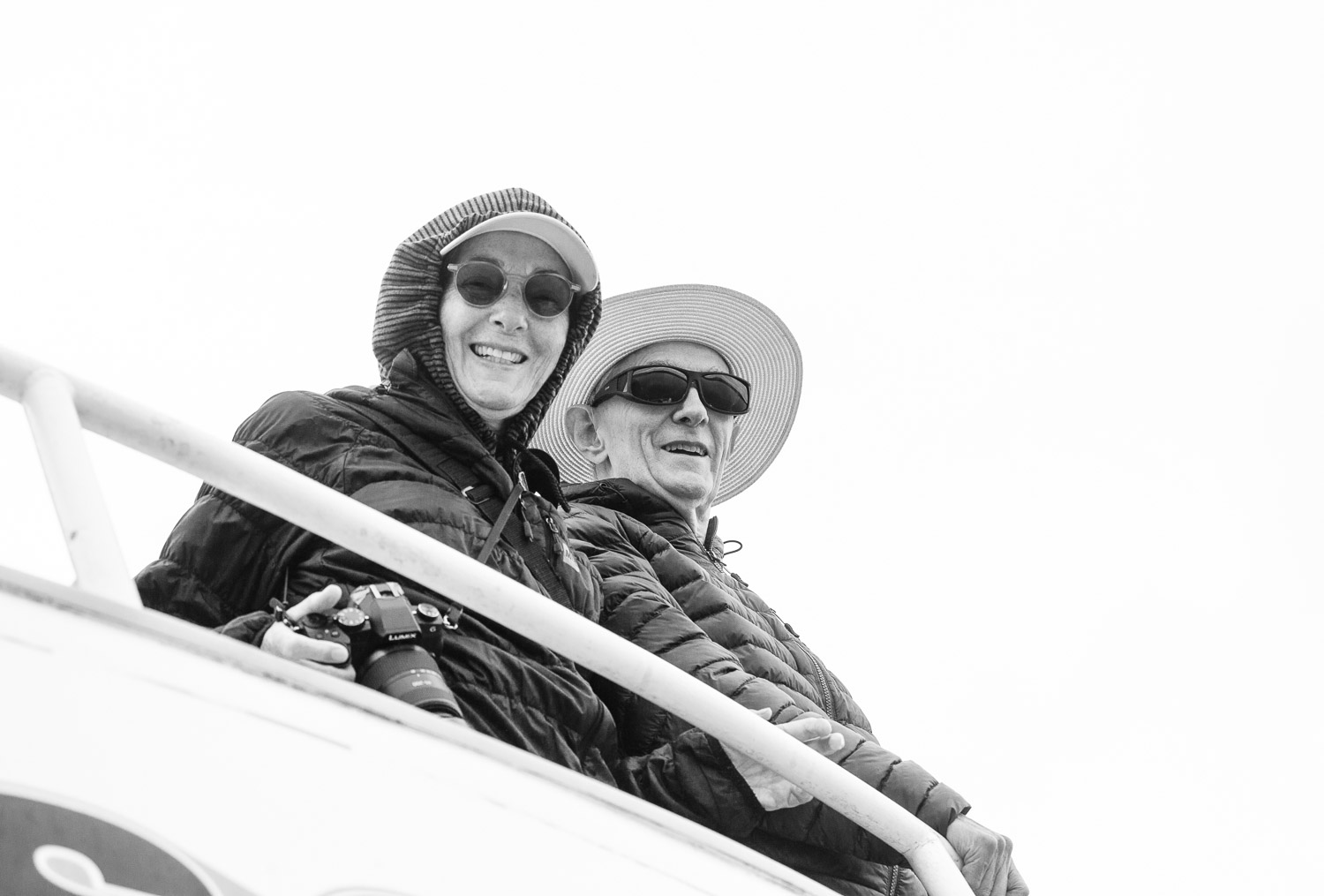
to look down on this drifting delicate grace, this swirling floating dance. They colour the water in a translucent salmon-pink shimmer, pulsating or drifting in what feels like an eternal simple bliss. Magic!
We continue on, and now, with the bridge coming into view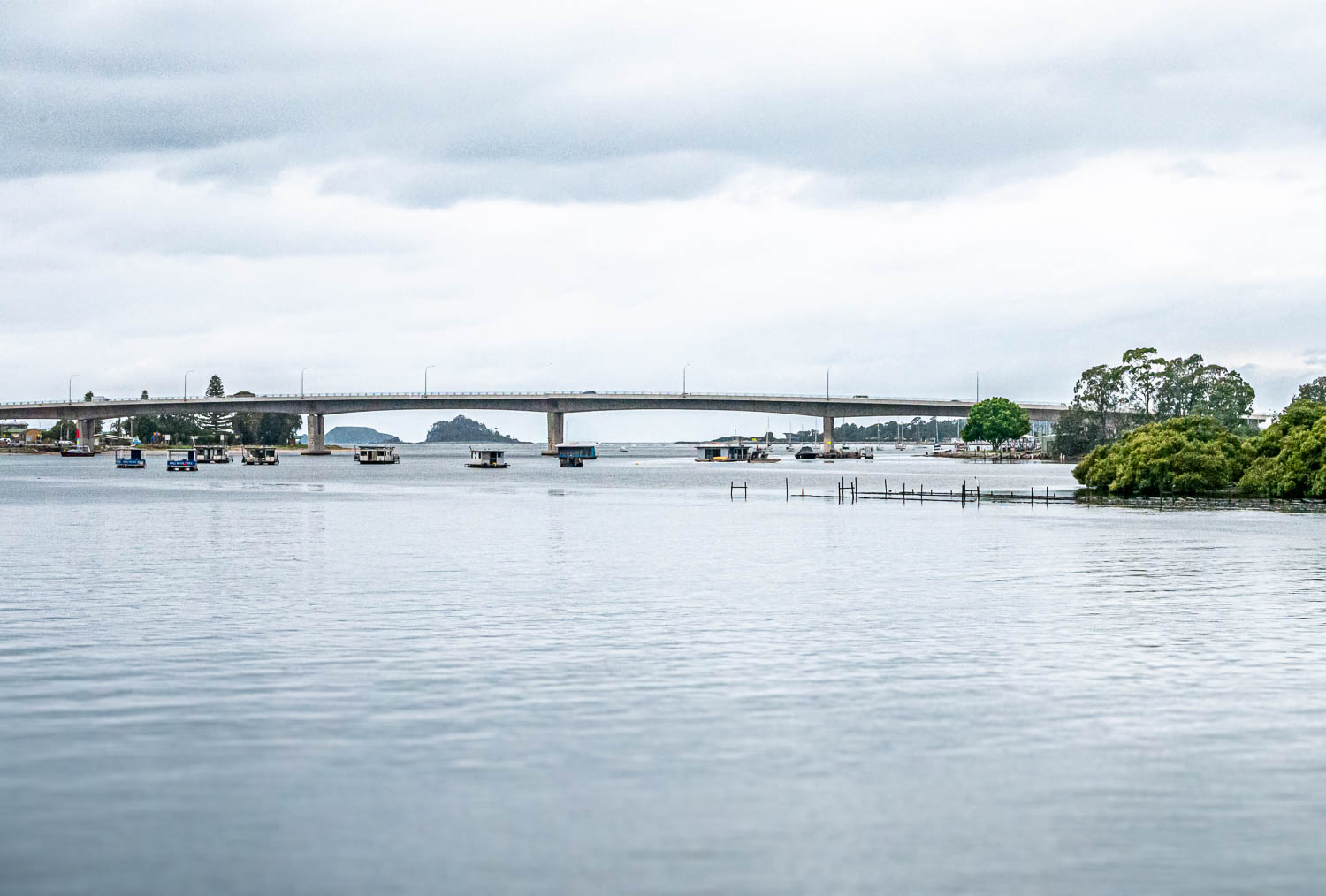
we know we are getting close to Batemans Bay, and to the end of this three-hour gentle cruise up the river and back again. The whole journey has been kind of dreamy, a tranquil exploration on calm waters. But the jellyfish! That feels like a miracle, and it’s only later, in researching about them, that I realize how lucky we were to have had a cloudy day.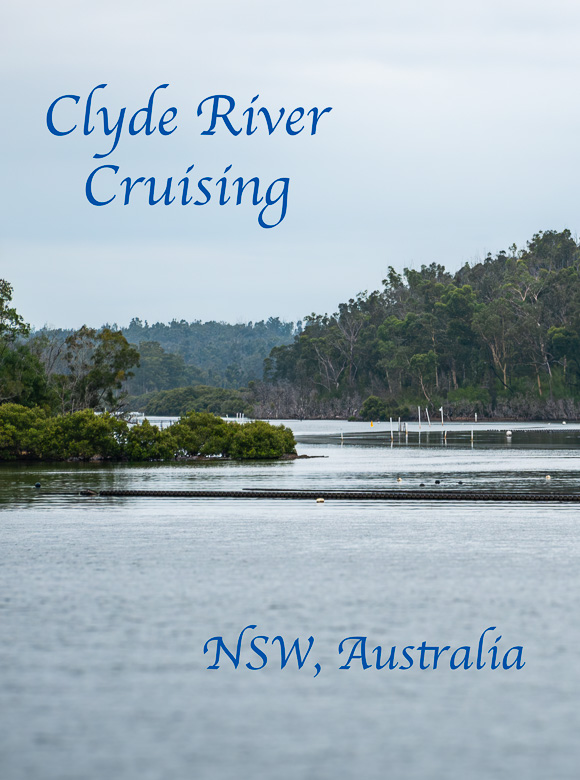
Budawang National Park, Clyde River National Park, and Batemans Bay are situated on what was and always will be Aboriginal land; the land of the Yuin Nation.
All words and images by Alison Louise Armstrong unless otherwise noted
© Alison Louise Armstrong and Adventures in Wonderland – a pilgrimage of the heart, 2010-2024.

 Adventures in Wonderland
Wonderful. Hope you both are well.
LikeLiked by 1 person
Thanks Cindy. It was a lovely day. And yes, thanks, we are both well. Hope you and yours are too. xo
Alison
LikeLike
Looks like a fun trip.
LikeLiked by 1 person
Thanks rabirius. It *was* a fun trip. Especially the jellies 😂
Alison
LikeLike
When I travelled in Australia, I often read about the paddle steamers that sailed up the rivers, which were then reduced to a trickle of water. It was hard to reconcile the two images. With the Clyde River, it seems that the old days survive, at least on one stretch.
LikeLiked by 1 person
Australia has always been a land of extreme weather, though probably it’s worse now. Severe droughts lasting several years and then the rains come bringing extensive flooding. I’ve seen a wide flowing river I used to swim in as a child reduced to literally nothing by a 7 year drought, and this time I visited it was full flowing again. This is nothing new, just maybe more exaggerated now. The “old days” survive in more places than just the Clyde. During a drought the Clyde too is reduced to a trickle.
Alison
LikeLiked by 1 person
What a nice experience. I like seeing how almost transparent the jellyfish are. Their cousins in the North Sea are dark and leave nasty stings.
LikeLiked by 1 person
It was really lovely. And the jellies were such a special experience. There are many beautiful jellyfish in Oz though several are fairly poisonous, and at least one kind can be fatal, but these ones are both lovely to look at and fairly harmless.
Alison
LikeLike
I found the jellyfish fascinating, Alison. I’ve never seen one with such fat appendages. And the cruise seemed like a delight as it made its way through the Clyde River National Park. I’ll pass on the oysters, however. Never been a fan. Grin. –Curt
LikeLiked by 1 person
I too found the jellies fascinating. It was so unexpected because I didn’t know about them beforehand, and suddenly there they were. The cruise was a delight for sure, as were the oysters 😁.
Alison
LikeLike
I’ve just donated any share of oysters I might eat in the world to you, Alison. Grin. Jelly fish can be beautiful. I think yours were the most unique I have ever seen.
LikeLiked by 1 person
What a wonderful trip up the river. I love being on the water. And the jelly fish! Wow!
LikeLiked by 1 person
Definitely a wonderful trip; I too love being on the water, and the jellies were such a wonderful unexpected delight. I think they’re really beautiful.
Alison
LikeLiked by 1 person
Lovely place to visit.
LikeLiked by 1 person
Thanks Melodie, it really was.
Alison
LikeLike
The Clyde River looks and sounds idyllic, and it’s good to know that it’s still relatively unpolluted. I’m not sure if I would enjoy the presence of jet skis though. Your lunch looks delicious! I love the colors from the salad that is usually absent from a regular fish and chips. And I must say, despite their notoriety, the jellyfish does add to the charm.
LikeLiked by 1 person
The Clyde is lovely, and I’d like to explore more of it one day. The water is really clean and constantly monitored – it has to be to ensure the oyster industry. We weren’t there during peak season, but I think the jet skis are few and far between. In 3 hours on the water we only saw those two, though there’s probably more near Batemans Bay in peak season.
Sadly the lunch was just okay, and I think that was the meal (or one I had in Sydney on the same trip) that made me finally understand that I don’t really like fish and chips as a meal – the chips are invariably underdone and the fish invariably overdone. The best chips/fries I ever had were from a little cart (street food, though not a food truck) in a small town in Mexico – perfectly cooked to a rich golden brown.
The notoriety justifiably applies to other species of Australian jellyfish, but not to these ones. Apparently the sting is very mild and clears up quickly. Not that I would want to be stung by them lol. It was so special to see them.
Alison
LikeLiked by 1 person
It’s hard to imagine fish and chips where the fish is overdone. How interesting that you found the best chips in a Mexican town! It reminds me of a really good coffee I had in a village on the Indonesian island of Flores.
LikeLiked by 1 person
I remember Nelligen as the welcome end of a trip down the Clyde Mountain (where I was always carsick). We had to stop and wait for the ferry, which held only a few cars. The noticeable landmark was the Steampacket Hotel. Then we would proceed to take the larger ferry at Bateman’s Bay – and sometimes enjoy the super fish and chips from the boat shed, sitting on the grass and fighting off the seagulls
LikeLiked by 1 person
There were two ferries? I must have done this journey as a child because I have a very vague memory of it. The name at least of the Steampacket rings a bell, and for sure I remember that the journey to the coast used to take much much longer than it does now, and that both coming down the mountain, and going back up were pretty scary – all those run-off ramps in case your brakes failed, and on the way up always overheated cars pulled over with steaming engines. Fun times.
Alison
LikeLike
What a wonderful, relaxing day, despite the rain. I felt the tranquility reading it. I wouldn’t go for the oysters though 🙂 Your jelly fish pictures are great, and there are so many. Maggie
LikeLiked by 1 person
Thanks Maggie. It was a lovely day, and the jellies were such an unexpected treat! I’m glad I managed to get a couple of good shots of them. Sooooo many! I know lots of people don’t like oysters, or don’t want to try them. I saw foods in Asia that for sure I would not be trying either (like fried bugs) so I guess it’s all part of the culture we’re raised in.
Alison
LikeLiked by 1 person
When I read “Clyde River” I thought, “Wait, when did y’all get to Scotland?” and then realized that’s the River Clyde and this is the Clyde River. :PI absolutely LOVE cruises and ferries and being on the water (but not in it!) What a magical, lovely trip! And those clouds, which didn’t matter anyway, turned out to be such a blessing with the jellyfish.
I am so glad the oysters didn’t make you sick, and that you got to see the jellies with their very fat tentacles! They have always seemed otherworldly to me, like something you’d see floating through the Universe between galaxies (or maybe that’s just the Star Trek upbringing?)
LikeLiked by 1 person
I too absolutely love cruises and being on the water so I’m so glad we chose to do this little excursion. It was just lovely, and the jellies a special treat. They seemed otherworldly to me too, and I like your image of them floating through the universe.
It was only the oysters in Croatia that made us sick. We eat them fairly frequently in Oz and have never been sick from them.
Thanks Felicity, I’m glad you enjoyed this post 🤗
Alison
LikeLike
I wish I had a trip like this but unfortunately, right now my bank balance won’t permit me So I will feel the experience through the post. xD.
Thank you for sharing.
LikeLiked by 1 person
Thank you so much. Too bad you’re unable to travel at the moment, but it’s lovely to hear that you can get a sense of the journey we had. I also am unable to travel at the moment but I read others’ posts, and travel with them in the same way you do.
Thank you for commenting!
Alison 🤗
LikeLiked by 1 person
Wow, can’t believe you were able to see so many jellyfish right from the boat! This sounds like such a wonderfully calm way to explore a place.
LikeLiked by 1 person
It was a really lovely day; I’m so glad we finally did it. And the jellies were truly amazing!
Alison
LikeLiked by 1 person
Hello, I hope you are both doing well🤗
How wonderful to read about your river cruise as we have just recently (last week) drove from Melbourne to Batemans Bay and back….so many beautiful places around there.
Australia is starting to be my “second” home, lol
LikeLiked by 1 person
Hi Dana. Thank you, yes we are both doing very well. Don has pretty much recovered and life rolls along.
I’ve done part of that drive from Melbourne to BB – it really is beautiful. Are you living part time in Oz?
Hope you are well too. 🤗
Alison
LikeLike
Hi, no we don’t live in Aussie, we both have families here, so we visit often…..D
LikeLiked by 1 person
I imagine this is a day trip that tourists seldom find. Love that lunch is provided, and looks great!, on the cruise. Great photos of the jellyfish… I remember being bitten by them terribly on a snorkeling stop in Vietnam, so not my favorites, but interesting to see them this way up close.
LikeLiked by 1 person
I think it must be busier in the summer, but really it’s mostly Canberra people who come to BB so not many Aussies, let alone foreign tourists, would even know about it. The lunch was a little disappointing – well maybe it’s just me; I like my chips cooked to a crisp and they never are. Thanks re the jelly photos. These particular jellyfish only have a mild sting but I know there are others in tropical waters (eg northern Australia, and Vietnam) that are much much worse, and can even kill you. Must have been horrible to have been stung badly by one.
Alison
LikeLiked by 1 person
We all dropped into the water from a small boat and swam towards the reef and then suddenly, everyone was swimming back to the boat! Many bites, not fun.
You may be interested in the April-May (current) issue of Smithsonian magazine. There’s an article about neon-colored slugs in the waters near Brisbane.
LikeLiked by 1 person
Oh that sounds nasty! At the GBR we were given head-to-toe silk-like suits to wear for protection.
I had a look at those slugs! Wow, amazing.
Alison
LikeLiked by 1 person
Good that you had some kind of wet suit. The tour organizers obviously know the dangers!
LikeLiked by 1 person
Thanks for your kind words.
This is the second time you’ve commented here saying that you can’t find the follow button. It’s there, twice, in the right hand column, so I’m a bit puzzled.
I’m not really a dog person, sorry. More of a cat person.
Alison
LikeLike
hey
cool blog 🙂 will give it a follow and a like !
LikeLiked by 1 person
Thank you so much.
Alison
LikeLike