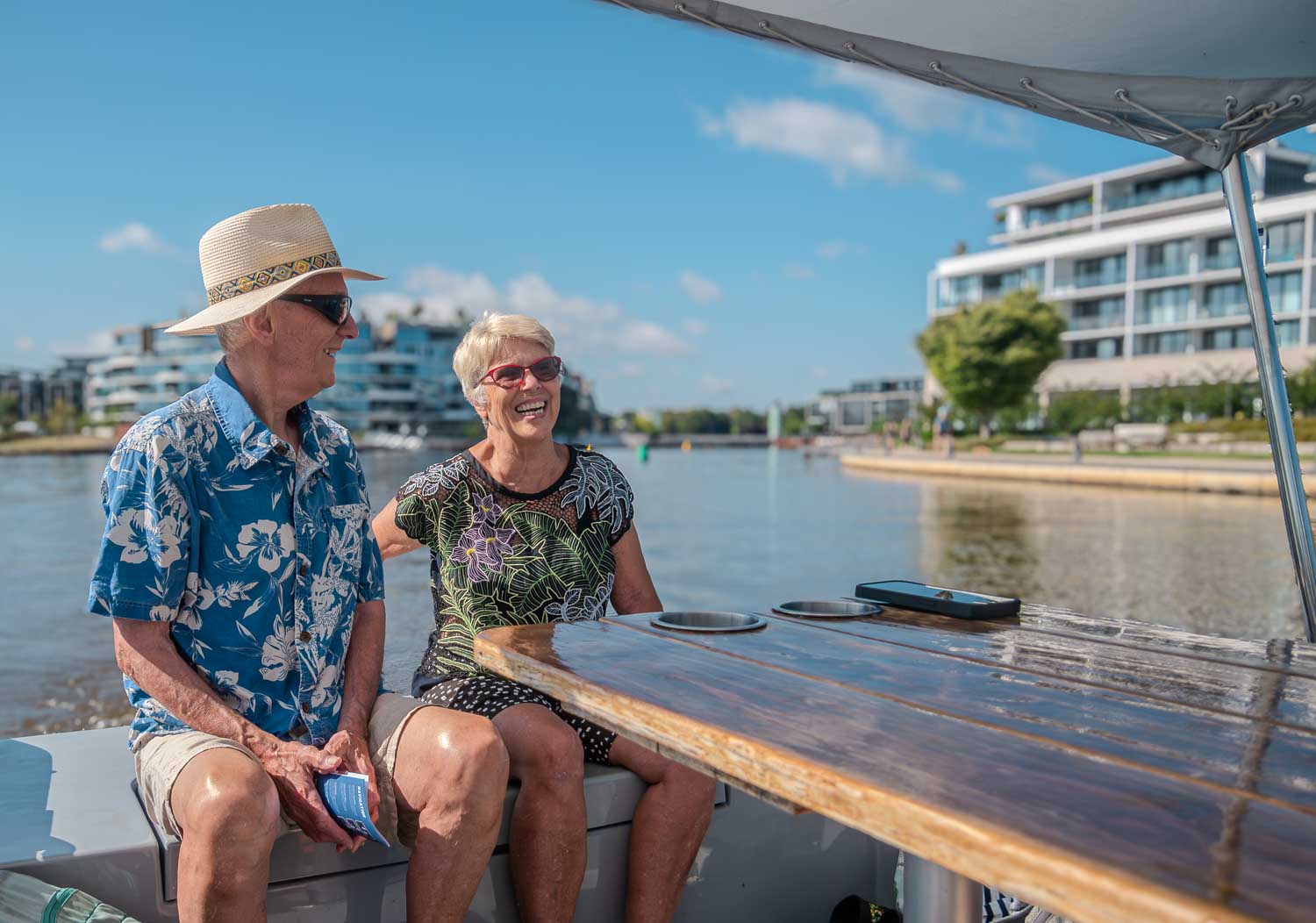
For a while when I was a kid we lived near the suburb of Kingston; it was also close to our school so we were there fairly frequently. Kingston was a quiet inner-Canberra suburb, and mostly still is, with a shopping centre that’s been upgraded somewhat from the 1960s. These days all these older brick houses are grandly dubbed “heritage”, and there are boutique shops, a drool-worthy bakery, and cool cafés alongside Green Square.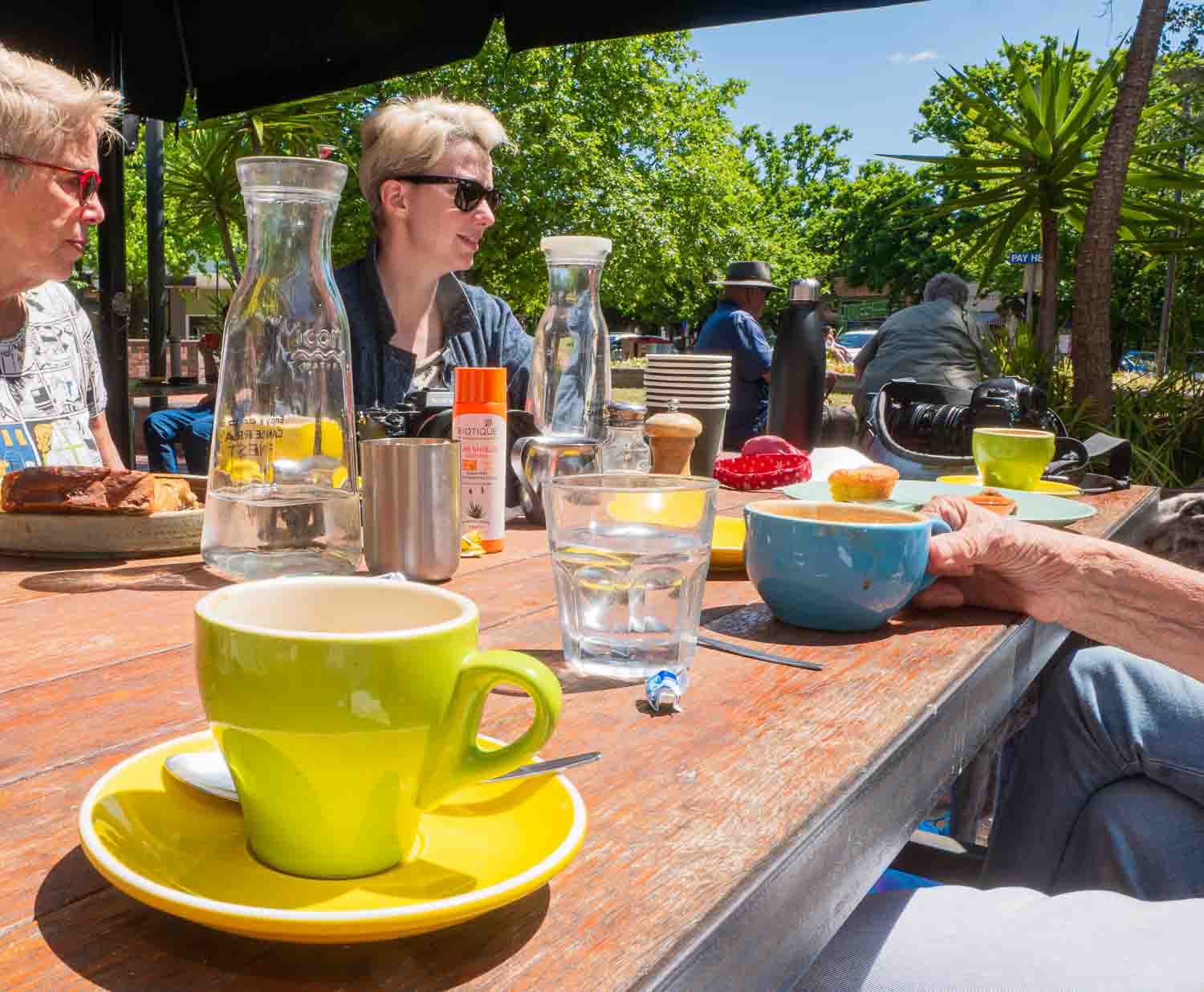
Originally the Kingston Foreshore area was light-industrial: Canberra’s original power house, the bus and transport depot, the government printing office. We had no reason to go there. In the 1990s development started; land was reclaimed from the lake; a harbour created with pontoons and boat docks; shops and restaurants were built just up the stairs from the water, with apartments and offices above. The bus depot has been converted into a thriving market, and the power house is now home to Australia’s biggest glassworks. The whole development is kind of revolutionary for Canberra. The city is built on a lake but there’s not a lot of lakeside amenities. The Foreshore is a rare lakeside district; there’s nowhere else you can kayak up for a cup of coffee. Kingston Foreshore brought Kingston into the 21st century; it’s the hip younger sibling of the original inner suburb.
On this most recent visit we go there a couple of times, for a meal, or coffee, and then walk along the lakeshore a while to let the dog run loose. Beyond the Foreshore development it’s a fairly typical serene Canberra lakeshore scene, a few cyclists on the 40km loop cycling path,
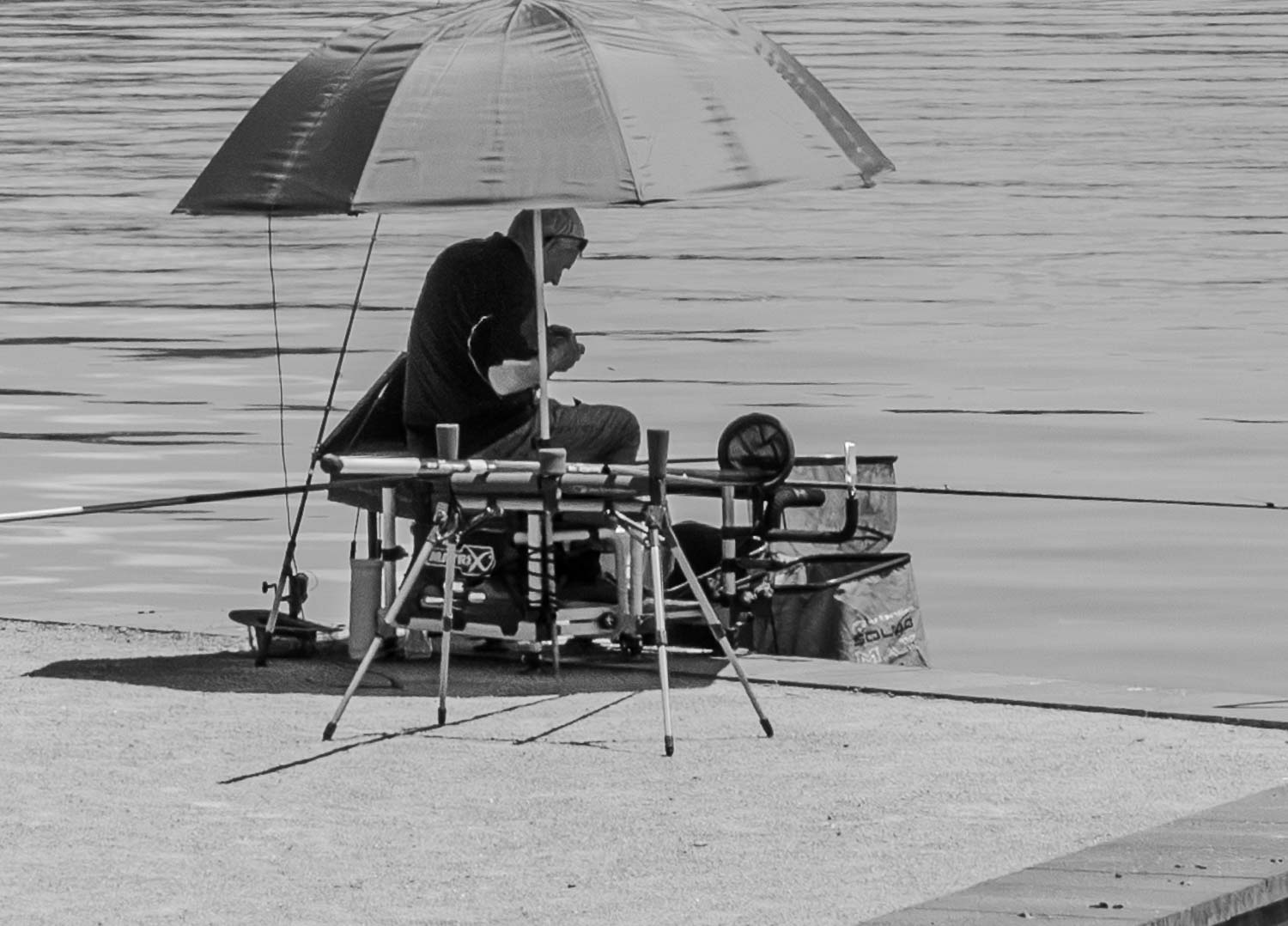
a few people walking, a few fishermen,

quiet waters; lush green parks; hardly a city at all really.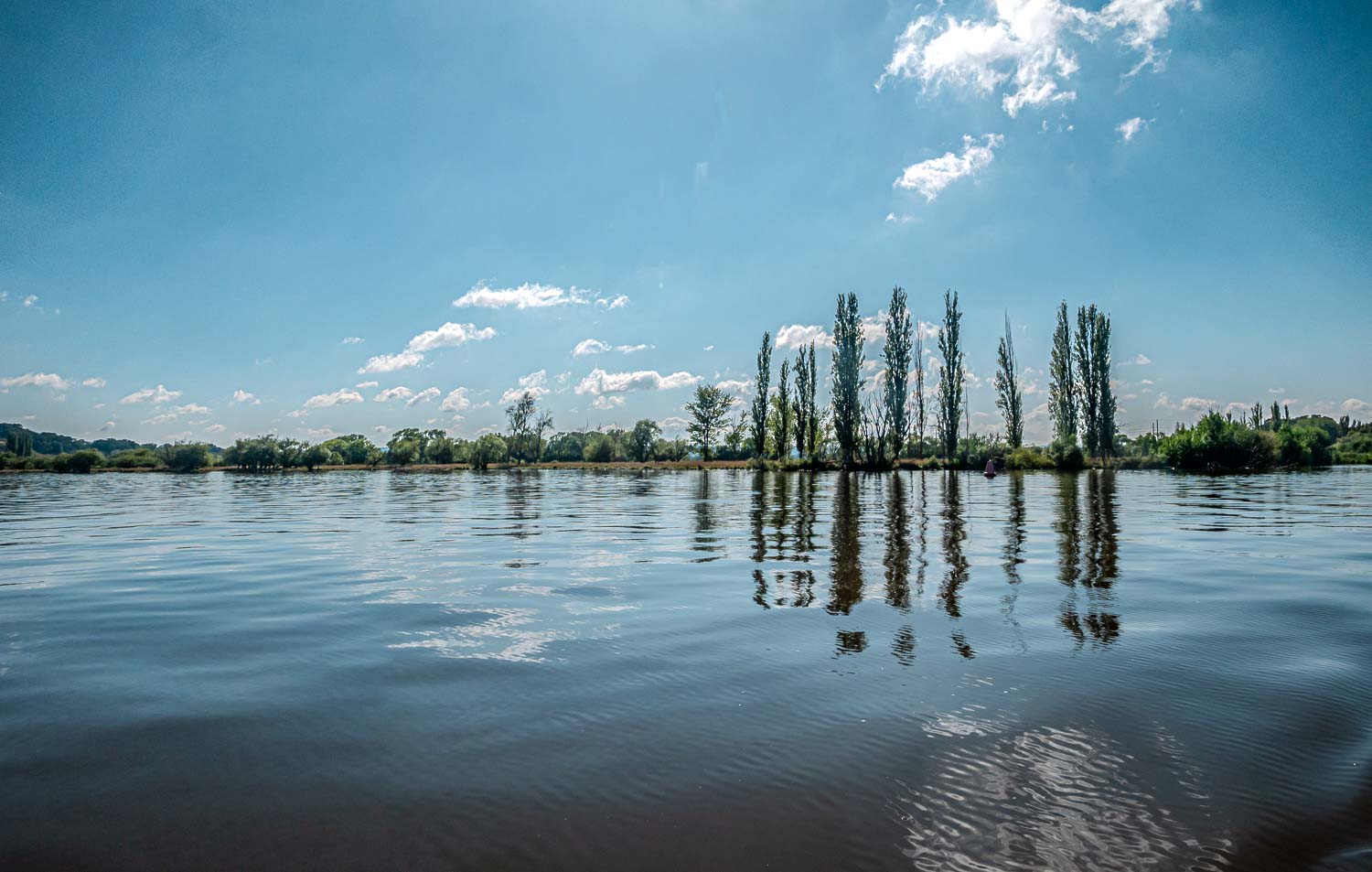
But back to the Foreshore harbour. It’s there that I notice the GoBoats! They are new to me, and my mind is clear; I want to go out on the lake in a GoBoat!
GoBoats are Danish. Of course they are. Stylish and practical picnic boats, made from 80% recycled plastic bottles, electric motors, no license required, self-drive. They have appeared on many a quiet city waterway since they first launched in 2014 – Denmark Sweden England Germany Australia.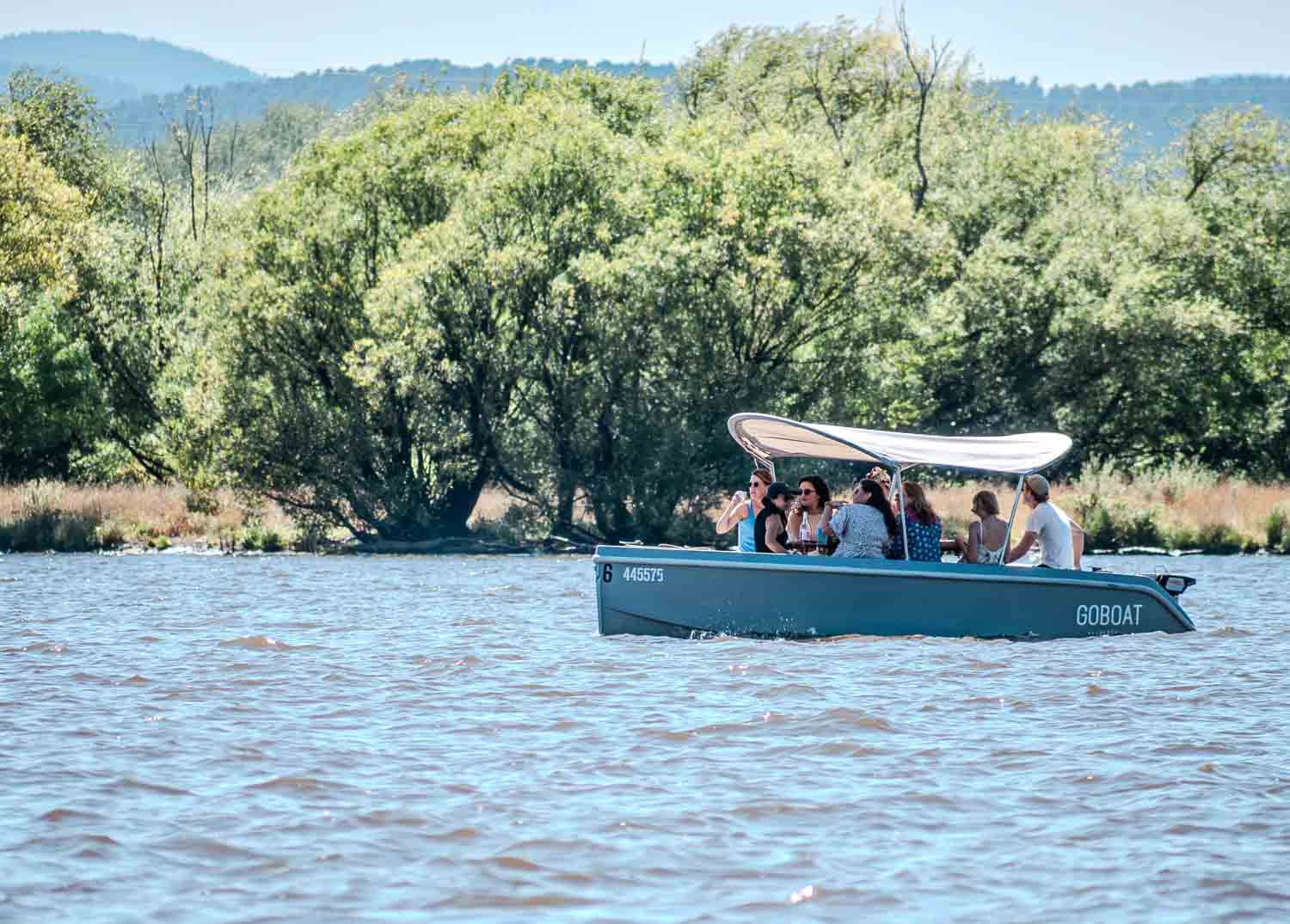
When I was a kid the only motorized vessels allowed on the lake were police boats, rescue boats, and one tourist cruise boat. Apart from that it was all sailing all the way. Plus canoes, kayaks,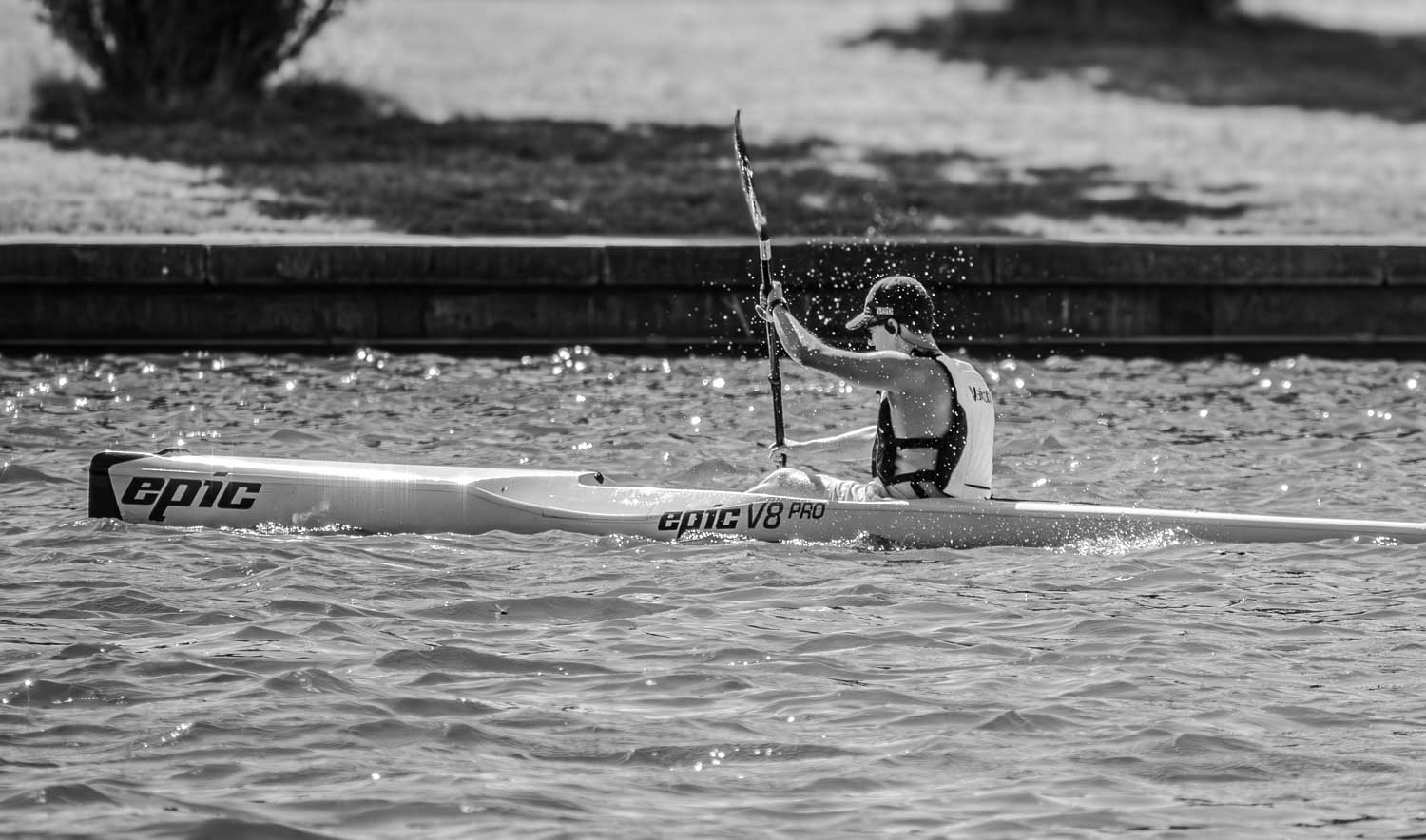
and peddle boats. Fast forward to the advent of electric motors and now they’re also allowed, plus coaching and judging boats for dragon boat racing and scull racing. And now, of course, there’s paddle boarding and wind surfing. I was a kid a long time ago; they didn’t exist back then.
Anyway, on a fine sunny day in January we stop at the Red Hill shops to get picnic goodies and go boating in a GoBoat – Don and me, Julie, Suzanne, and Ellie and her dog Sylvie.
Passing under Kings Avenue Bridge,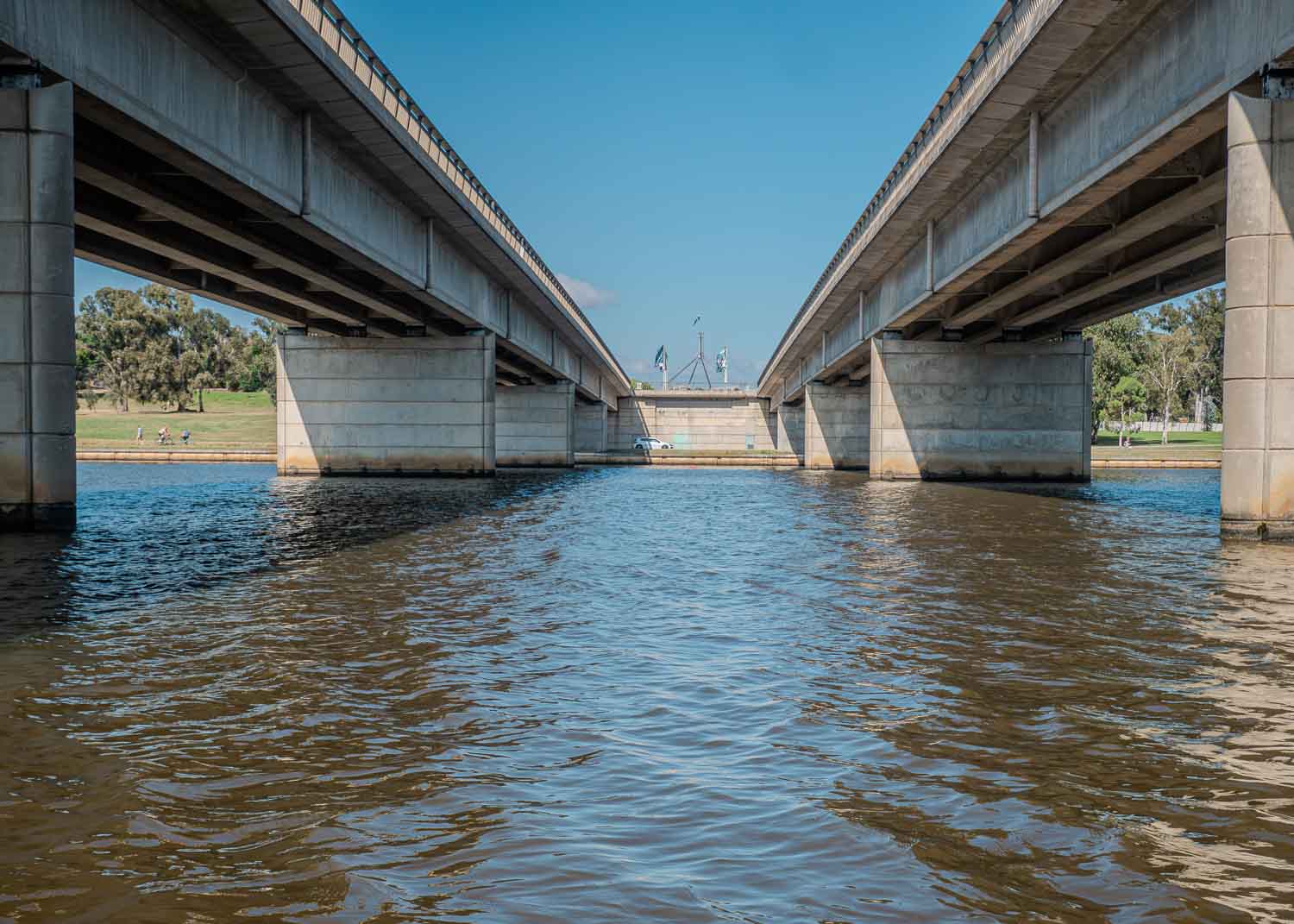
we meander slowly along. Even at at full speed it is slow; no doubt they’re designed that way. No thrashing around creating a wake on Canberra’s lake thank you. Activity on Lake Burley Griffin is nothing if not sedate. This is not a complaint.
We cover about 2/3rds the length of the lake before we have to turn back. Here’s what we see:
Dragon boat racers training,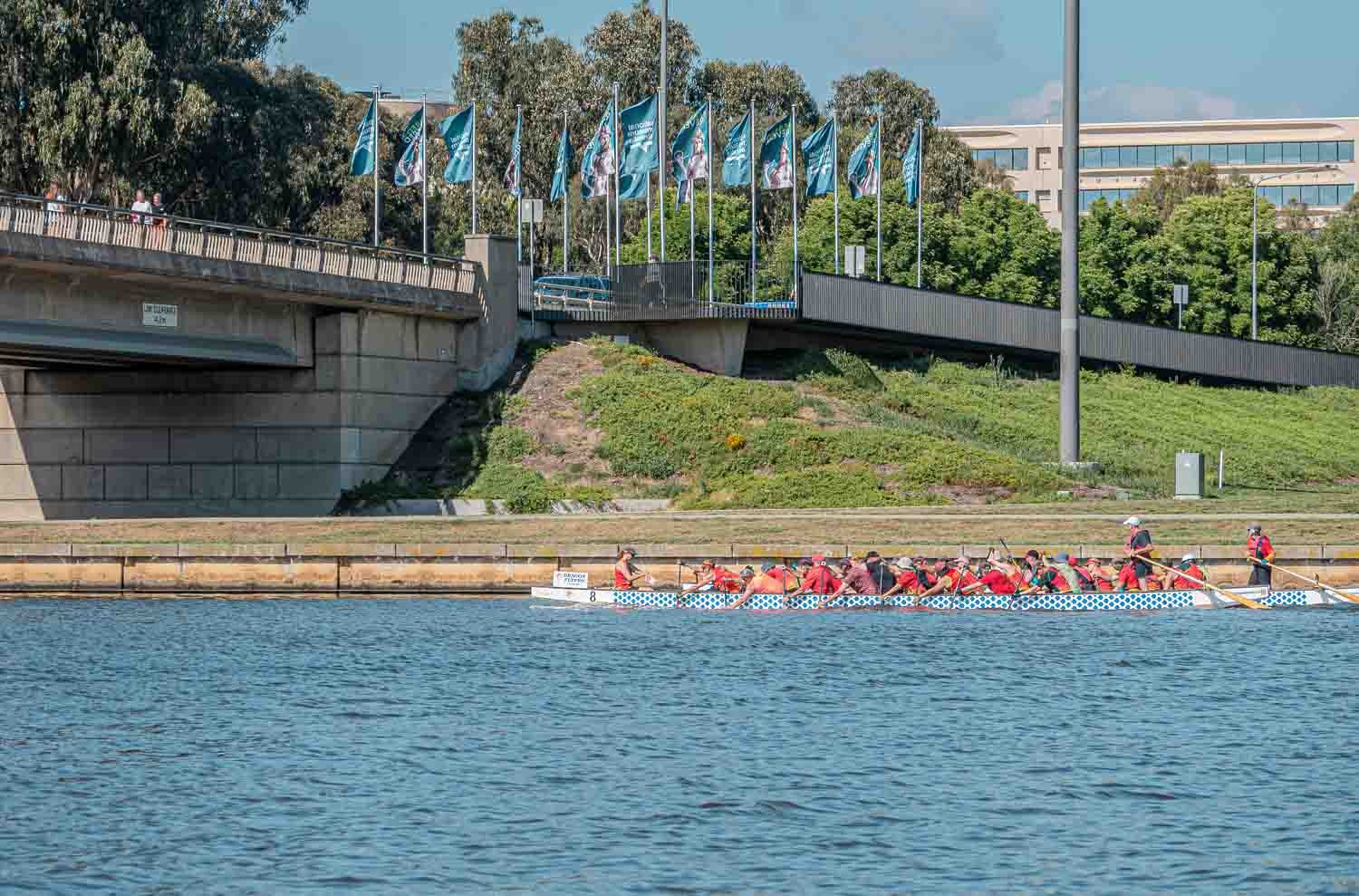
a big fancy new tourist cruise boat,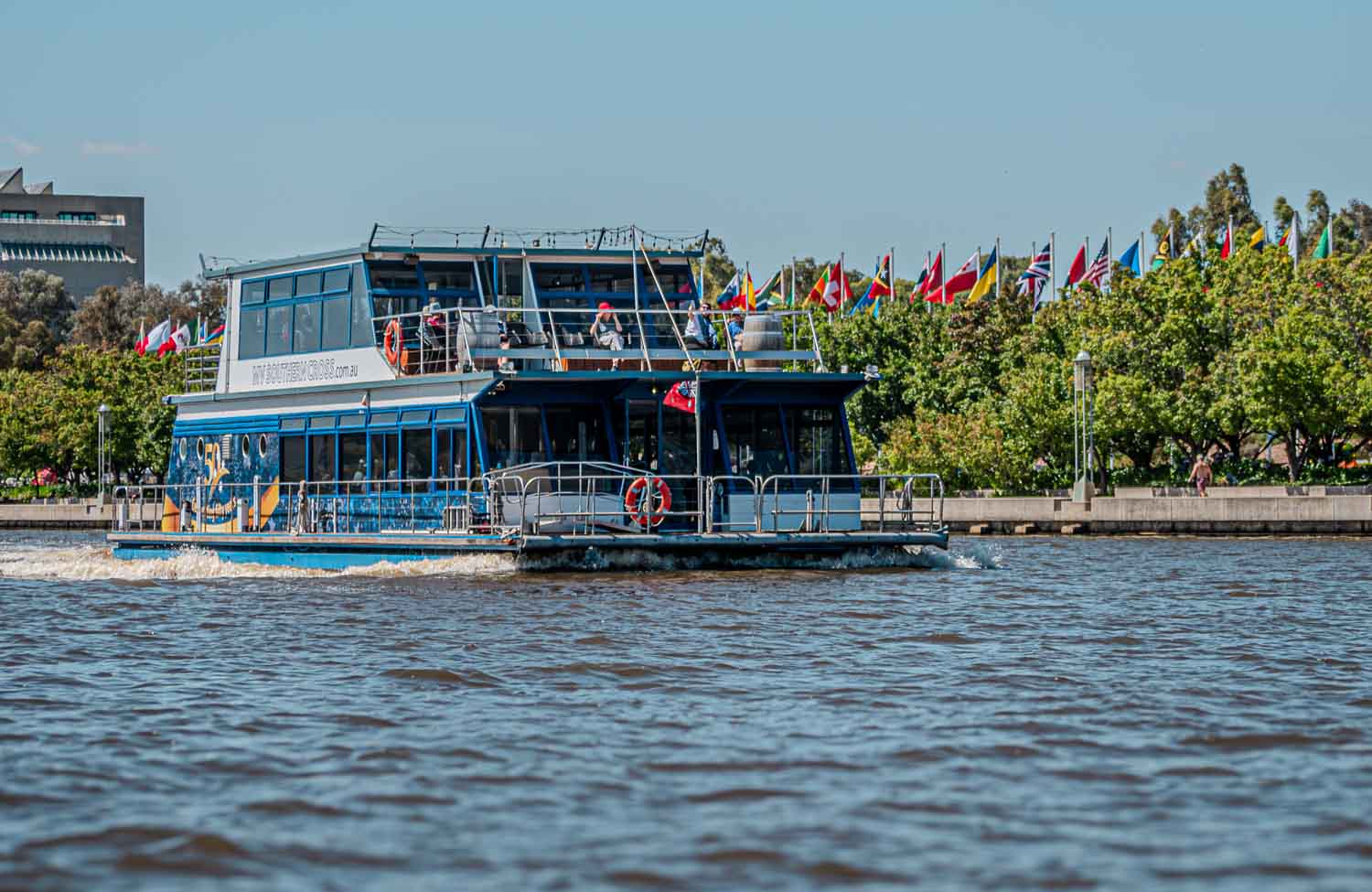
the National Library, looking like a modern Parthenon, and where, in another lifetime, I trained as a librarian,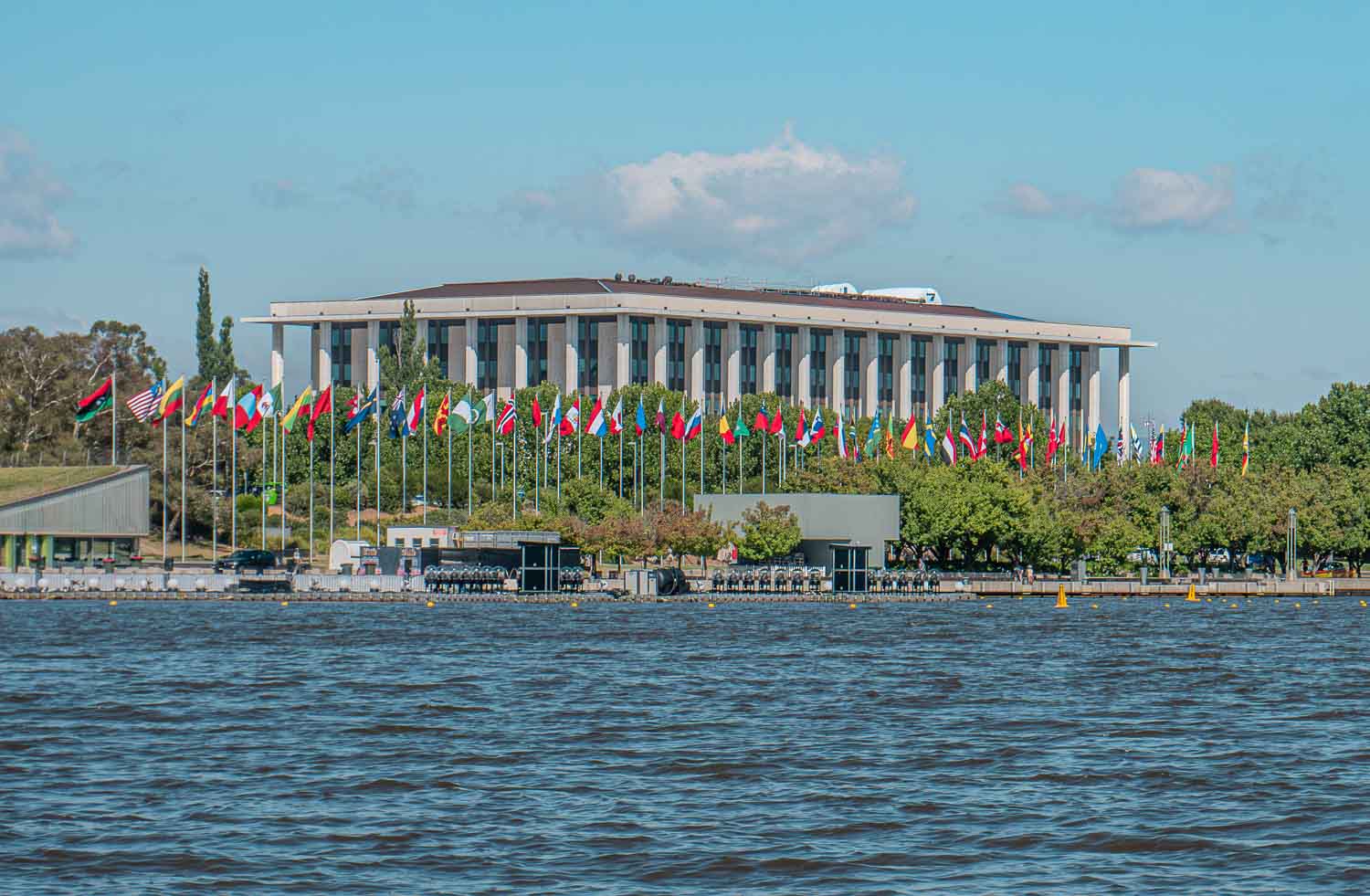
the National Carillon with its 57 bells that chime on the quarter hour and play a little tune on the hour,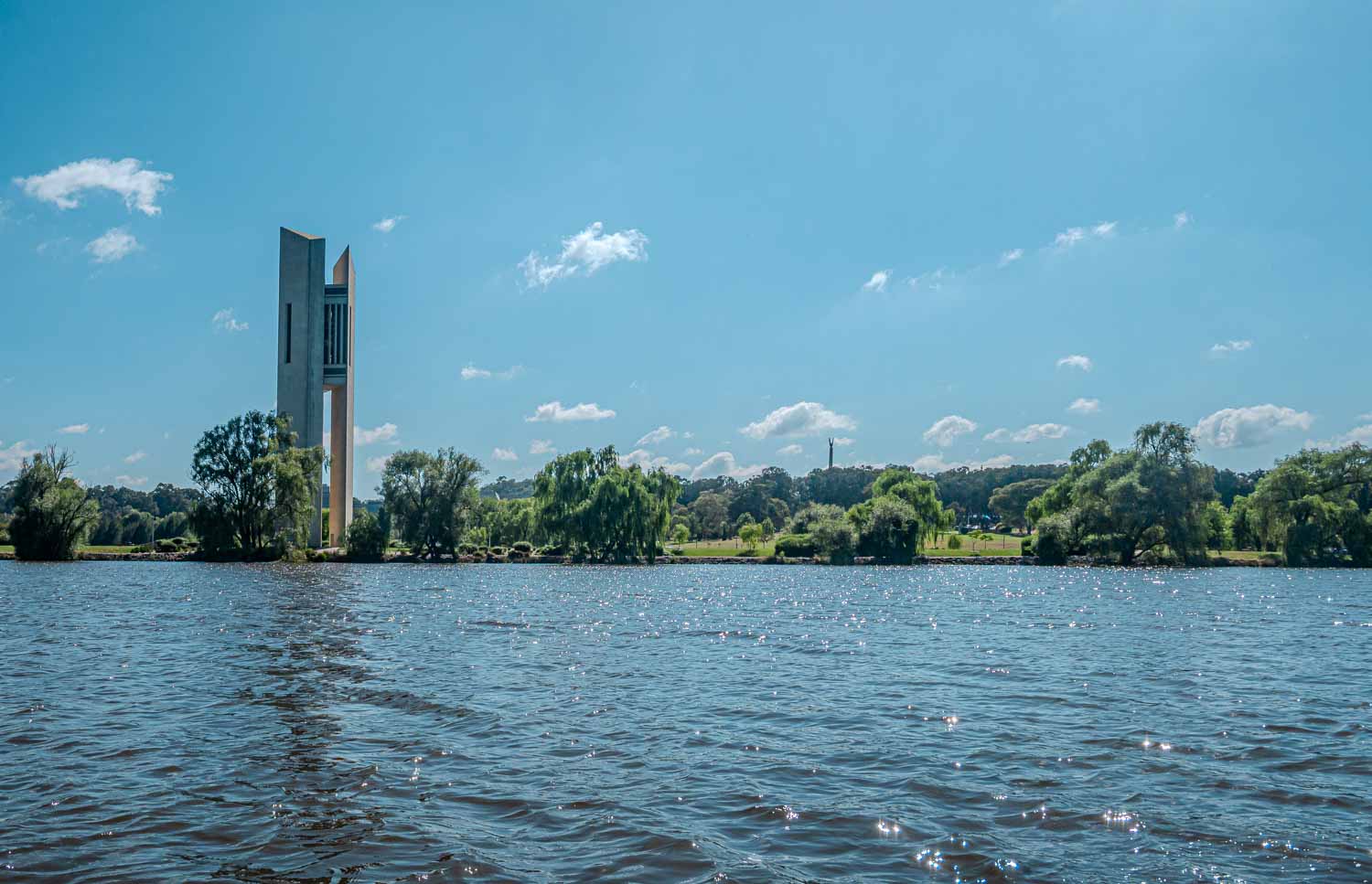
the High Court building,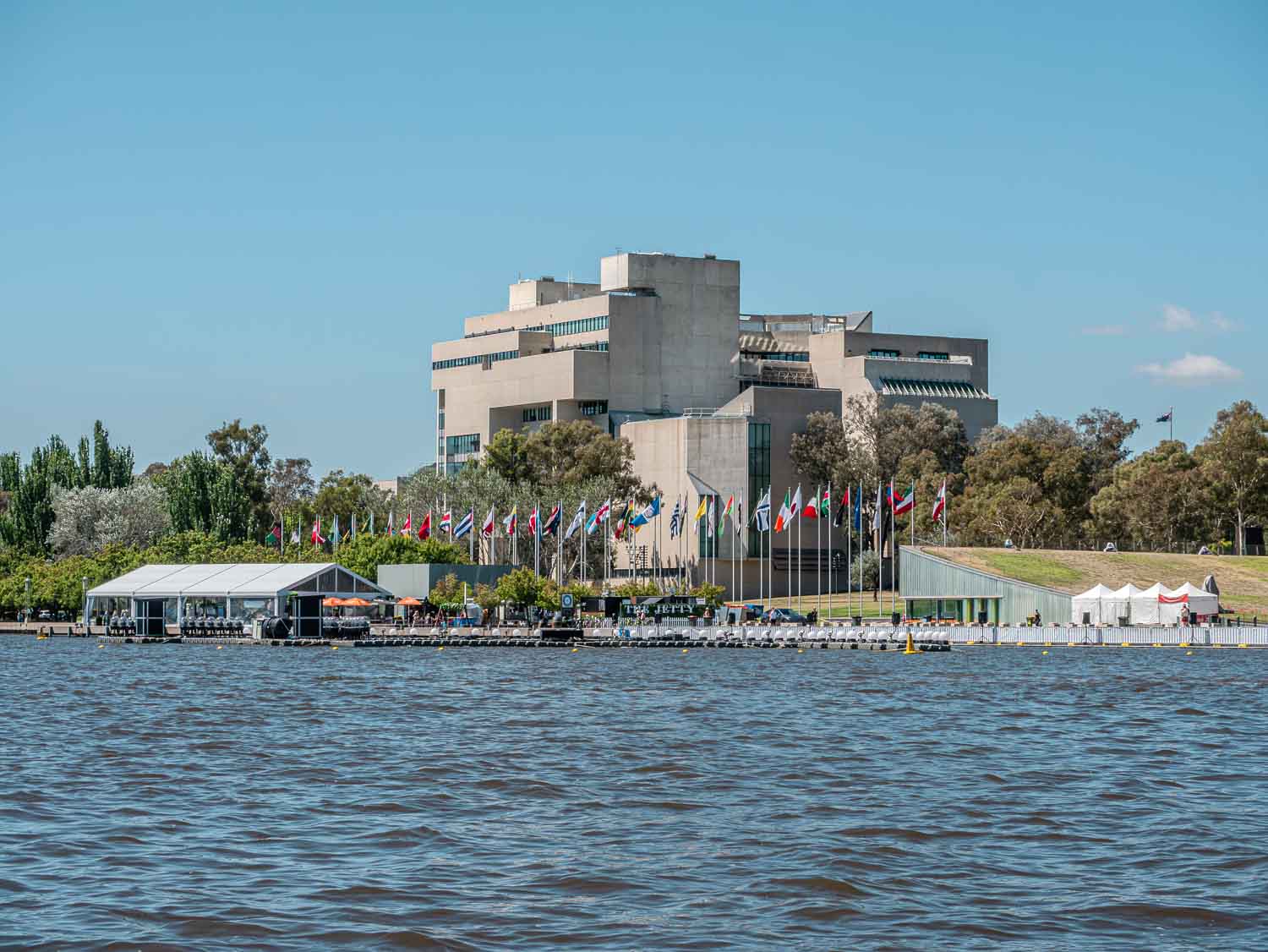
a family fishing,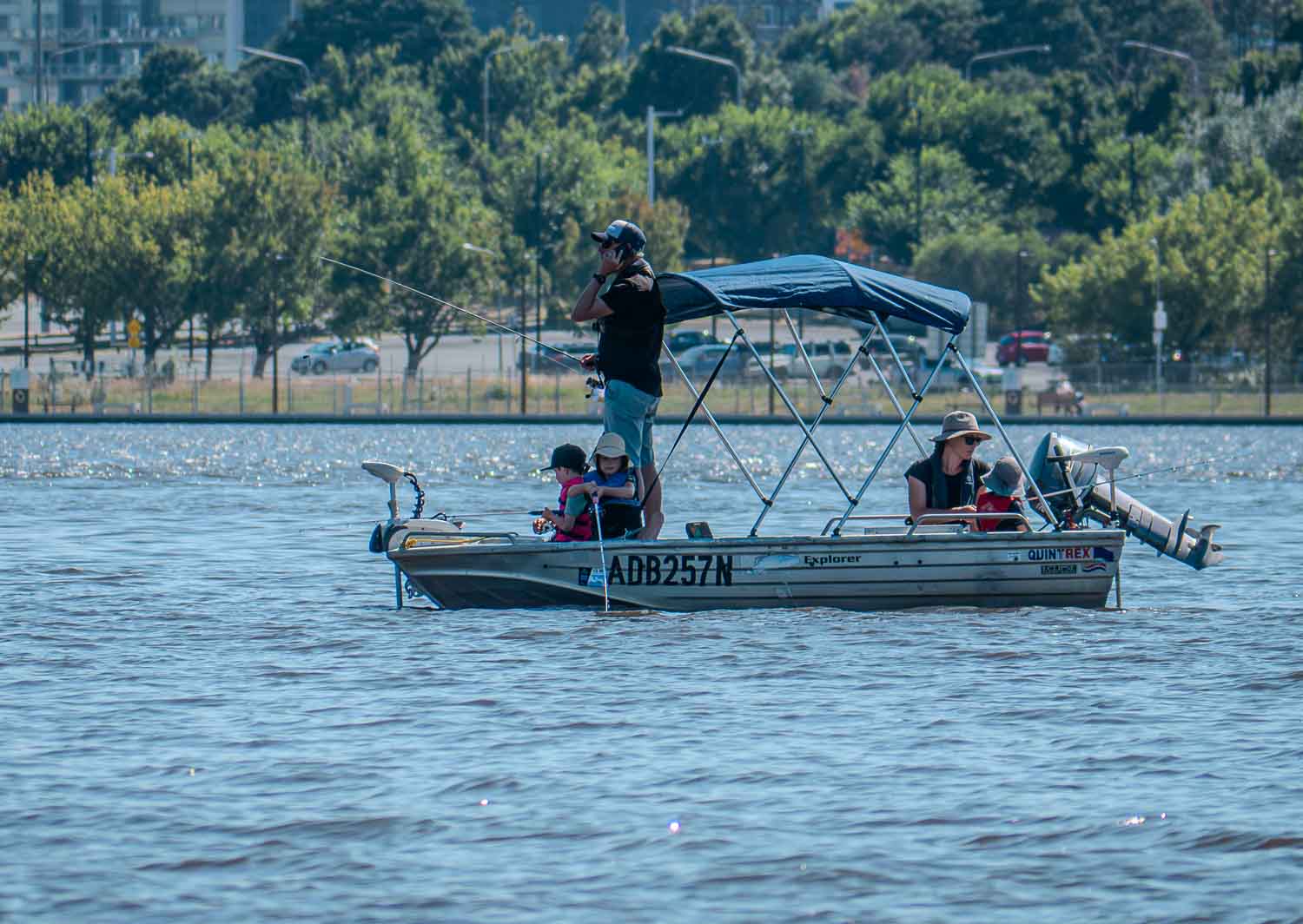
a black swan,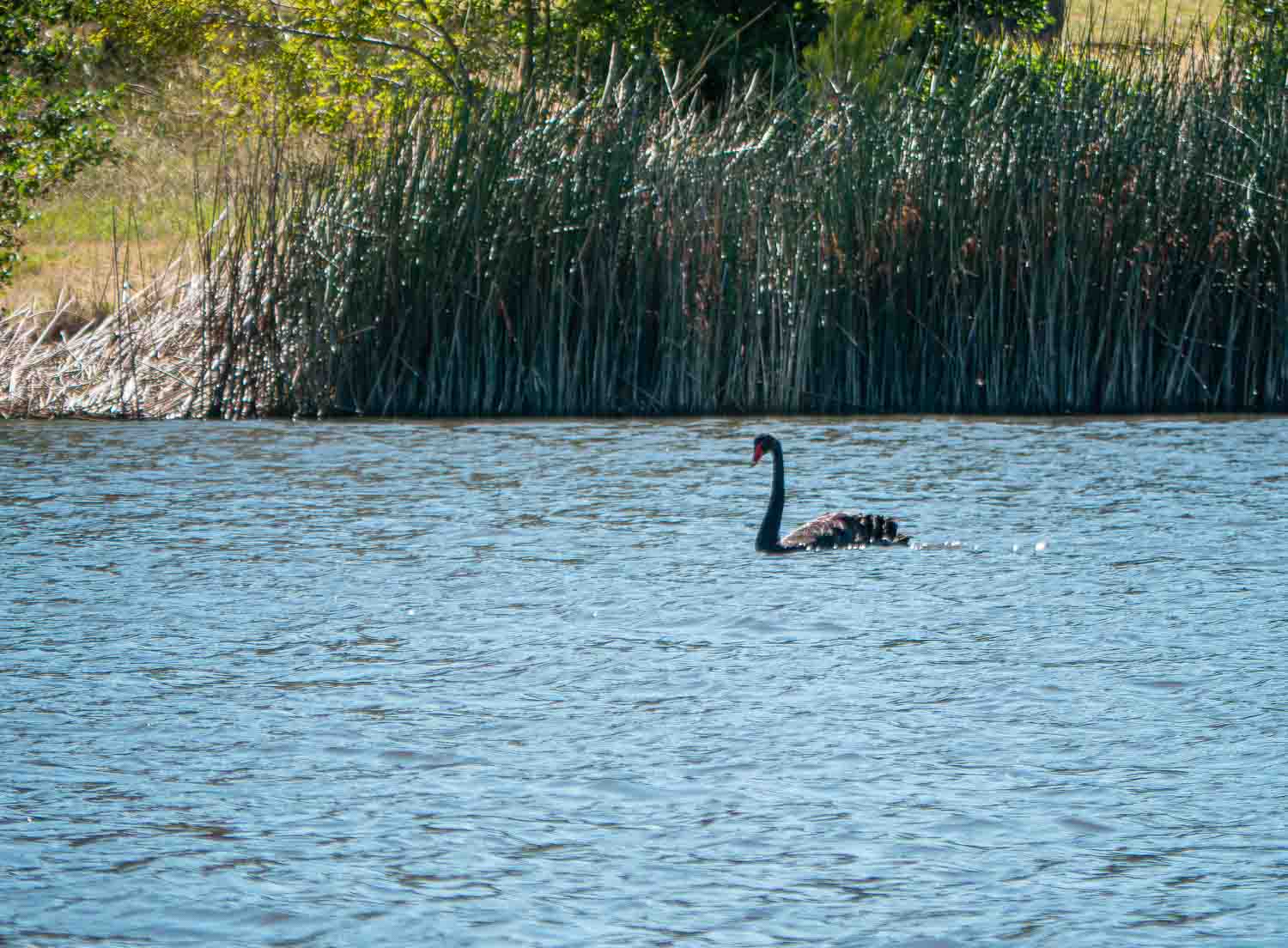
and a smaller tourist cruise boat behind a scull racer training with her coach.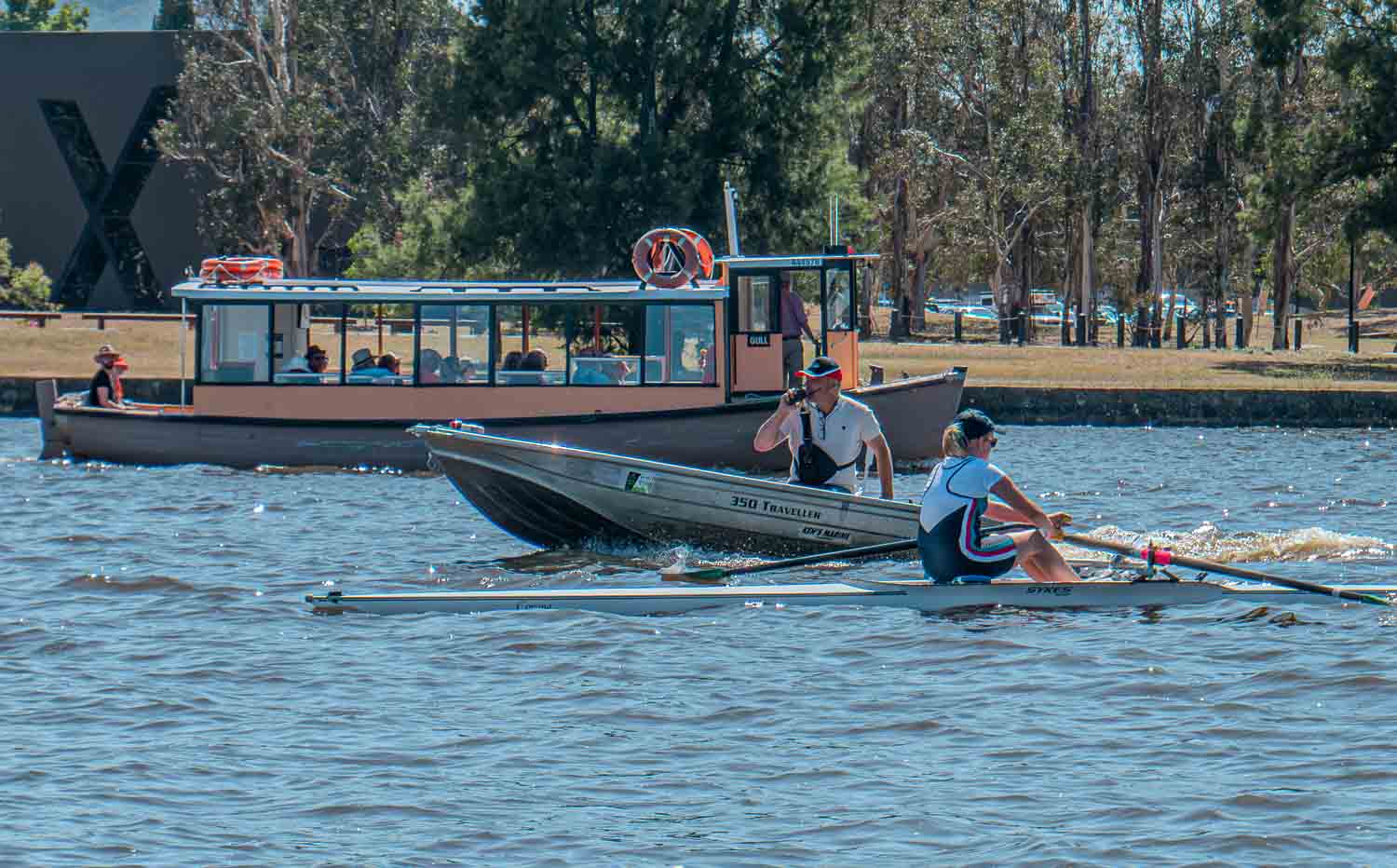
It’s time for our scrappy picnic, nothing special, just what we grabbed from the supermarket – drinks and croissants and sandwiches, and featured in the foreground, treats for the dog.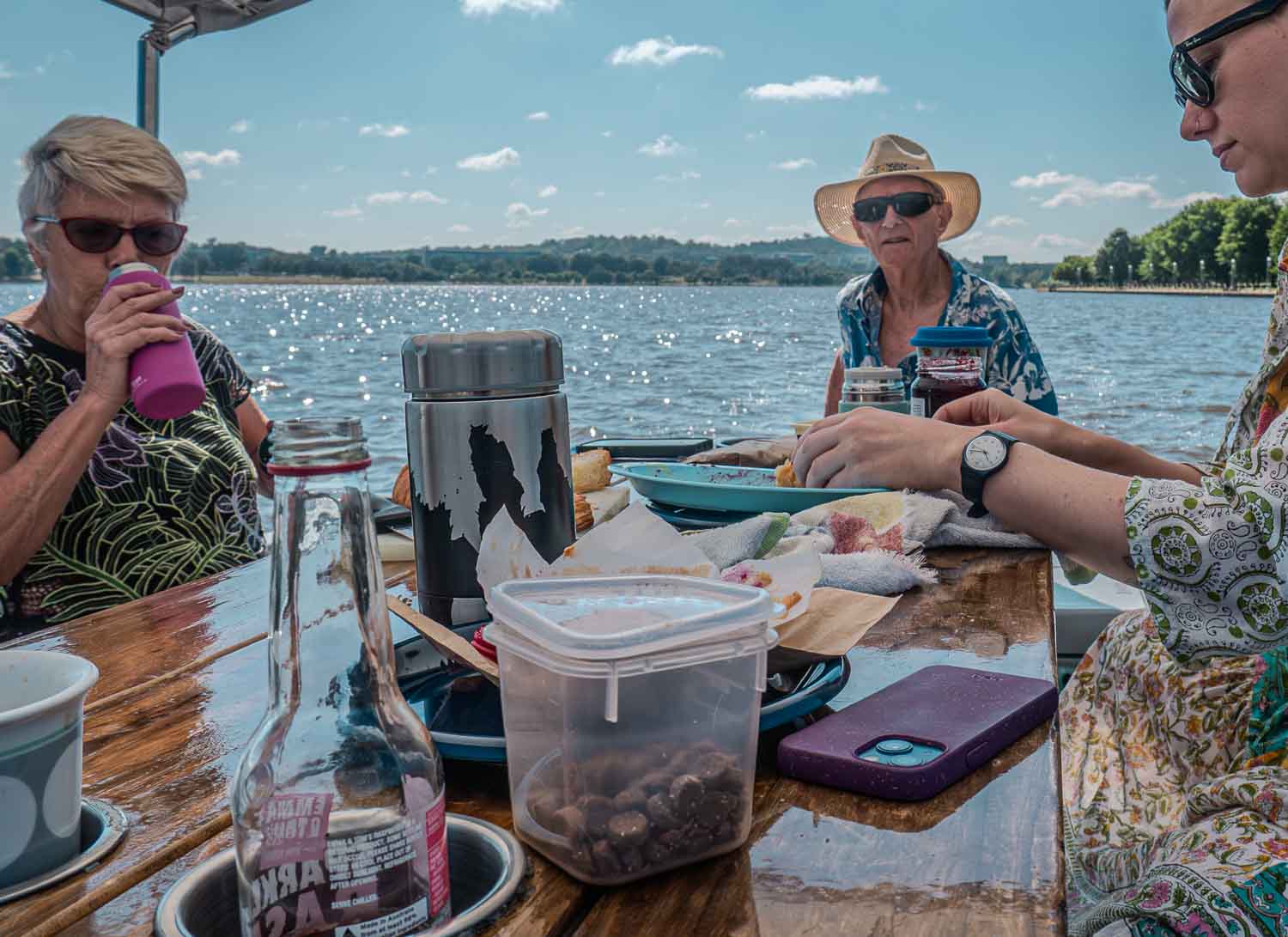
Don takes a turn at the tiller, Ellie takes out her umbrella,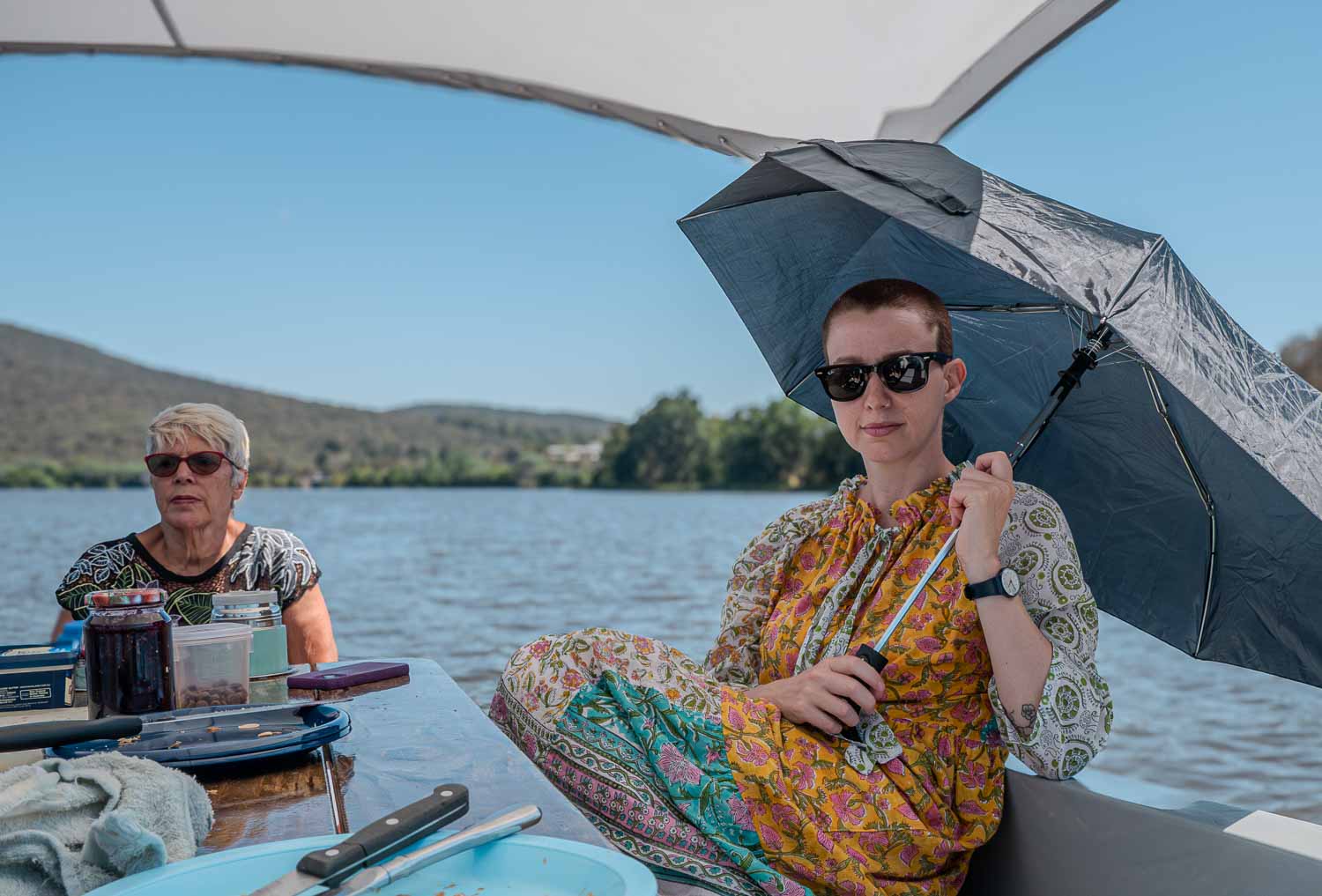
and Sylvie the gentle greyhound clambers over anyone who’ll let her.
At some point we pass under Commonwealth Avenue Bridge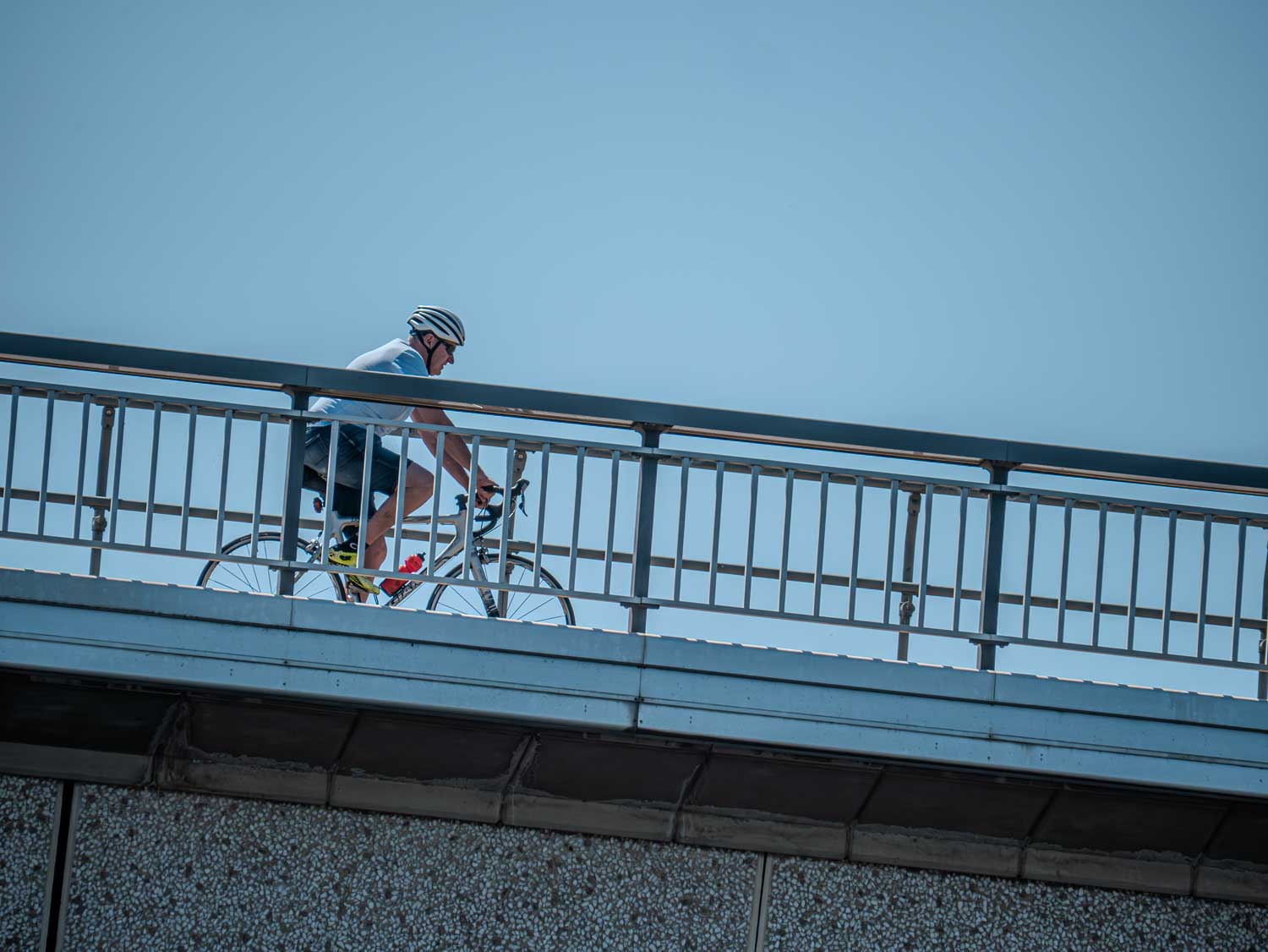
and come to Acton Peninsula, the home of the National Museum of Australia.
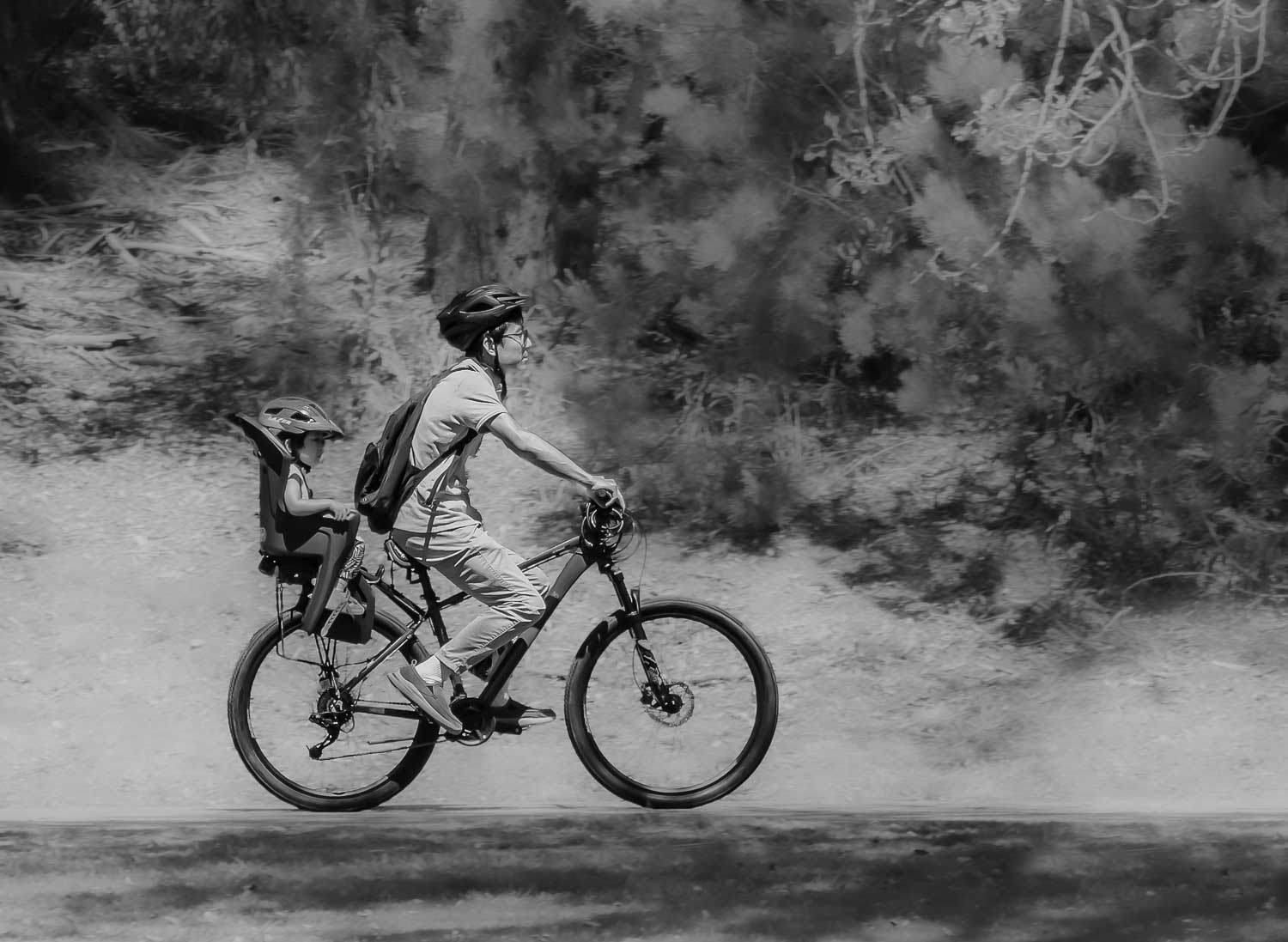
There’s always activity on the pedestrian and cycle path that surrounds the lake,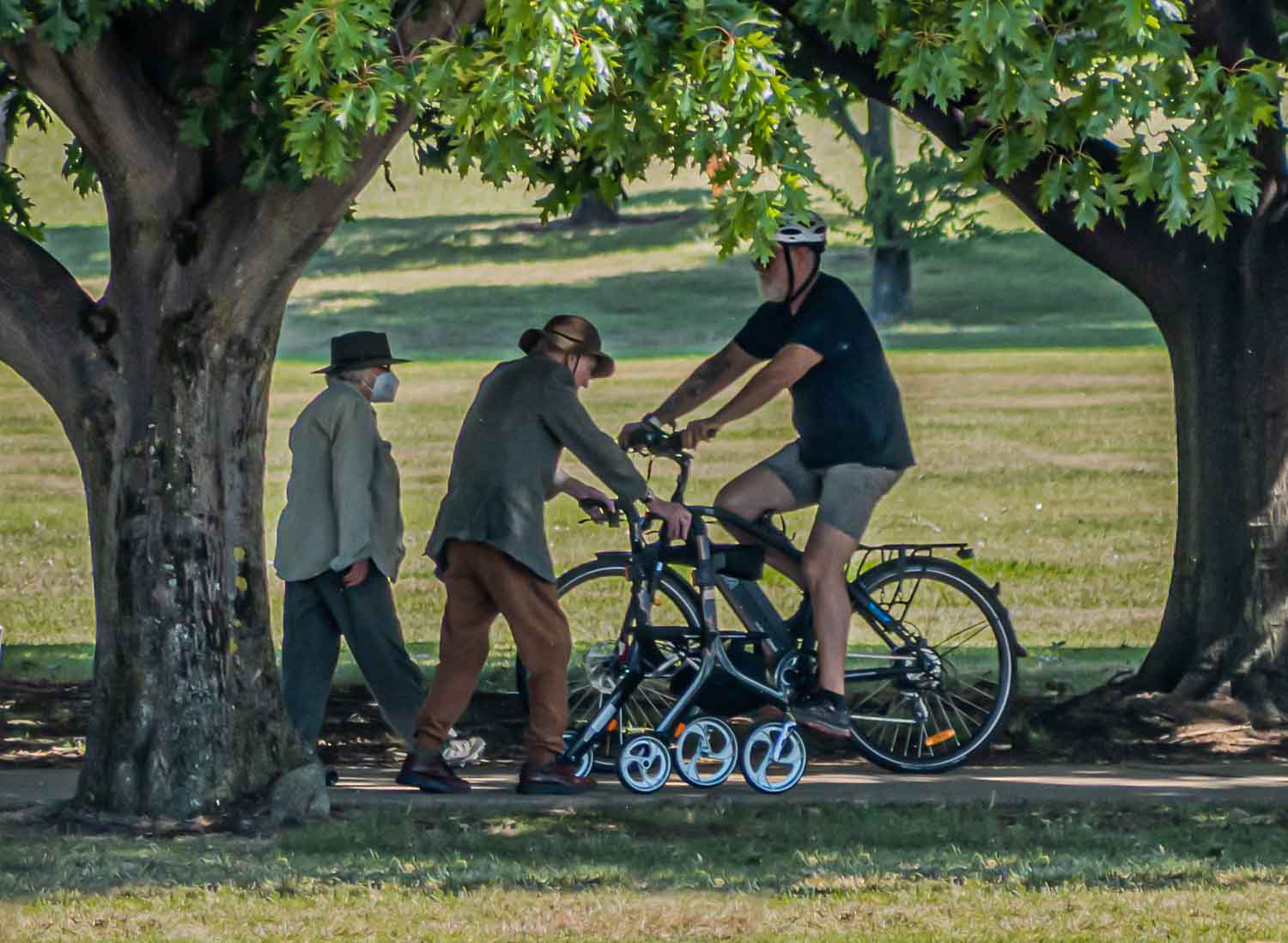
and gushing up over all is the Captain Cook Memorial Jet. It commemorates Captain James Cook’s first sighting of the east coast of Australia. The water emerges at 260 kilometres per hour (160mph), and reaches a height of 152 metres (500ft). It’s pretty spectacular.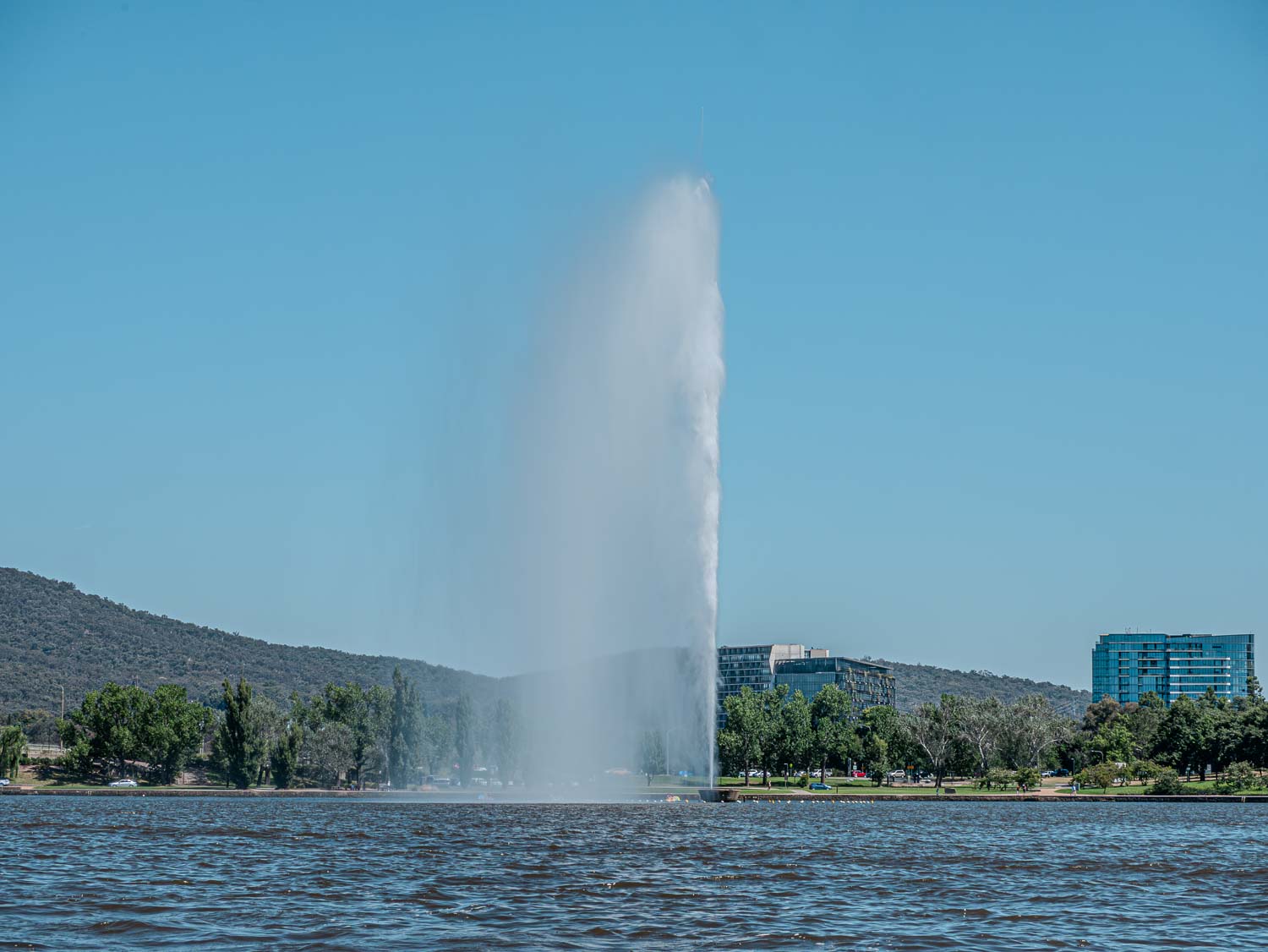
The whole journey, there and back again, is slow and peaceful. It could have been a time to relax, a time to surrender into the moment, a time to trail my fingers in the water watching the ripples they make. Instead I’m too busy taking photos and wanting more. More variety, more speed, more excitement. So now I want a do-over so I can be more immersed in the reality of it, in the quiet beauty of it, so I can let myself be lulled by the water and the wide sky and the gentle drifting in this tranquil place.

The Memorial Jet may be spectacular, but what’s not so spectacular is the recent national referendum to alter Australia’s constitution so that the Indigenous people “may make representations to the Parliament and the Executive Government of the Commonwealth on matters relating to Aboriginal and Torres Strait Islander peoples”. The result was overwhelmingly No. I am shocked, and heartbroken, and ashamed of my country.
Many probably now wish that Cook had never been anywhere near Australia. The Australian Capital Territory (Canberra) was the only jurisdiction to vote in favour of this amendment.
Canberra and its beautiful lake is situated on what was and always will be Aboriginal land; the lands of the Ngunnawal, Ngunawal and Ngambri peoples.
Next post: The Australian National Botanic Garden, and the Jerrabomberra Wetlands.
All words and images by Alison Louise Armstrong unless otherwise noted
© Alison Louise Armstrong and Adventures in Wonderland – a pilgrimage of the heart, 2010-2023.

 Adventures in Wonderland
It looks like a lovely day out on the water. I sure love that greyhound!
LikeLiked by 1 person
It *was* a lovely day. I just wanted to go faster!😂
That greyhound is a gem. I loved her. And I’m a cat person. I’ll be doing another post soon – at a dog park I got some fabulous pics of her racing.
Alison
LikeLiked by 1 person
I look forward to that!
LikeLiked by 1 person
Lovely day to share and beautiful weather.
(I am also shocked and disappointed in Australia’s referendum result. I would have thought it would be a resounding YES).
LikeLiked by 1 person
Thanks Vicki. It *was* a lovely day. I’m so glad we did it. *And* I want a do-over 😂
Yeah, the vote shocked me too. 😢
Alison
LikeLike
I find it always a nice thing to have a large body of water, or hills, or anything nature provides, near the city where we live. Such places help us reconnect with the Earth after those long hours we spend at work. It’s really sad about the result of the referendum, and as I was curious to see how the votes went in each state/territory, I noticed Canberra is the only one voted for the change. I thought cities like Melbourne would have also voted similarly.
LikeLiked by 1 person
I agree about having lots of natural elements in or near cities. I feel so privileged to live in Vancouver, and to have Canberra as my Aussie hometown.
The referendum result made me so sad. Apparently there was a lot of lying and misinformation from the right wing politicians/media. 😢
Alison
LikeLiked by 1 person
Beautiful day and not-so-beautiful referendum results.
LikeLiked by 1 person
It *was* a lovely day, even if I did get a bit impatient.
As for the referendum, I suppose I should have said that referendums are rarely successful, requiring 66% of the vote and a majority in 4 of 6 states. At the same time there was a lot of misinformation and lies spread about 😢
Alison
LikeLike
Thanks for introducing me to GoBoats. We, too, were ashamed by the vote.
LikeLiked by 1 person
GoBoats are fun – nice way to see the lake.
Yeah – the referendum 😢 It should be so obvious!
Alison
LikeLiked by 1 person
What a peaceful day out in the lake!
LikeLiked by 1 person
Iy was really lovely, except I got a bit impatient 😂
Alison
LikeLiked by 1 person
Loved Sylvie!
LikeLiked by 1 person
We do too ❤️ She is one special dog.
Alison
LikeLike
Lovely photos and a sense of peace out on the lake. Thank you for sharing. As for the referendum, I live in regional Queensland and am often in the remote communities. Sadly there was a LACK of information and what there was, was not explained with any understanding. The feeling in this State (and dare I say WA as well) is that there is a vast amount of money allocated for our indigenous communities but they see very little (if any) of it. It is swallowed up by bureaucracy and that has to change. I respect and care for our native people but this wasn’t the way to make a difference.
PS I think Sylvie is a beautiful dog and her nature radiates out of her – altho I have never met her, I can see she is very loved and special.
LikeLiked by 1 person
Thanks Alison. It really was a lovely outing. I’m glad we did it.
Re the referendum I not surprised to hear about the lack of information, and have also heard there was a lot of misinformation and lies being spread. I’m also not surprised that the money to support the Indigenous communities never reaches them in a meaningful way, or at all. Was it ever thus. And yes! It’s the bureaucracy that needs to change – that would go a long way to actually addressing the situation.
In Canberra there’s a lot of heed paid to the Indigenous people in the form of public sculptures, quotes from the Elders, acknowledgement on govt websites etc and while I appreciated the recognition, I wondered if it was just “appeasement theatre”.
And yes, Silvie is an absolute gem – and that comes from a cat person!
Alison
LikeLike
“Believe me my young friend, there is nothing – absolutely nothing – half so much worth doing as simply messing about in boats.” – The Wind in the Willows.
Misinformation and lies from a frightened right wing – I guess the USA isn’t the only place where that runs rampant.
LikeLiked by 1 person
Oh yes – that quote from Wind in the Willows is *exactly* it. Next time I’m in Canberra I’ll GoBoating again for sure!
Sadly misinformation and lies from a frightened right wing is pretty rampant in Australia now, and is emerging here in Canada too. 😢
Alison
LikeLiked by 1 person
You trained as a librarian? How cool! I love being on or near the water but no desire to be in it; GoBoats would be so cool! I often saw Dragon Boat teams practicing on the Willamette in Portland, OR, and I love watching them.
What do the flags outside the library and the court represent? Are they states and territories? The jette d’eau reminds me of my semester abroad in Geneva. Even though you don’t think it’s a big deal, that water jet catches the eye and says “yep, that’s home!”
A shame about the recent Indigenous vote; some world views take a verrrrry long time to change. I’m impressed it even went for a national referendum; no way are we advanced enough here in the US to even try for such a thing. I mean, we added “/ Indigenous People’s Day” to Columbus day for crying out loud.
Sorry. Got on a bit of a rant there. I’m done now. 😛
Very much looking forward to the botanic garden & wetlands!
LikeLike
I worked as a librarian for a few years but it was too ordinary and stable for an adventurer like me. 😂
Like you I love being on or near water. I also happily go in if the water’s warm. I’ve seen dragon boats practicing here in Vancouver from time to time – always fun to watch them.
The flags are the International Flag Display. There are 110 flags in total, representing 108 Missions that have a diplomatic presence in Canberra, as well as flags of the European Union and the United Nations, identified by a plaque at the base of each flagpole. All national flags are positioned alphabetically, starting closest to the High Court of Australia. The first country listed is Afghanistan and the last, alphabetically speaking, is Zimbabwe.
In reality the referendum was unlikely to be a yes vote – it’s a constitutional change that would require 66% of the vote plus a majority in 4 states out of 6. Still it was disappointing, and at the same time progress that it even made it that far. At least the country is talking about it.
Alison
LikeLike
Forgot to mention that Australian Aborigines call Australia Day Invasion Day, and rightly so.
LikeLike
Lovely day and boat and dog, Alison
I too am deeply shocked by the outcome of the referendum. It would have been a good start.
LikeLiked by 1 person
It was a lovely day, and that dog is really special. Well, you know I’m a cat person, but Silvie completely won my heart.
I was shocked too about the referendum, but then I learned more about it – misinformation and lies spread about it, and lack of good information, plus what I wrote to Felicity in the comment just above yours. Very few referendums actually pass.
Alison
LikeLike
Effecting change and putting wrongs right never seems to be easy.
LikeLiked by 1 person
So true. At least it was enough of a conversation in the country to even have a referendum, which is another step forward.
Alison
LikeLiked by 1 person
You grew up in such a beautiful part of the world, Alsion. I was very upset by the outcome of the referendum. My friend lives in Melbourne and as all her family went to vote Yes, we eagerly followed along the journey. It’s amazing how with such a simple thing as a two-letter word, Australians managed to strike down the first attempt at constitutional change in 24 years. Unfortunately, it’s gonna inflict lasting damage on First Nations people and suspend any hopes of modernizing the nation’s founding document. Thanks for sharing and have a fantastic day 🙂 Aiva xx
LikeLiked by 1 person
I definitely was lucky enough to grow up in a beautiful part of the world. I love Canberra.
I too was upset at the outcome of the referendum. I guess the kind of good news is that referendums rarely pass since they require 2/3rds in favour (not just a simple majority) and 4 out of 6 states to be in favour.
And then I suppose it can be seen as a positive that there was even a referendum about it. Such a thing would never happen in the US for example. So it’s some kind of progress.
Alison 🤗
LikeLiked by 1 person
Such a beautiful spot in the middle of the city. I love having nature so close. On the other hand, I am shocked at the referendum. I had vaguely heard about it when we were travelling and I assumed it would go the other way. Maggie
LikeLiked by 1 person
I also love having nature so close. It’s one of my favourite things about Canberra, and about Vancouver where I live.
And I too am shocked, and saddened by the referendum. There are really so many of us who thought it would go the other way.😢
Alison
LikeLiked by 1 person
Lovely lake photos and the GoBoat excursion looks like great fun. I guess the term heritage can be bent to many uses.
LikeLiked by 1 person
Thank you so much 🤗 It was a lovely outing, very serene.
I agree re the use of the term “heritage”. I was certainly amused to hear it applied to old Kingston houses since they were what I grew up with, and never thought of them in that way.
Alison
LikeLiked by 1 person